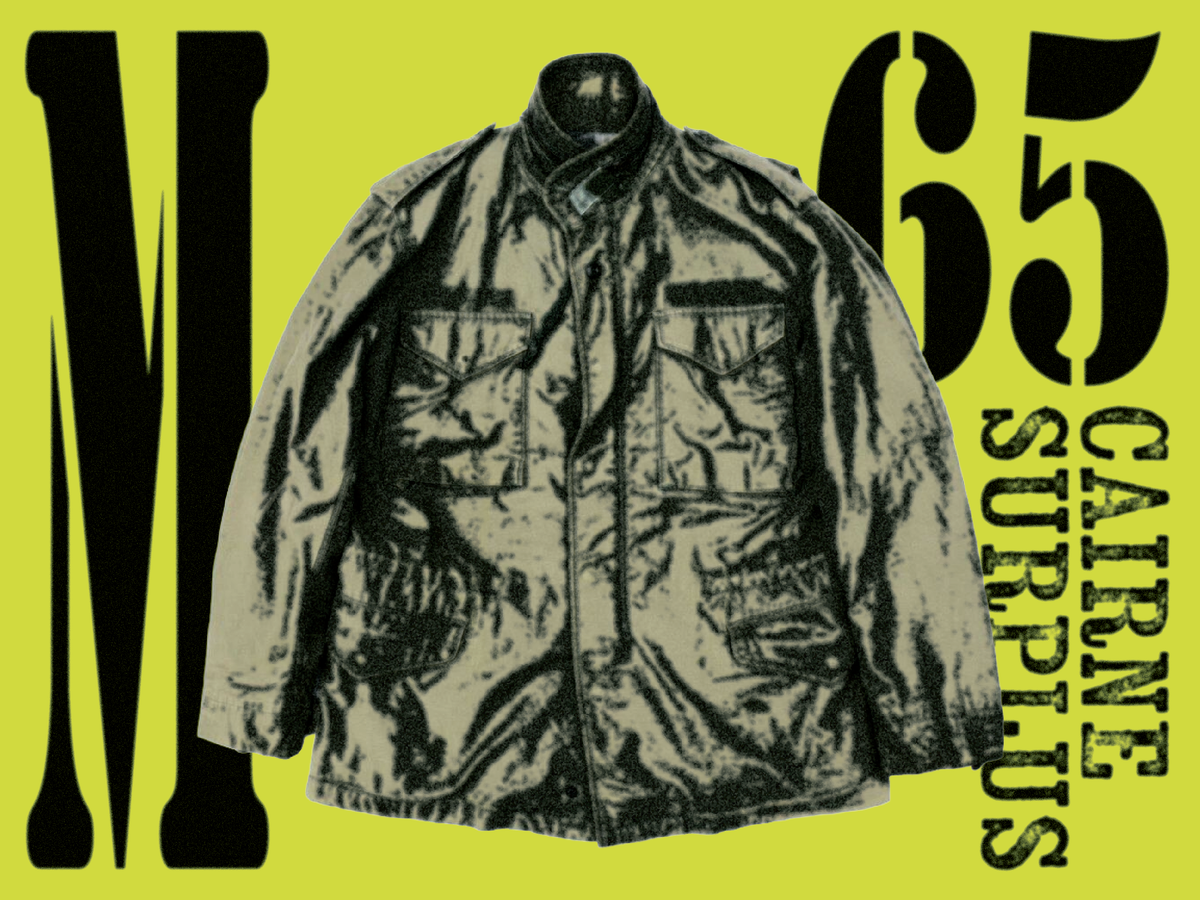
M-65 FIELD JACKET
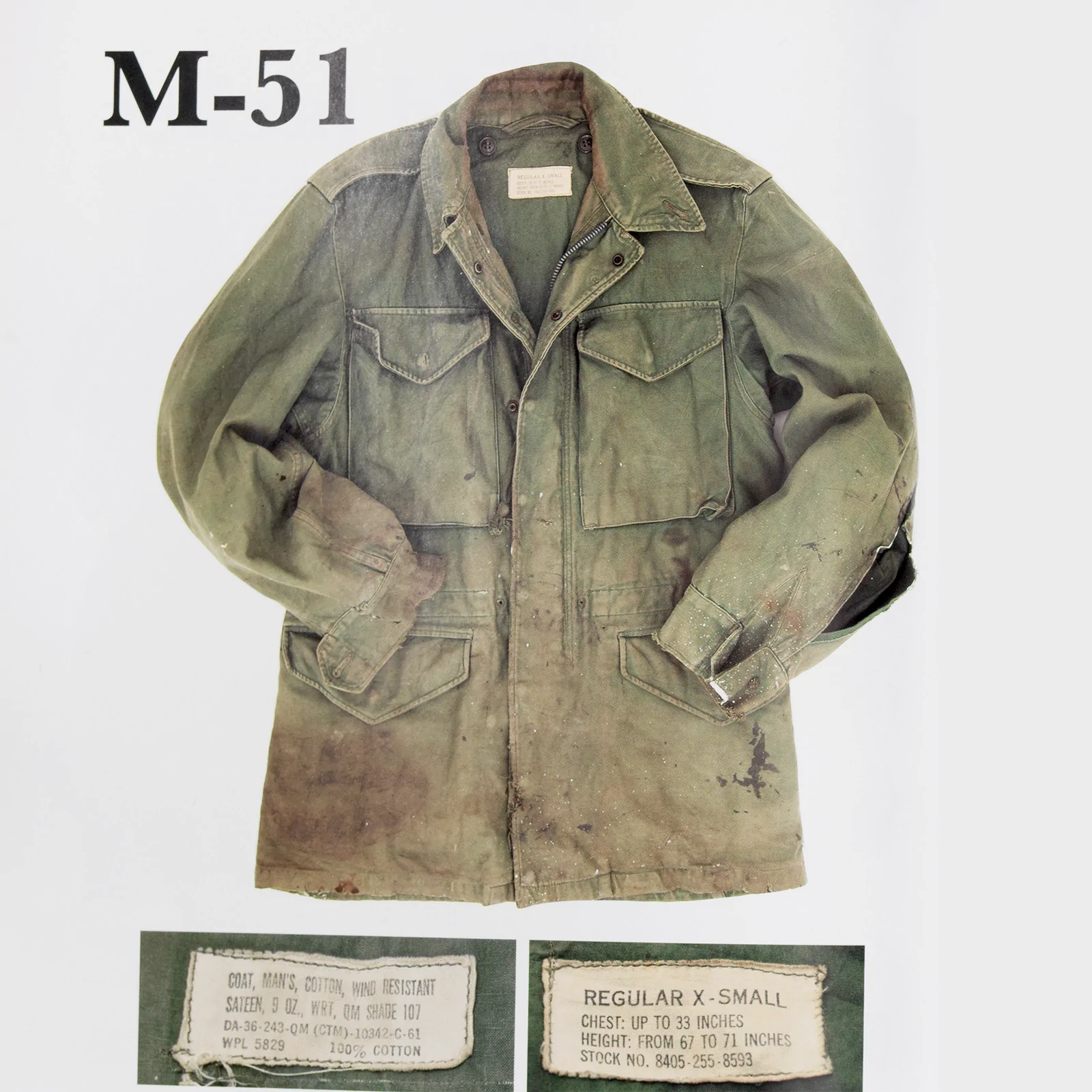
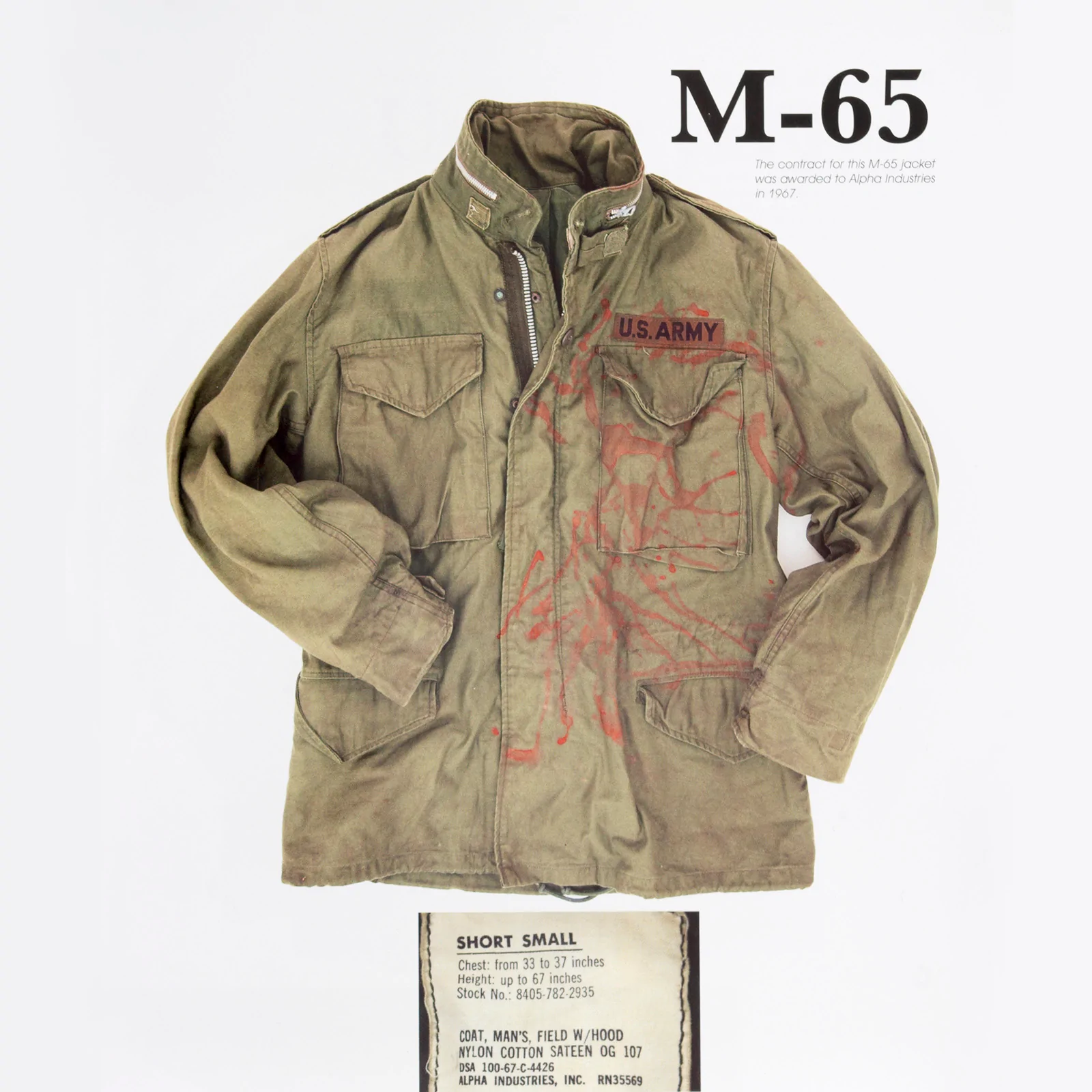
(Left) M-51 Jacket (Right) M-65 Jacket Customized with Paint Splatter (source: Bulang & Sons)
A Brief History
The M-65 holds the title of the longest-issued U.S. Army field jacket, serving troops for forty years between 1965 and 2005. It didn't start as a cultural object. It started as a problem to solve.
It evolved directly from the M-1943 via the M-1951, and the upgrades were entirely practical: a stowable hood built into the collar, snap closures on the four cargo pockets, velcro cuffs, a taller upright collar, and a nylon-cotton fabric blend that handled wind and water far better than the cotton-only predecessors. Designed for 15°F to 45°F, with a button-in quilted liner for colder conditions. Built to function in terrain that made almost everything else useless.
It never went away because it layers, it moves, and it holds its shape. That oversized, squared-off silhouette in OG-107 olive reads as intentional whether you pulled it off a surplus rack in 1974 or found it on a runway.
Construction: The Patterns
The M-65 went through several production contracts over its lifespan, each leaving behind small but readable differences in construction. For collectors and designers working from the originals, these eras matter.
1st Pattern — 1965 to 1966
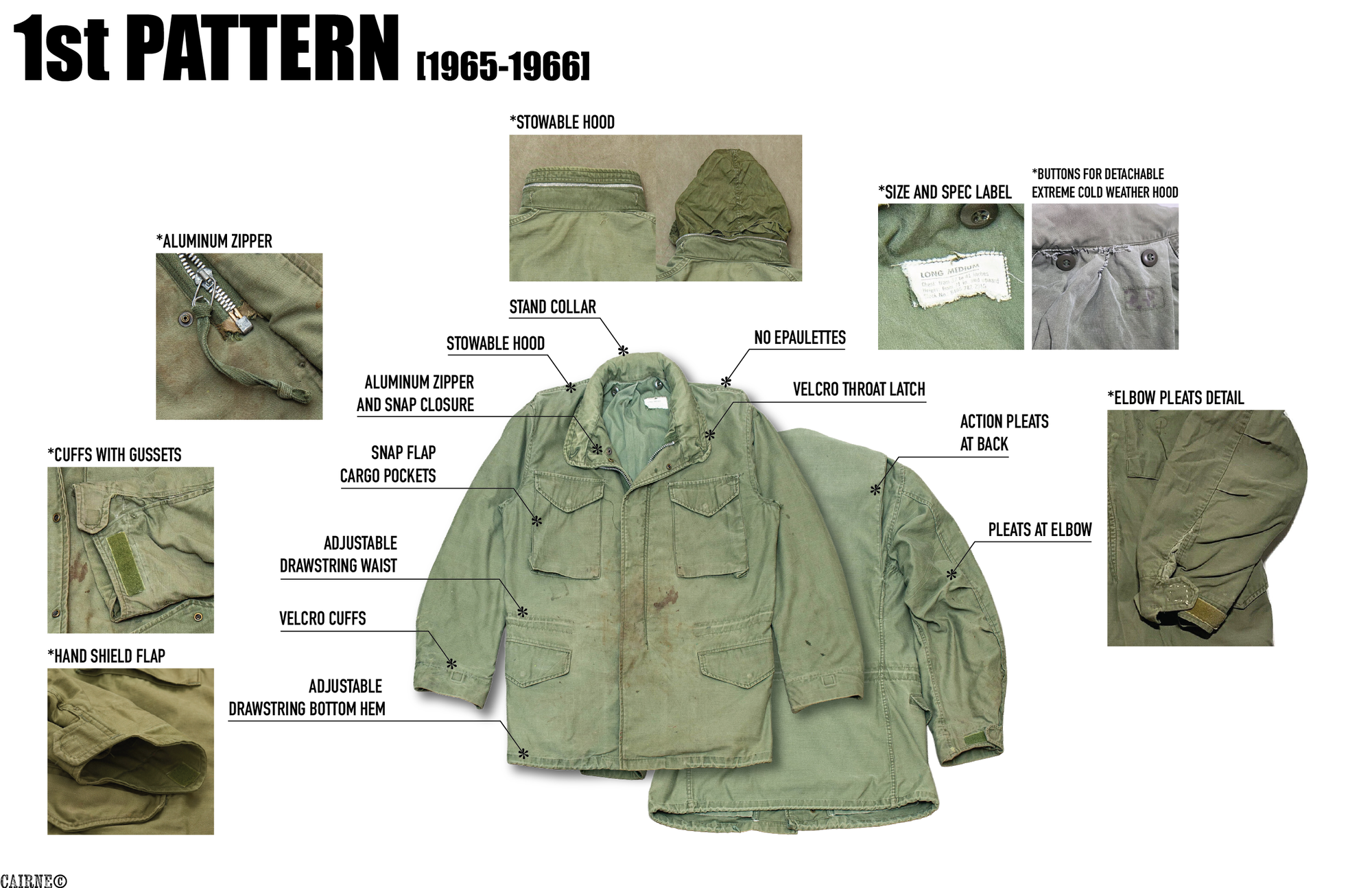
The rarest. Produced only under the first two fiscal year contracts and in significantly smaller quantities than anything that followed. The only M-65 made without shoulder epaulettes — cleaner-looking, slightly slimmer in fit. Main zipper: silver aluminum-tooth, from contractors including Conmar, Scovill, or Talon. Cuffs were gusseted — an extra piece of poplin sewn between the velcro tabs so the sleeve could be tightened without pulling the shape out of the arm.
2nd Pattern — c. 1966 to 1971
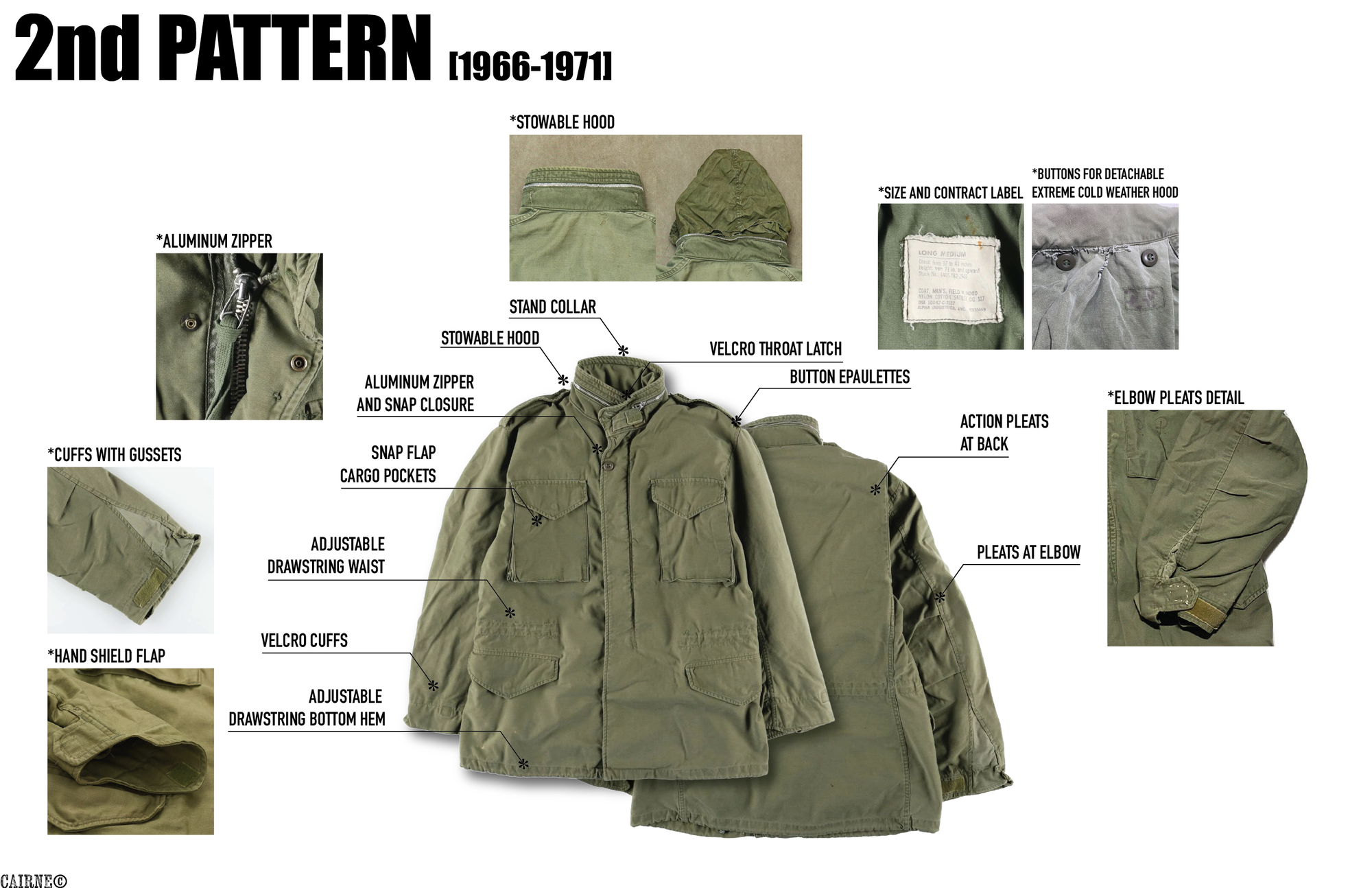
Epaulettes added. Troops found them useful for keeping gear straps from sliding off the shoulder. The aluminum zipper carried over through the peak years of Vietnam — these are often the most sought-after examples for that reason. The gusseted cuff stayed on early 2nd pattern contracts but was phased out from FY1968 onward, replaced by a straight edge as production shifted to double-needle machinery.
3rd Pattern — c. 1972 to early 1980s
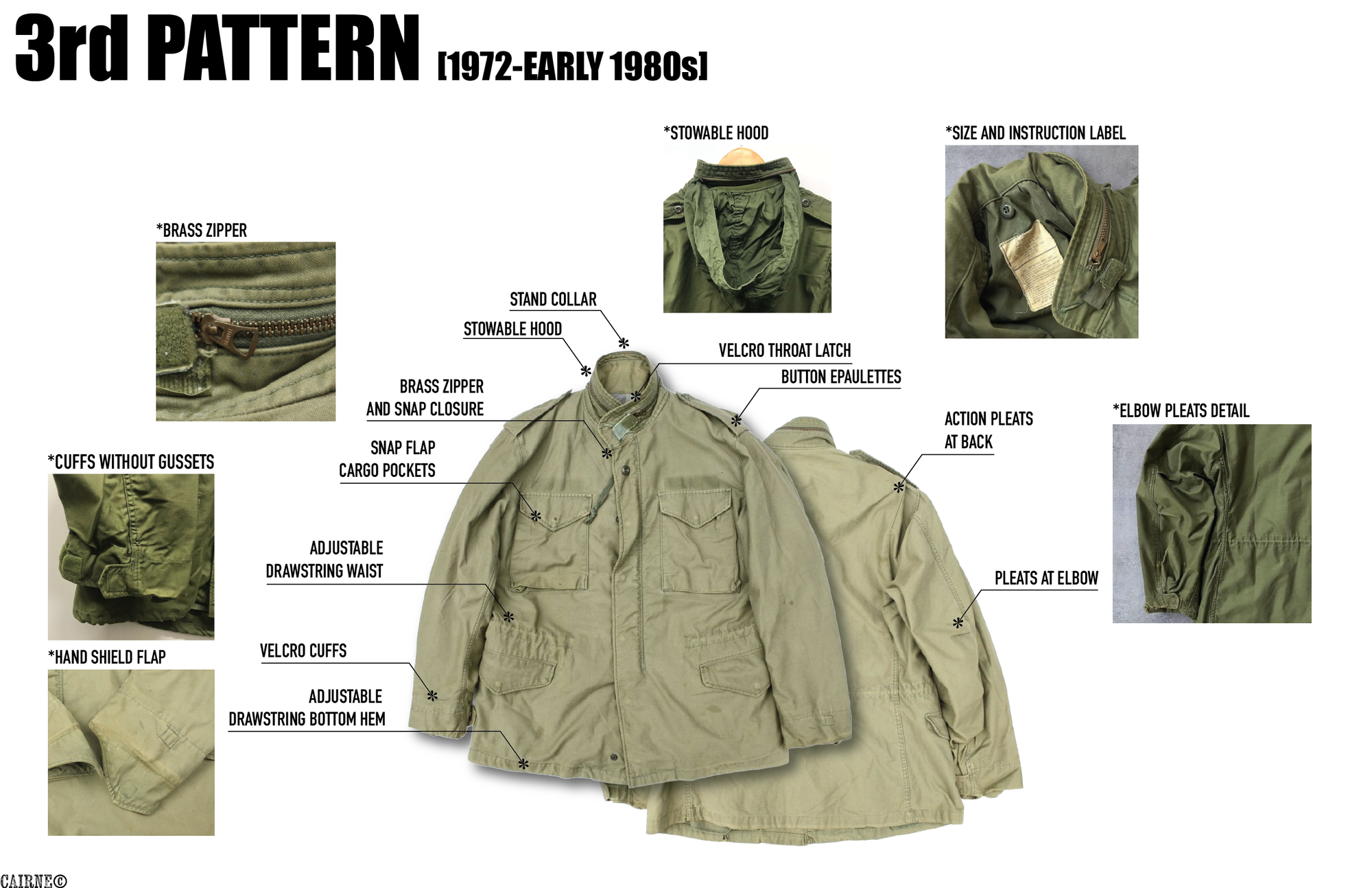
Brass replaced aluminum for the main zipper — heavier but more durable. The gusseted cuff was gone entirely. The silhouette held: same four-pocket layout, same epaulettes, same proportions. Late contracts in this era began introducing synthetic nylon zippers as cost started to factor in.
Late Production & Camouflage Variants — 1981 to 2005
In 1981, the M-65 was standardized in M81 Woodland camouflage. Desert variants followed in the '90s for Middle East deployments. The Universal Camouflage Pattern (UCP) arrived in 2005 before the jacket was retired from service. To most collectors, the olive drab models from 1965 through the early '80s are the ones that built the jacket's reputation — everything after reads as later-era.
What It Left Behind
After the war, surplus flooded out. Veterans rotated home still wearing their M-65s, and when many of them joined the anti-war movement, the jacket came with them. People who had never served started wearing it too — the unofficial uniform of a generation that had run out of other ways to say what it meant.
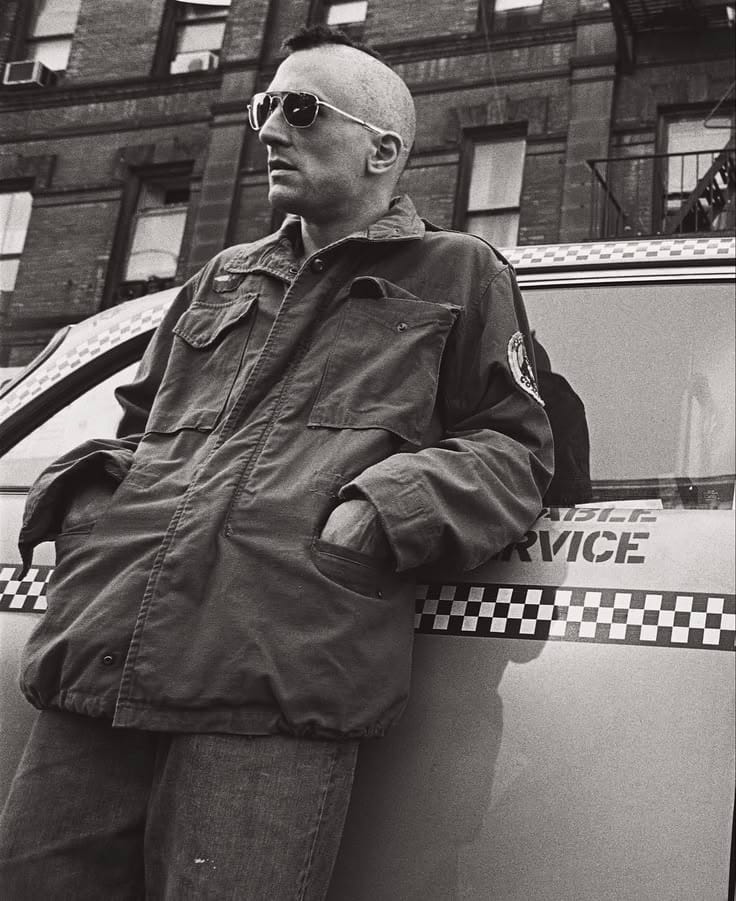
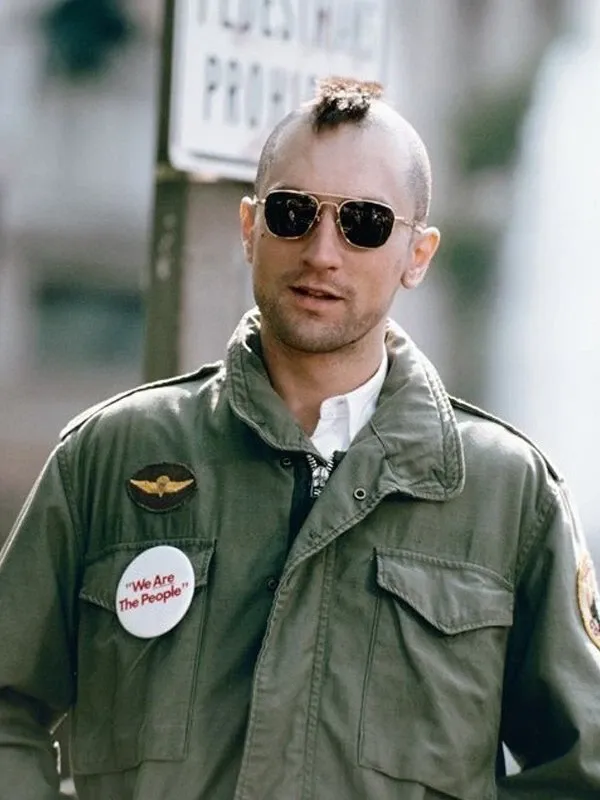
Travis from Taxi Driver (1976) (source: unknown)
Then came the films. Travis Bickle — De Niro's Marine veteran in Taxi Driver (1976) — did more than anyone to shift what the jacket meant. On Bickle, it stopped reading as surplus and became something harder to name: a man who came back from the war and found nothing waiting for him. Rambo followed in 1982, a different body in the same jacket — the forgotten soldier, abandoned by the country he fought for, wearing the only identity that still fit. Two characters. Two versions of the same fracture.
The M-65 has since been reinterpreted across the whole range of menswear — luxury houses, streetwear brands, reproduction labels — each translation usually stripped of the history it's borrowing from.
But this jacket's most paradoxical chapter is still ahead. In 1971, hundreds of veterans dressed in combat fatigues and worn uniforms walked up to the steps of the U.S. Capitol and threw their medals — one after another, for three straight hours. The uniform that once meant state-sanctioned combat had become the costume of collective refusal. The men wearing it were the same men the military had issued it to.
That's the next story.
Found a very useful source regarding this vintage journey.
Check this brand & blog out for vintage pattern study.
 ShinsukeKawahara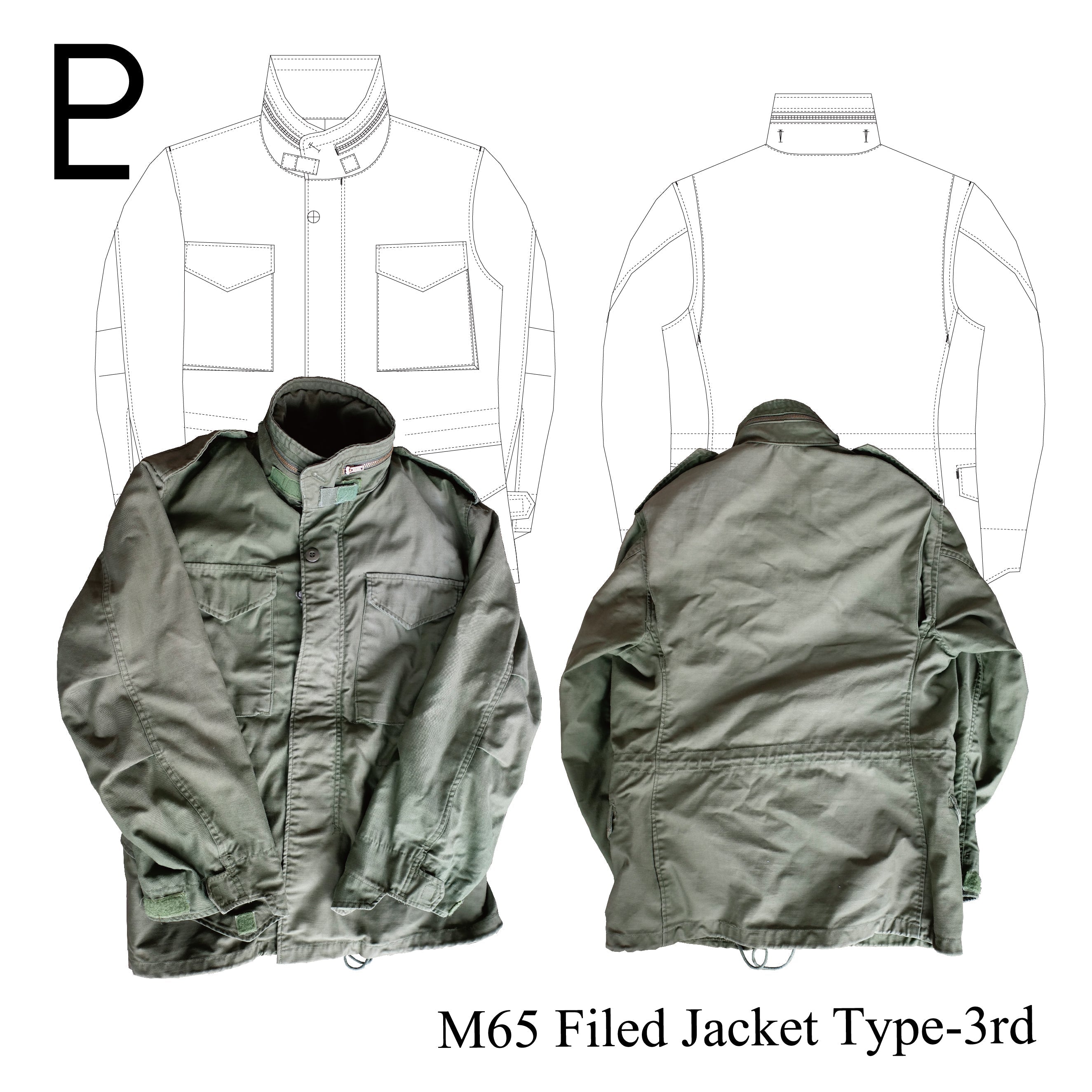
Inquiry