PUNK IS NOT DEAD Vol.2
The Same Wall, Two Different Rebellions
West Berlin vs. East Berlin & the Soviet Bloc
They were separated by concrete and barbed wire, sometimes by less than a kilometer. On one side, punk was a lifestyle you could choose. On the other, it was a condition you survived.
West Berlin — The Island That Forgot To Be Afraid
West Berlin was a geopolitical anomaly. Surrounded by East Germany, exempted from military conscription, subsidized to function as a Cold War showcase — the city filled with draft dodgers, artists, and misfits who had nowhere better to be. Housing was cheap and collapsing. Nobody with real ambitions came here. That was exactly the point.
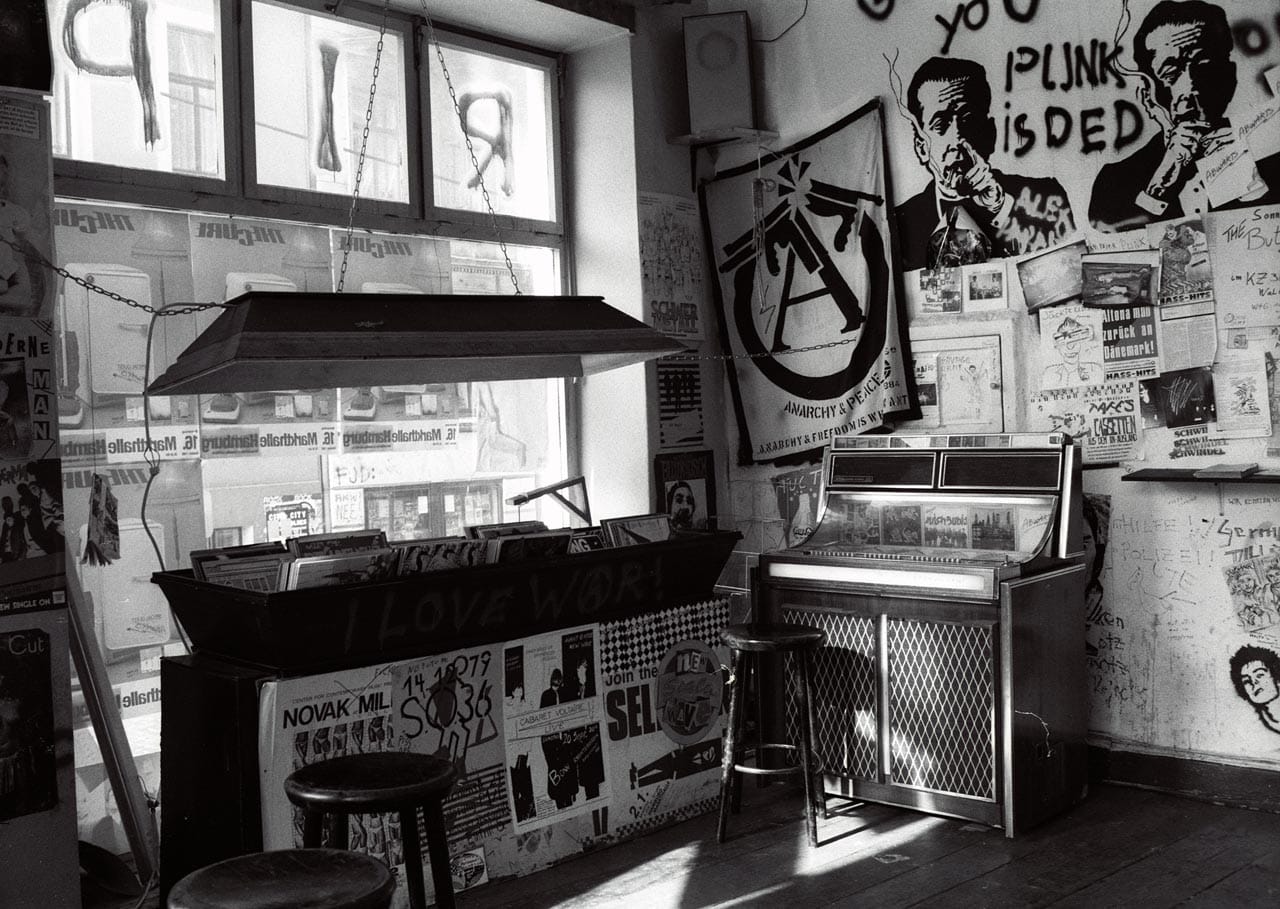
Kreuzberg became the center of gravity. SO36 — a punk club founded during the squatter movement, its founders literally occupying the building — was the epicenter of a scene that had no interest in the future because the future, in a walled city surrounded by Soviet tanks, felt hypothetical. David Bowie and Iggy Pop lived here. Nick Cave came of age in the bars of Schöneberg. Blixa Bargeld of Einstürzende Neubauten built a career out of dismantling music's structures entirely.
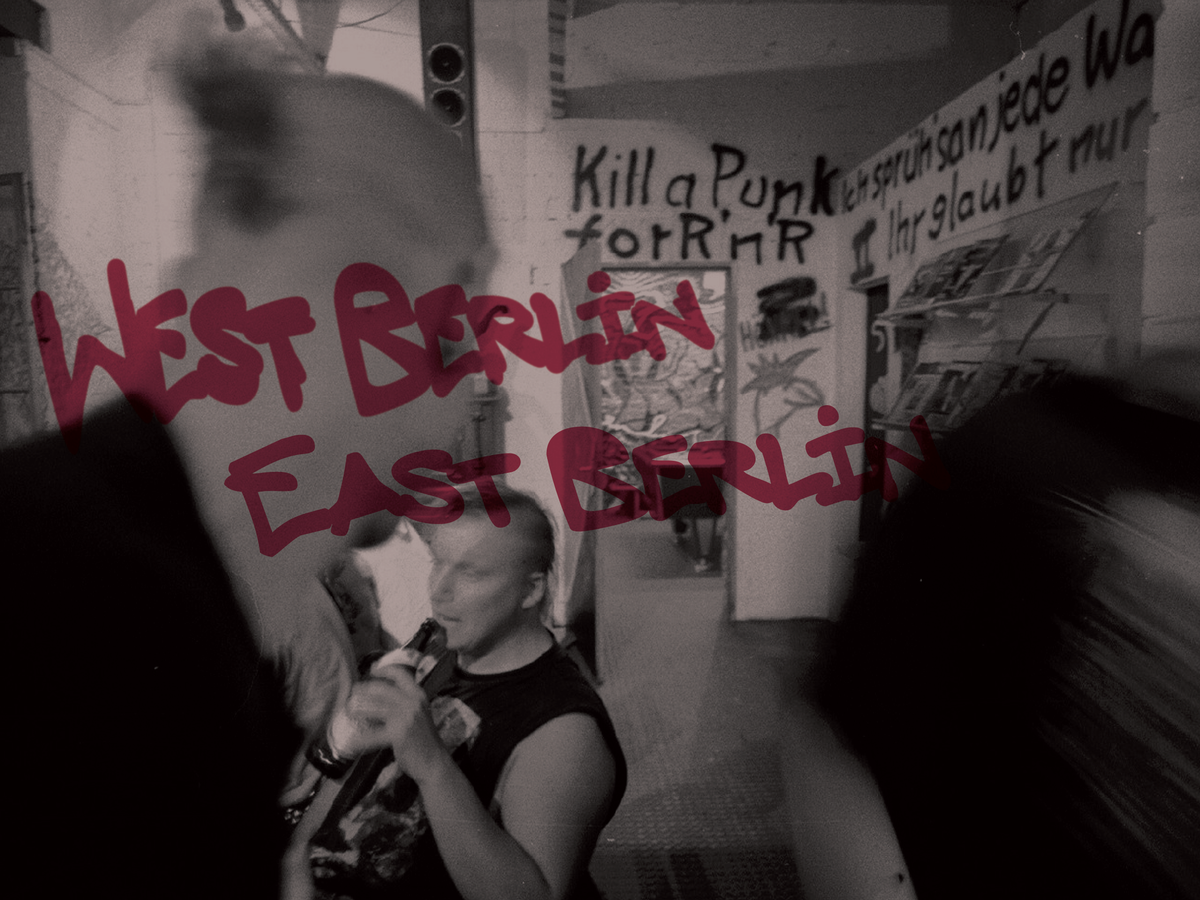
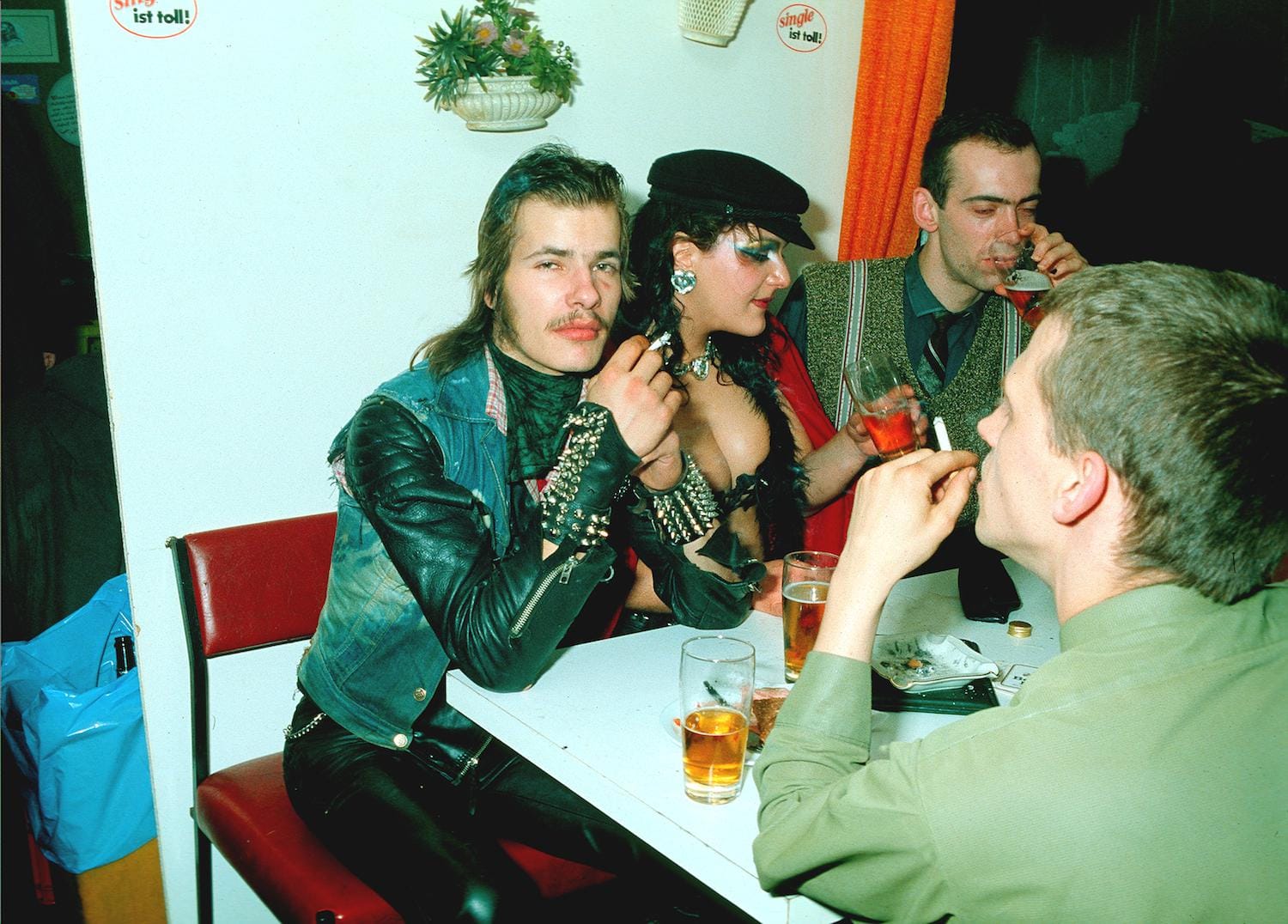
West Berlin punk was political the way nihilism is political — not a program, but a posture. The Wall was always visible from the clubs and the squats. The response was to throw a party directly in its shadow. The resistance was real. But it had a stage, a door charge, and a way home afterward.
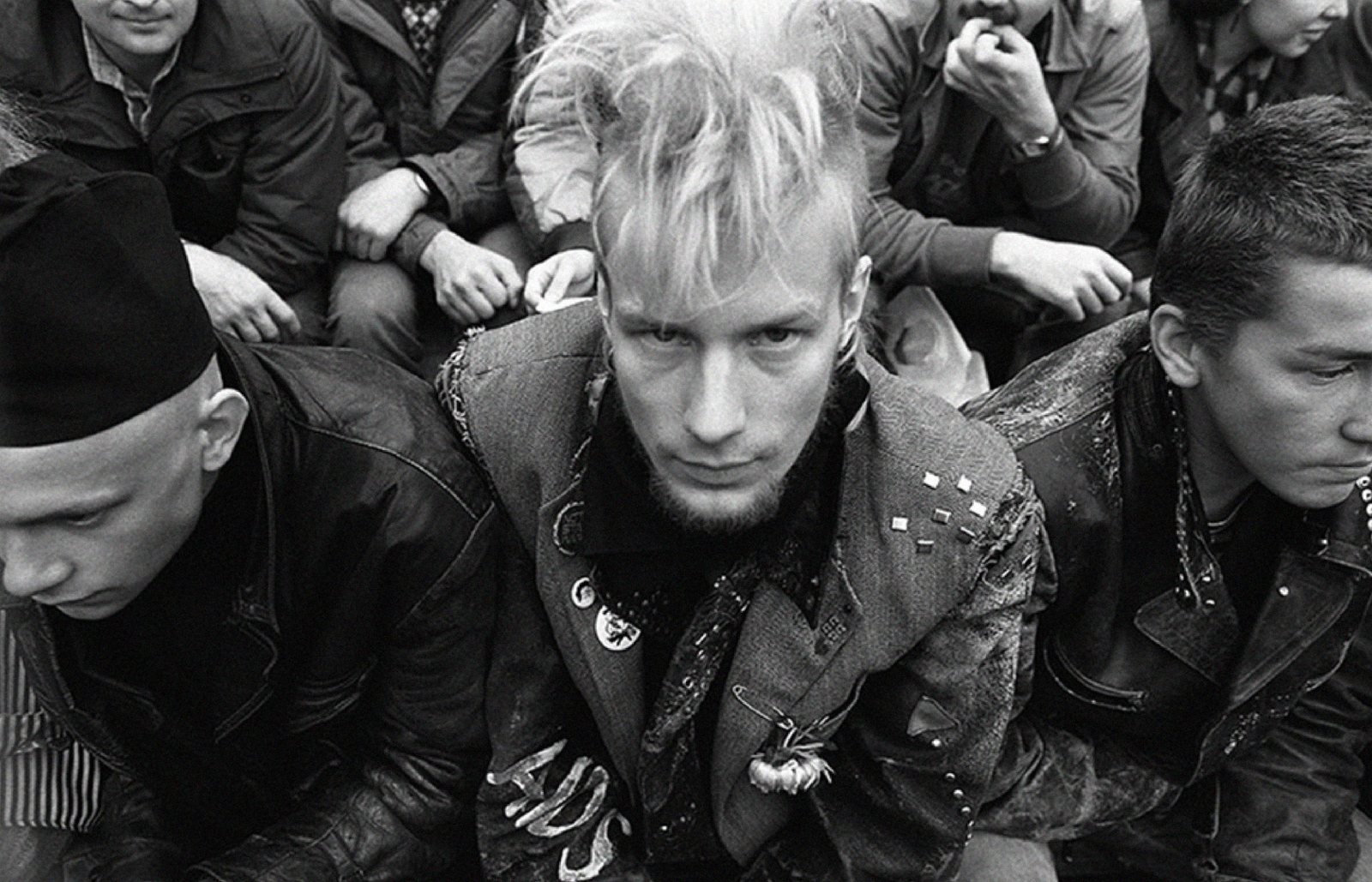
SO36, Kreuzberg. Surrounded by the Wall, with nowhere to go and nothing left to lose.
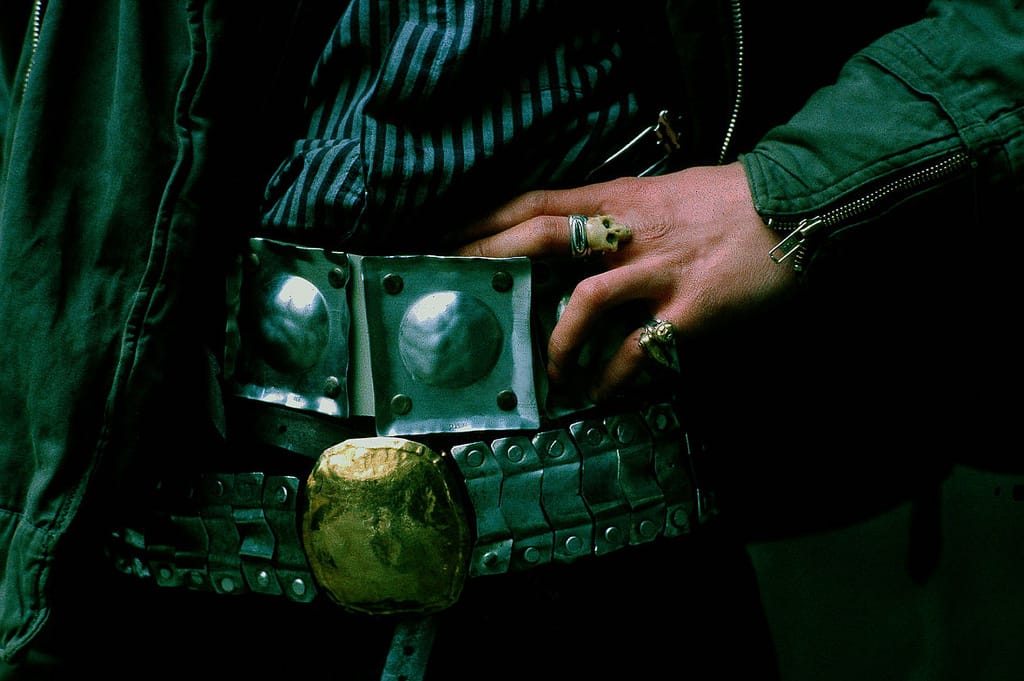
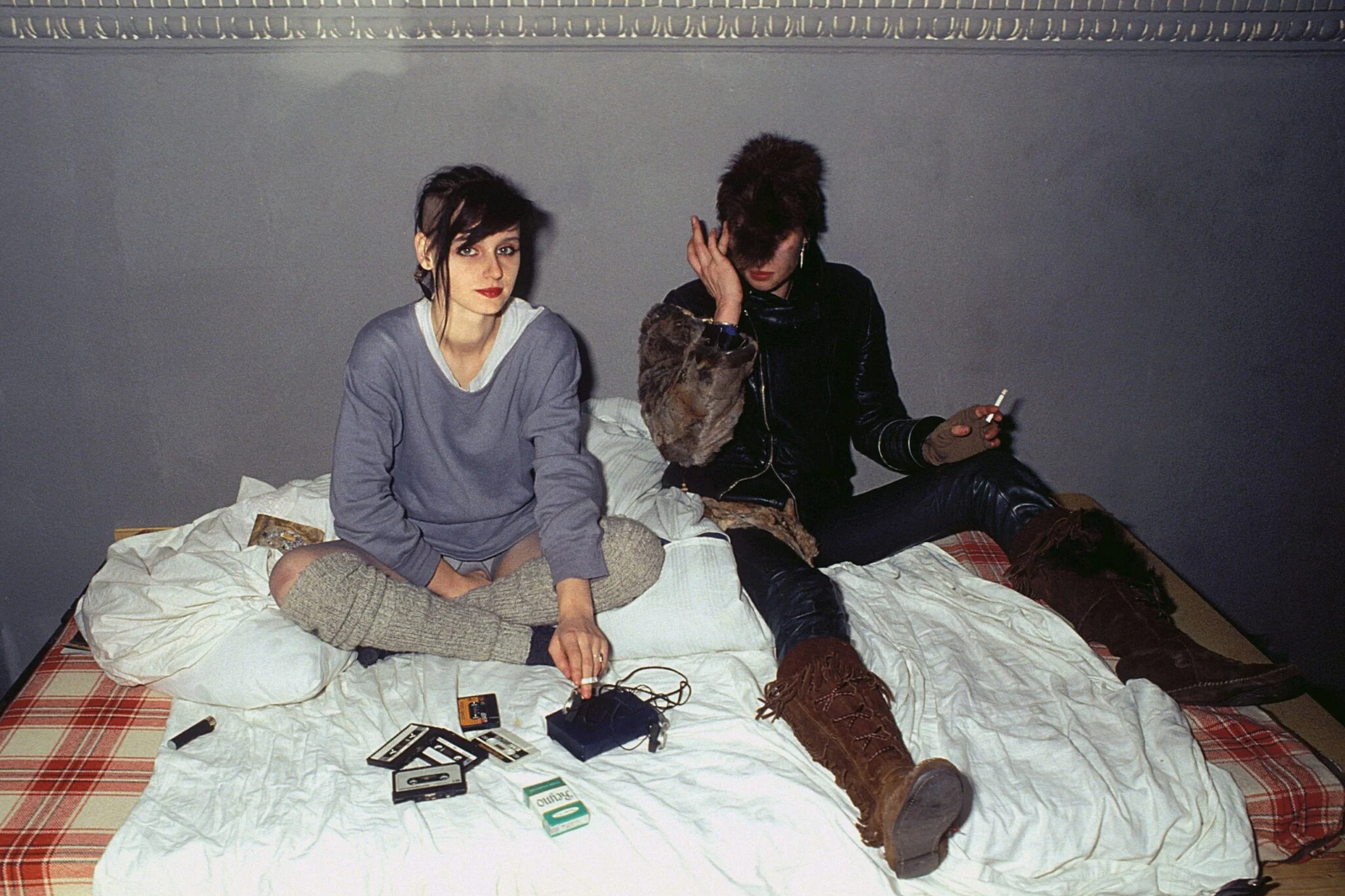
East Berlin & the Soviet Bloc — The Punk That Cost You Everything
On the other side, the calculus was entirely different.
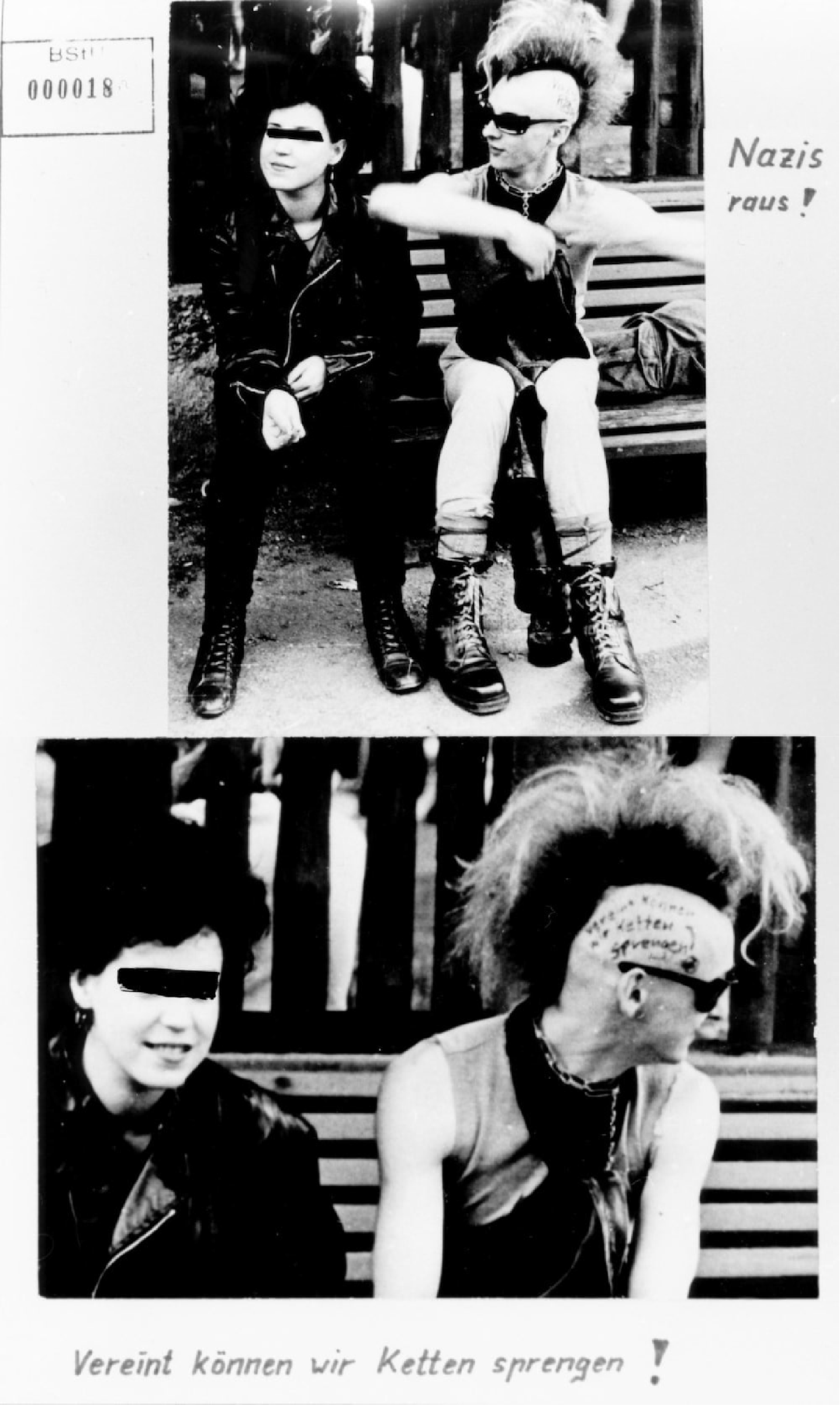
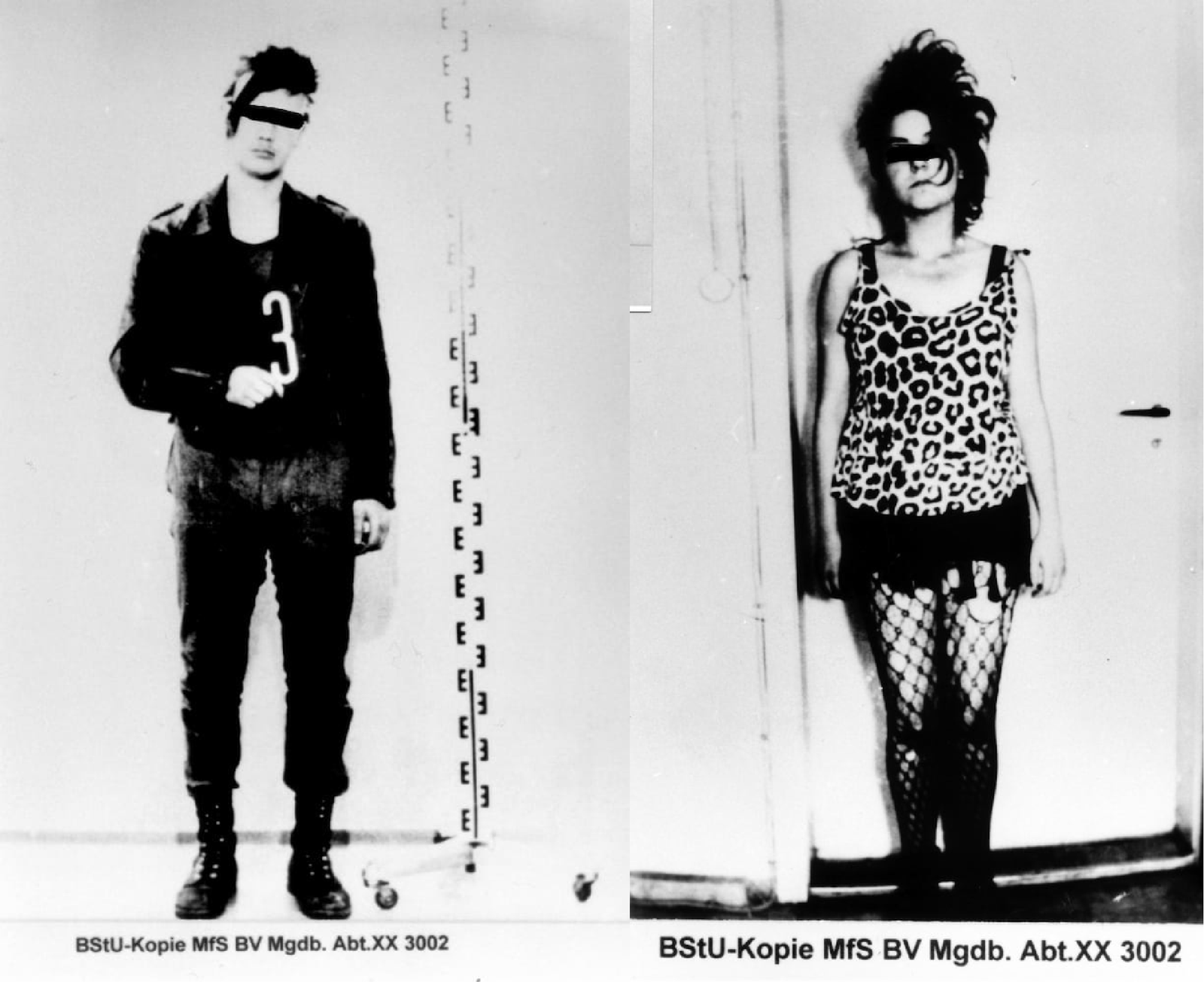
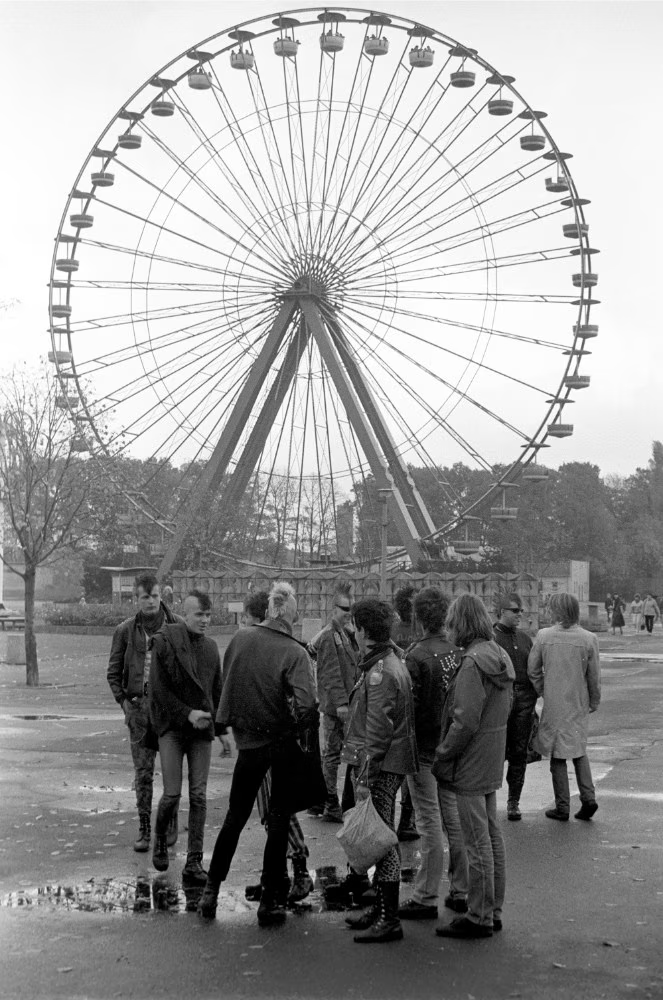
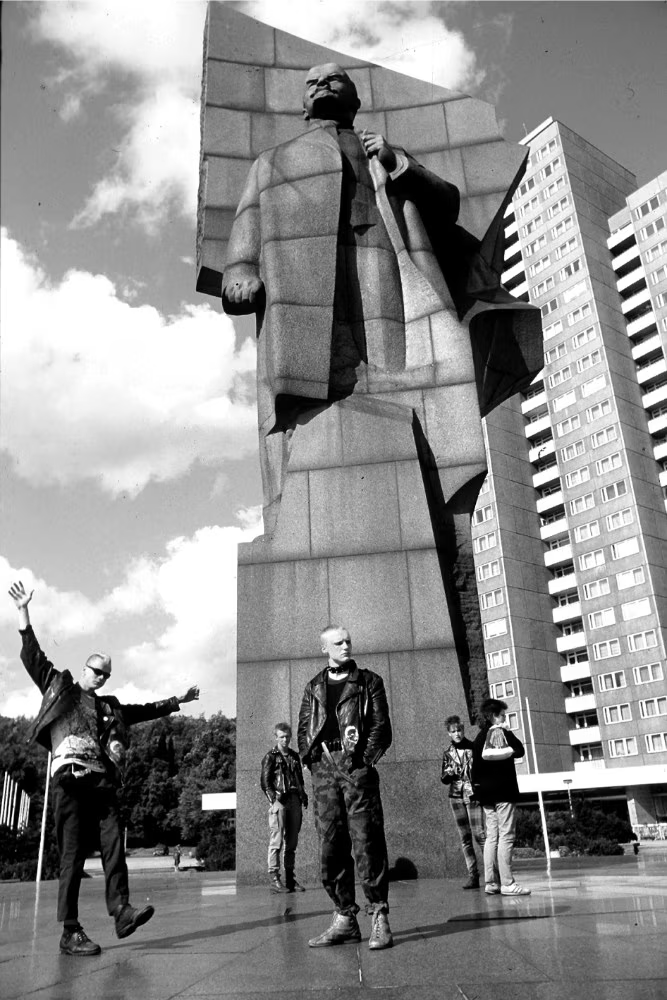
East German punk arrived through forbidden frequencies — BBC and RIAS radio signals drifting over the Wall, bootleg cassettes passed between friends. By 1981, the Stasi estimated a thousand punks in the GDR. That was enough to begin specifically targeting them. The authorities launched Härte gegen Punk — personally signed by Stasi chief Erich Mielke in August 1983. Bands were banned from public spaces. Informers were embedded in the scenes, sometimes joining the bands themselves. Being a punk meant expulsion from school, blacklisting from employment, or forced military conscription. Jana Schlosser of Namenlos served two years in Stasi prison for comparing the secret police to Hitler's SS. Juergen Gutjahr of Wutanfall recalls being tied up, bagged, and beaten in a forest by Stasi officers at seventeen. Two of his bandmates later turned out to be informants.
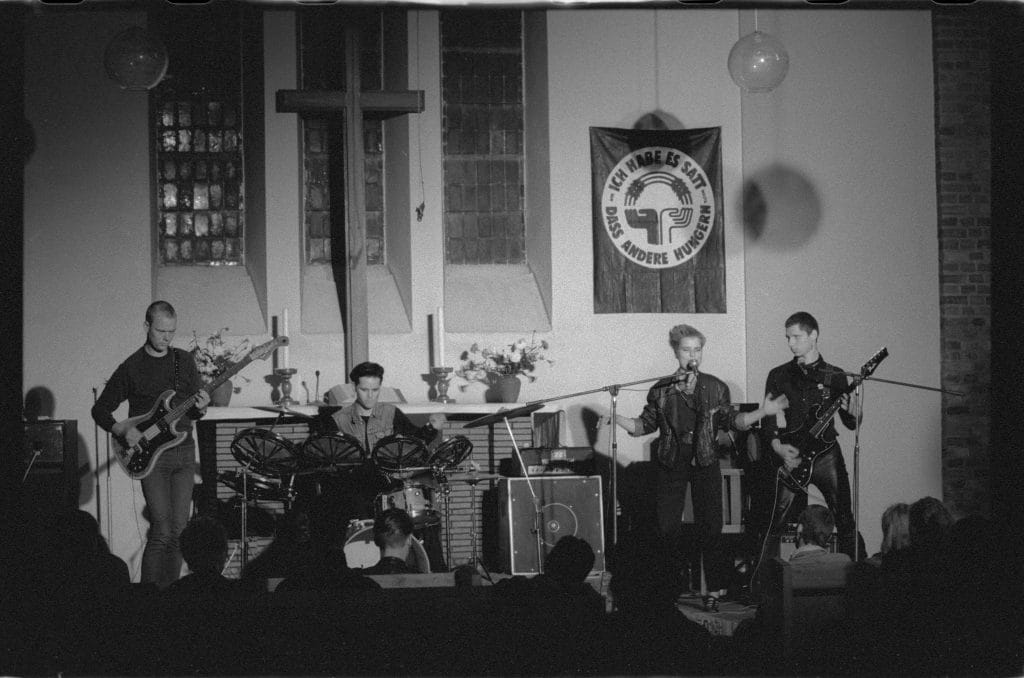
The scene survived by retreating into the one institution the state was afraid to touch: the Protestant Church. Shows were held under the cover of Bluesmessen — church services technically exempt from censorship laws — drawing hundreds of young people who came not for God, but for guitars.
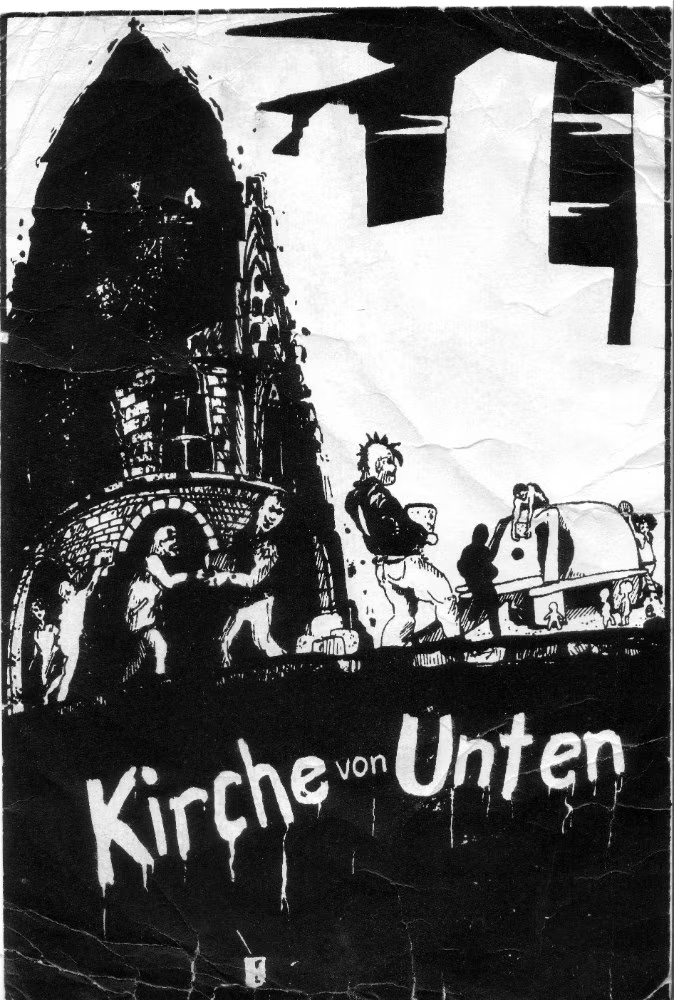
It was inside these spaces that the scene began to change. What had started as aesthetic rebellion slowly collided with the other dissidents sheltering in the same buildings: peace activists, environmental protesters, anti-militarist groups. The punks who survived the crackdowns came out of jail more politicized, not less. Out of this convergence grew Kirche von Unten — the Church from Below — founded in 1988 in the pastoral house of St. Elisabeth Church. Despite its name, it was an atheist anarcho-punk collective, using the church's protection to stage protests, publish samizdat, and build a resistance network the state couldn't fully see. On the eve of the revolution, a Stasi report identified Kirche von Unten as the single most threatening activist group in the country. The following year, punk was named the biggest youth problem in the GDR.
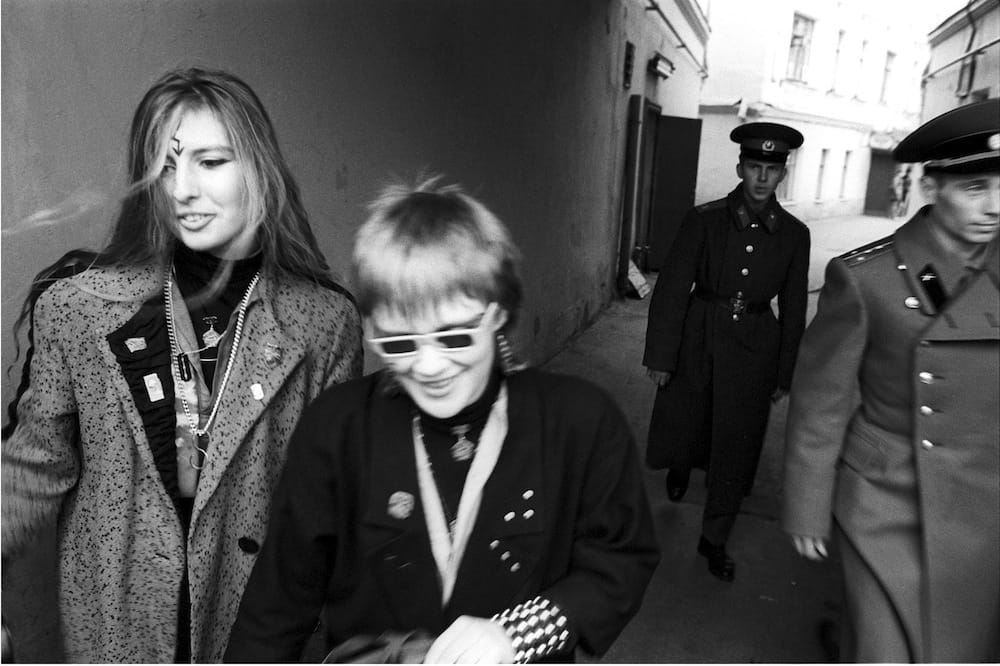
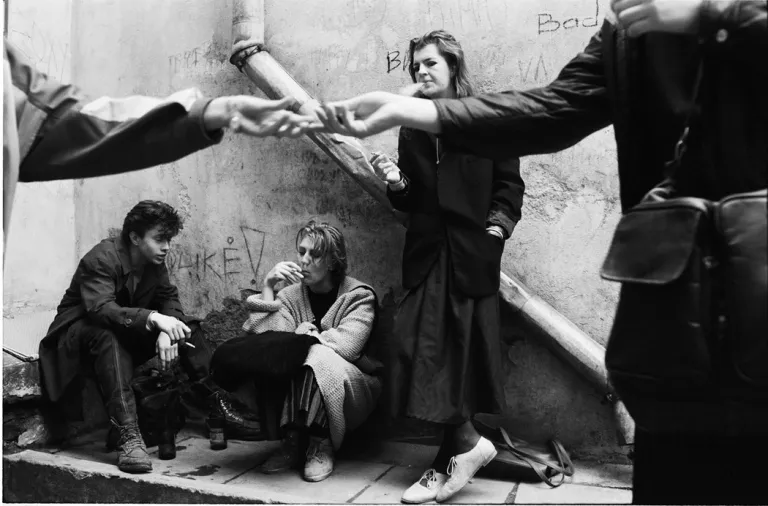
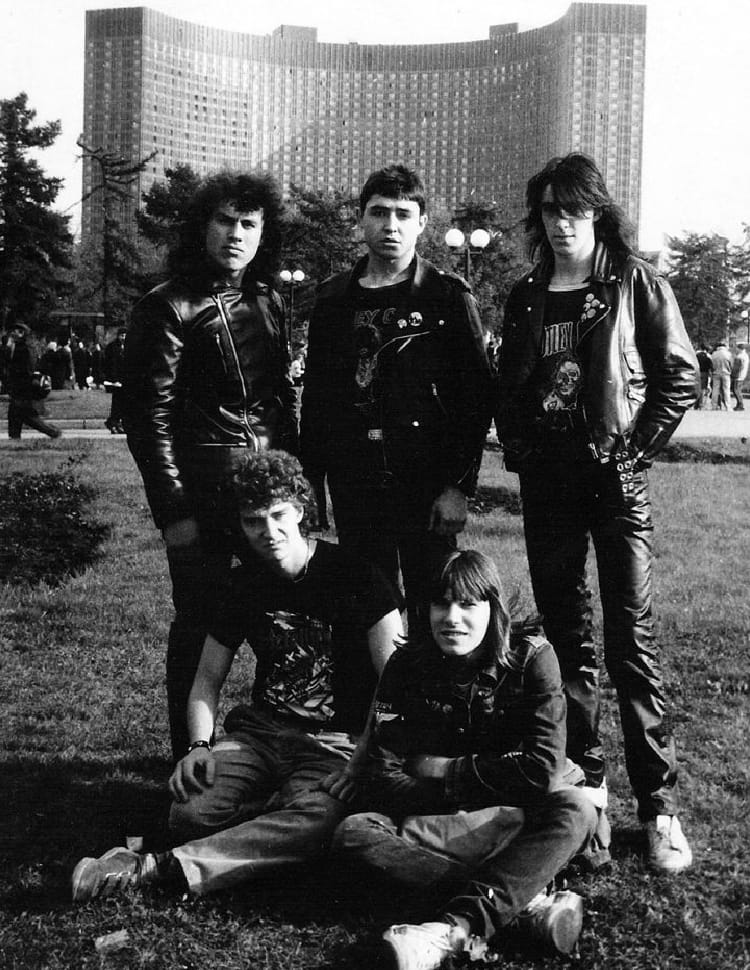
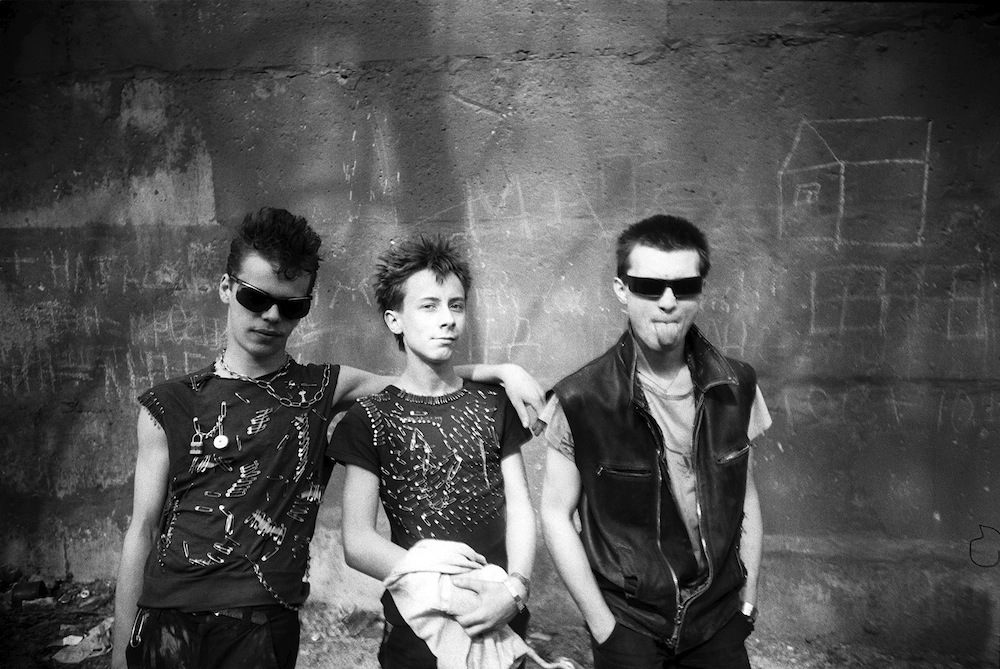
In the Soviet Union, the same logic played out on a larger scale. Punk arrived as contraband. The Leningrad Rock Club, built and overseen by the KGB in 1981 to monitor anti-Soviet behavior, was used by the bands anyway. Musicians passed tapes like letters and listened to Voice of America through static.
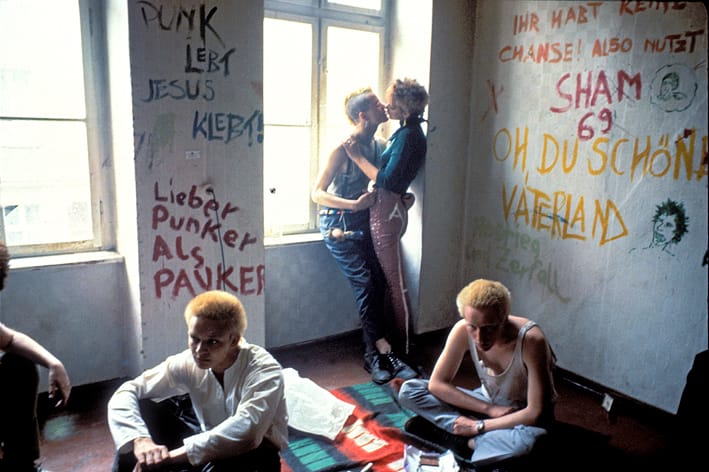
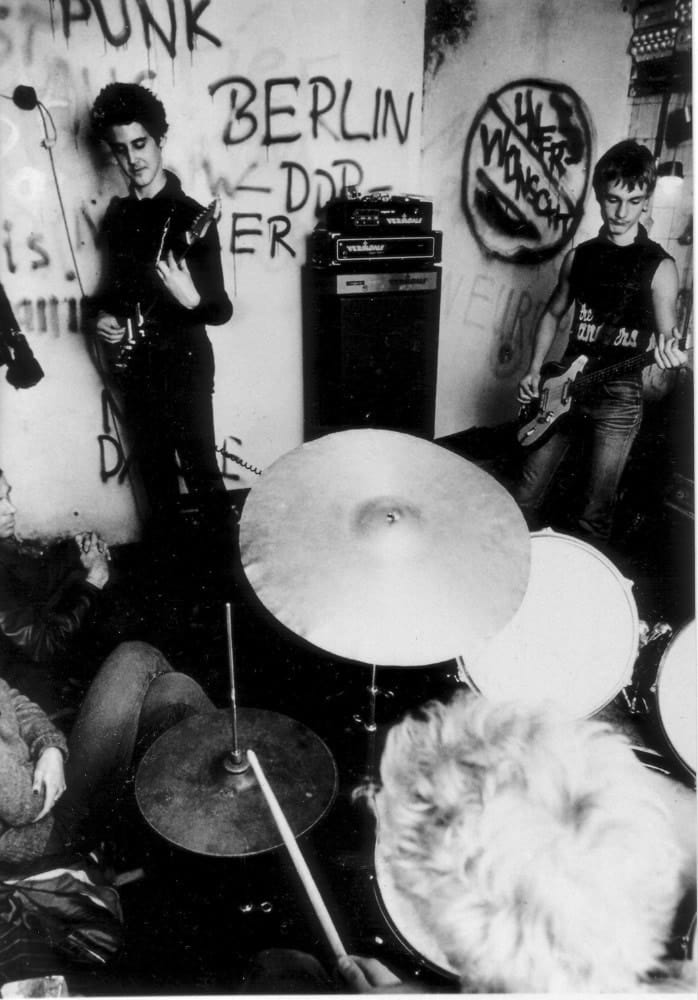
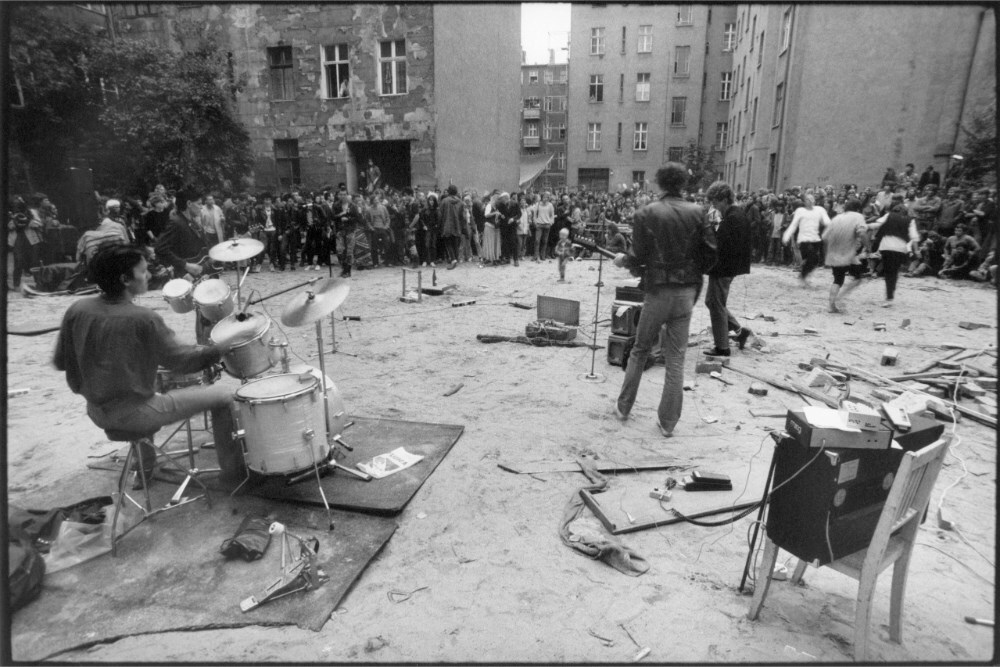
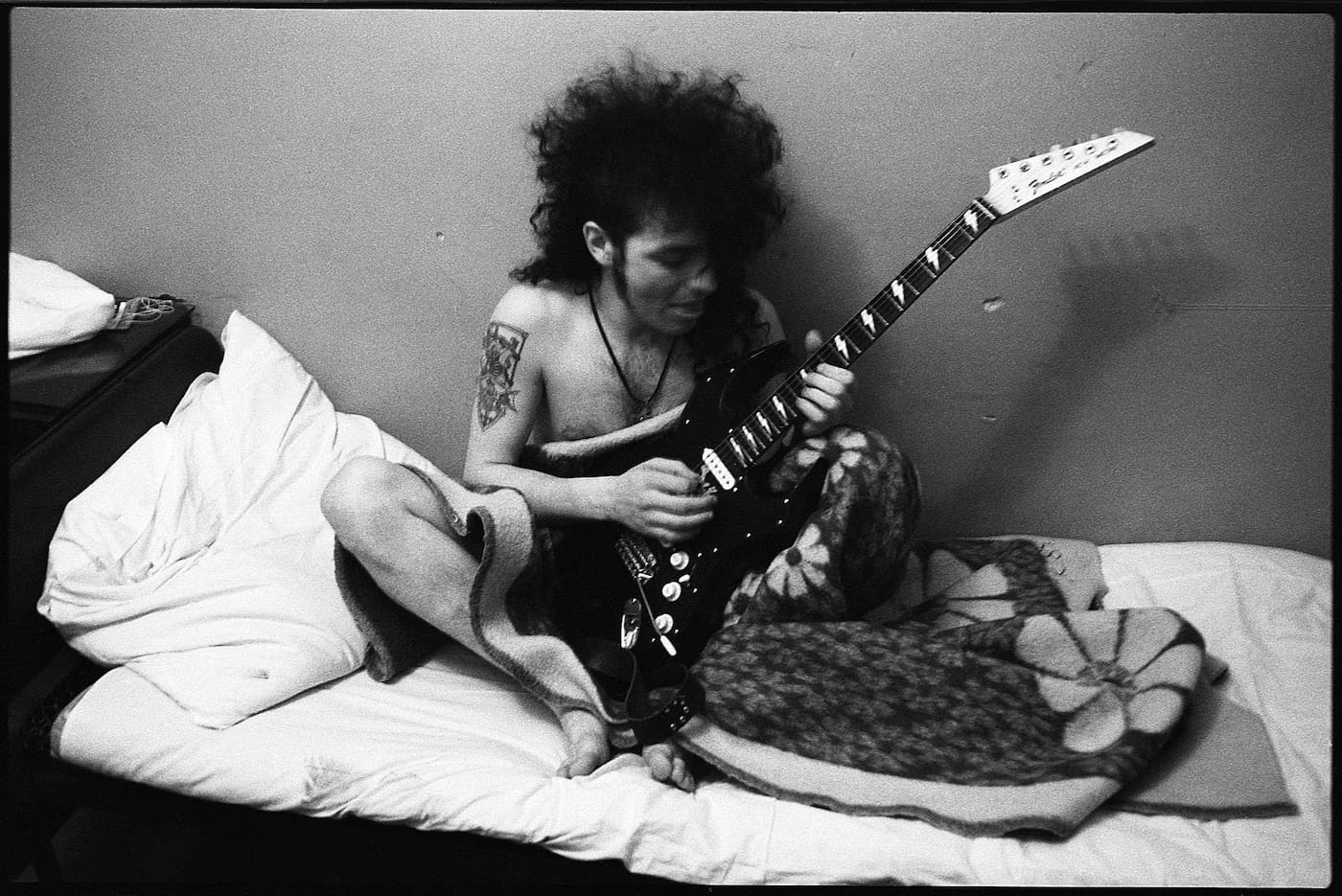
Backyard concert, Prenzlauer Berg — 1982. Every show was illegal. Every photograph was evidence.
The Distance Between Them
In West Berlin, rebellion was something you could afford. The subsidized rents, the conscription exemption, the open stages — all of it created conditions for a scene that was genuinely radical but ultimately protected. You could wake up the next morning. You could make a record. You could become Nick Cave.
In East Berlin, punk was a bet you made with your body.
When the Wall fell in November 1989, the two streams merged. Former East Berlin punks ran the clubs. The underground networks became the infrastructure for the techno scene that followed. West Berlin's bohemian energy and East Berlin's hardened dissidence collided into something that would define the city for the next thirty years.
But before that, they were two different answers to the same question: what do you do when the world you live in is not the world you can accept?
One answer was to party until it changed.
The other was to fight until it did.
Inquiry