Wasteland Mechanics
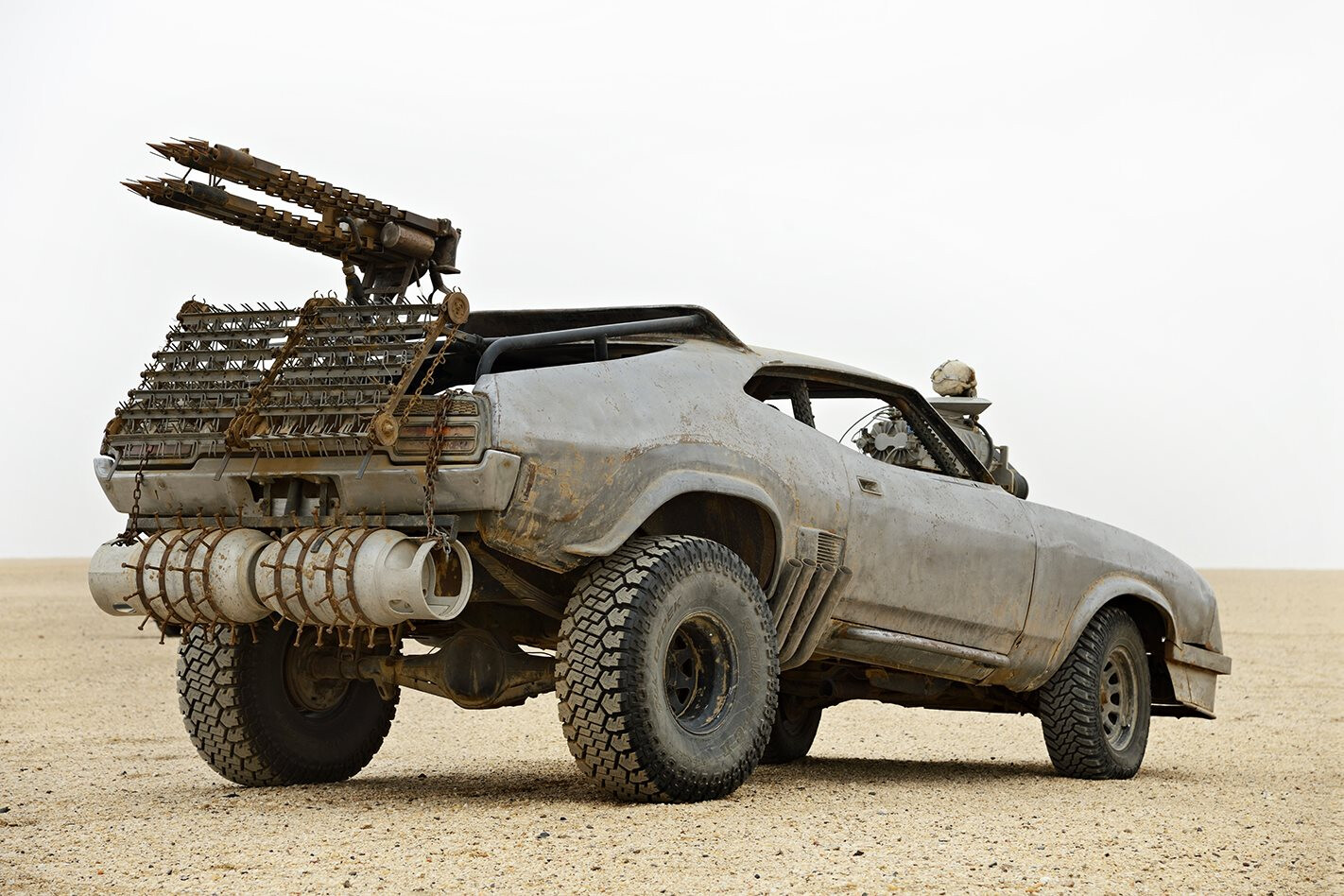
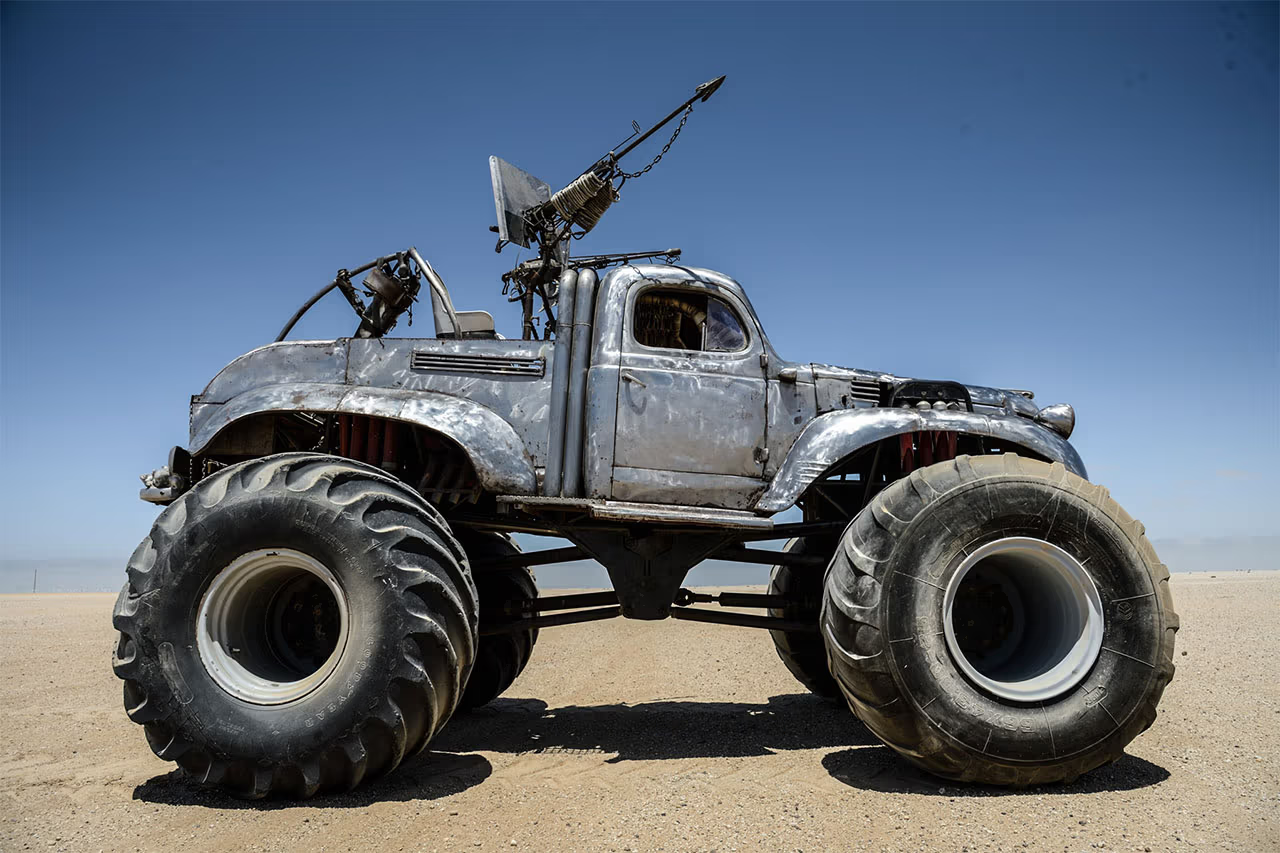
Cars on Mad Max: Fury Road (Left - Razor Cola, Right - Bigfoot) (source: Warner Bros)
I always go back to that chase sequence in Fury Road. The Doof Warrior hanging from bungee cords over a rolling wall of speakers, playing a flamethrower guitar made out of a bedpan and a French trumpet. The thing about those vehicles isn't just that they look cool on screen—it's that you can tell they were actually built. It’s rusted scrap metal, heavy steel plates, and chains bolted onto junkyard frames. It’s a very specific, dirty kind of DIY that you just can't fake with CGI. And the wild part is, this exact kind of mechanical survivalism isn't just a Hollywood fantasy. People have actually been building these things out on a dried lakebed in Nevada for decades.
It didn’t even start out looking like a post-apocalyptic movie. Back in 1986, it was literally just a handful of people (Larry Harvey and Jerry James) burning a wooden man on a beach in San Francisco. A purely spontaneous, do-it-yourself hangout. Harvey's brother later described those early gatherings plainly: "It was a Dadaist gathering of a lot of do-it-yourselfers who organized eccentric happenings." No financial reward. No social recognition. Just the thing itself. That description contains the entire DNA of what Burning Man would become.
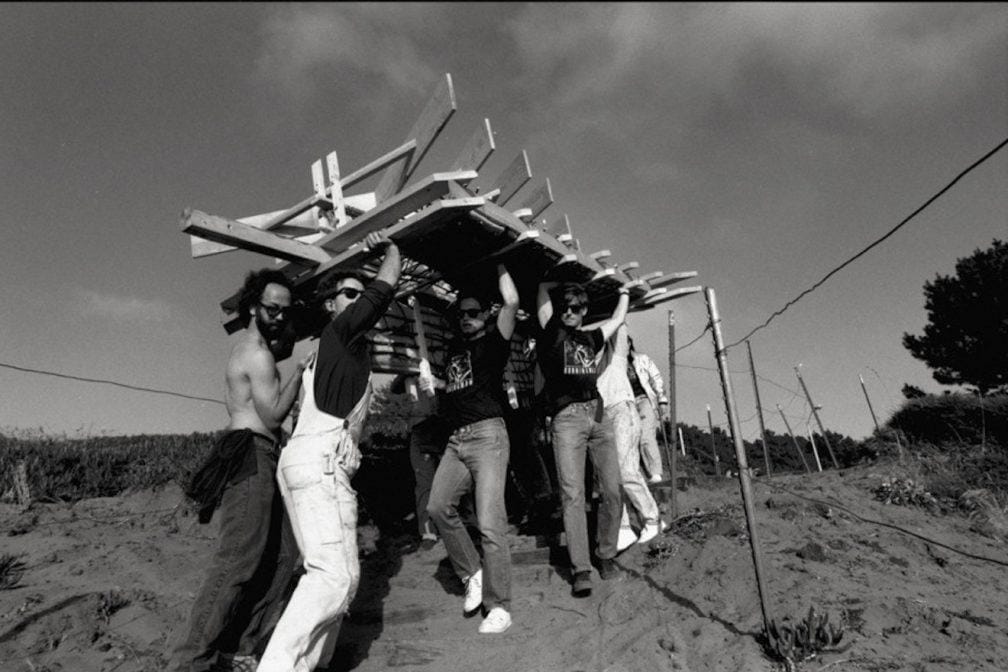
Early Burning Man Festival, 1989, Baker Beach (source: Stewart Harvey)
But when a group called the Cacophony Society—basically a loose network of urban explorers and culture jammers—moved the whole thing to the Black Rock Desert in the 90s, the vibe completely shifted. The alkaline flats of Nevada already look exactly like the end of the world, so the people showing up naturally leaned into that visual. They were pulling from this old bohemian idea that the most honest work happens when there's no money on the line. No brands, no sponsors. Just building something massive because you want to see if you can pull it off.
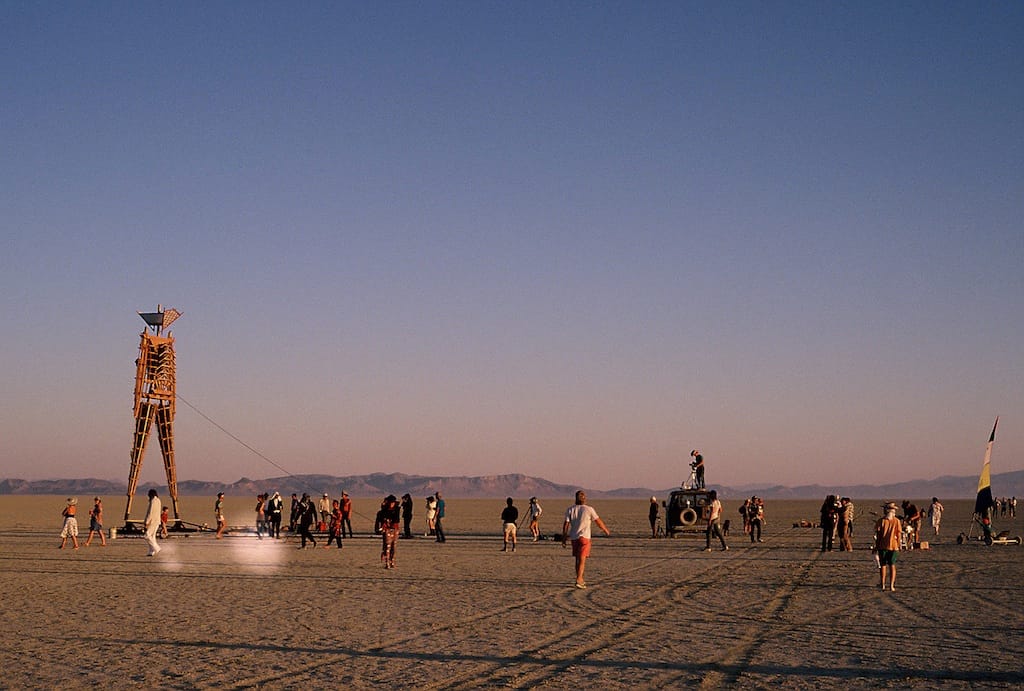
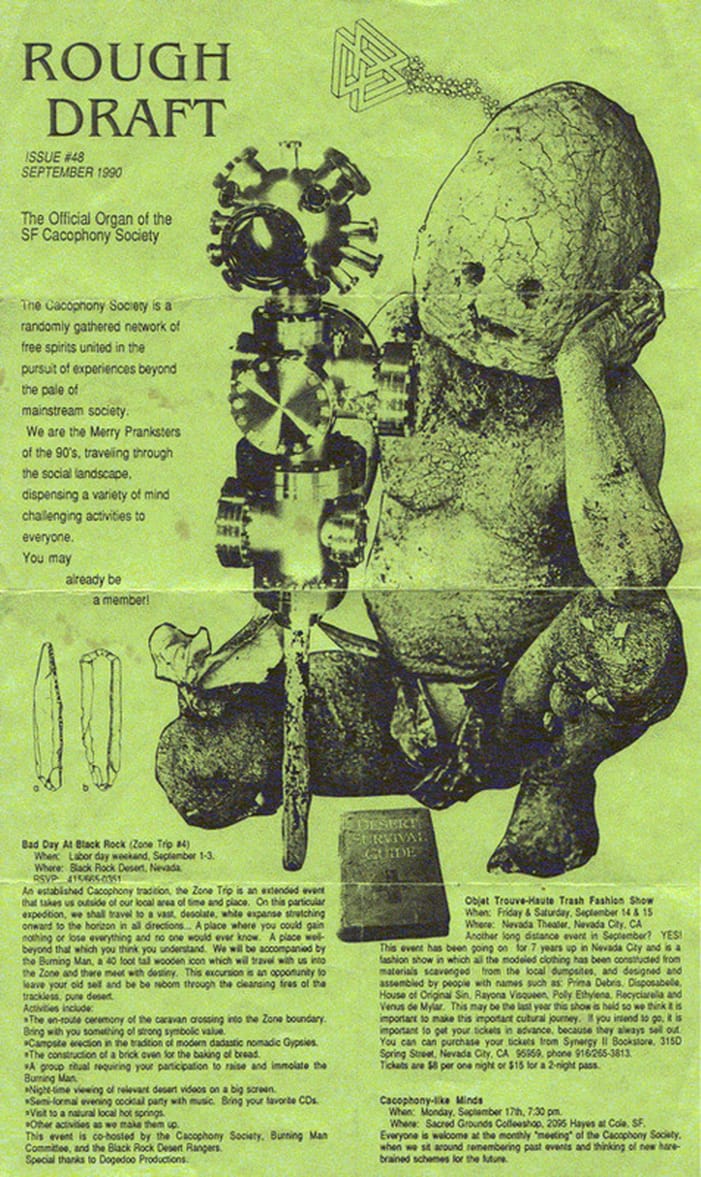
(Left) Burning Man Festival, 1990 (source: C. Nick Lynch) (Right) Rough Draft, Newsletter Published by Cacophony Society (source: Cacophony Society)
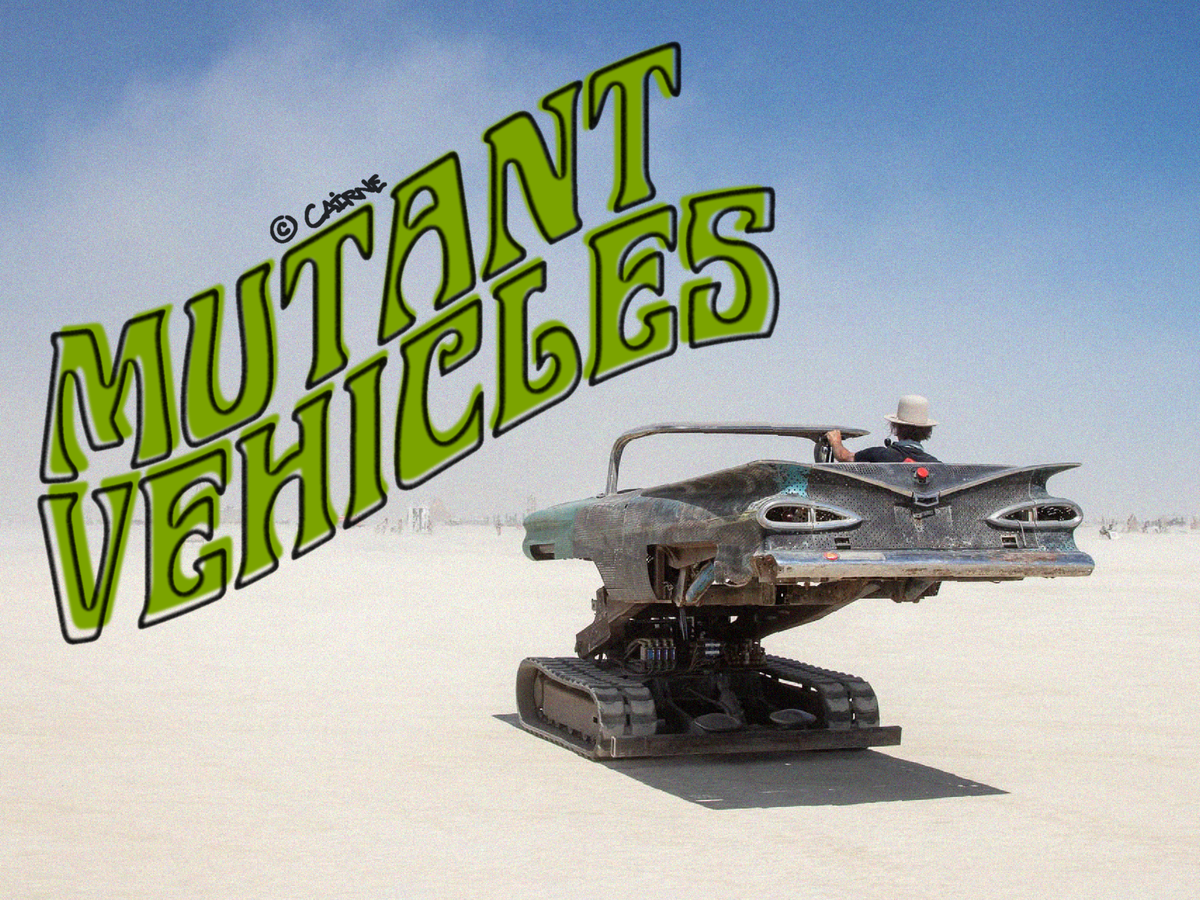
As the event blew up in size, they eventually had to ban regular driving entirely—mostly just to keep the choking dust down and stop people from getting run over. The only exception they carved out was for mobile art. But to keep things strict and make sure people weren't just slapping some neon lights on a stock Honda Civic and calling it a day, they set up the Department of Mutant Vehicles (the DMV) back in 1999.
If you actually want a permit to drive around the playa, you have to prove your build qualifies as a "Mutant Vehicle." And the baseline rule is pretty uncompromising. You have to mutate the thing so far past its original frame—chopping it up, welding on entirely new structures, completely burying the base chassis—that nobody can even guess what it started out as.
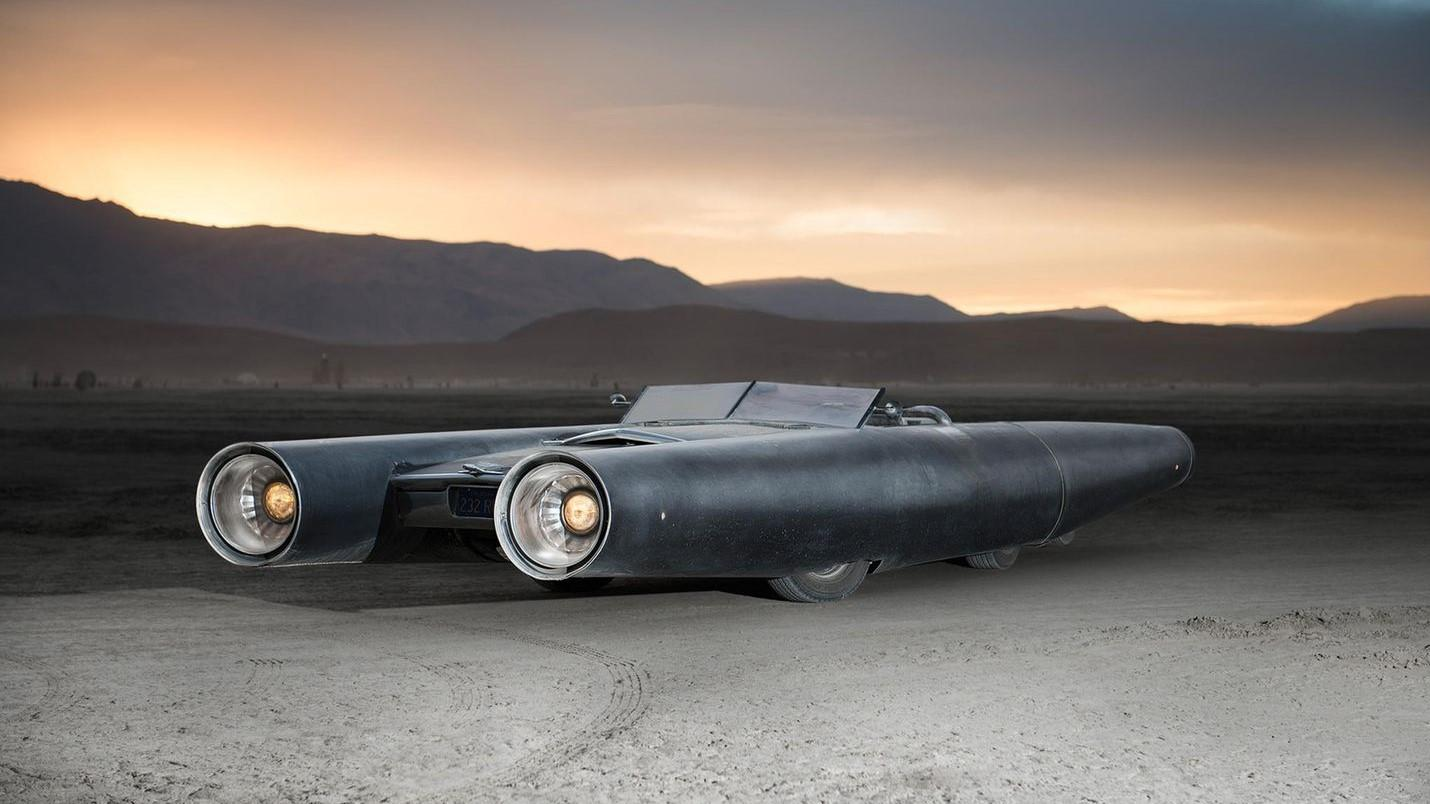
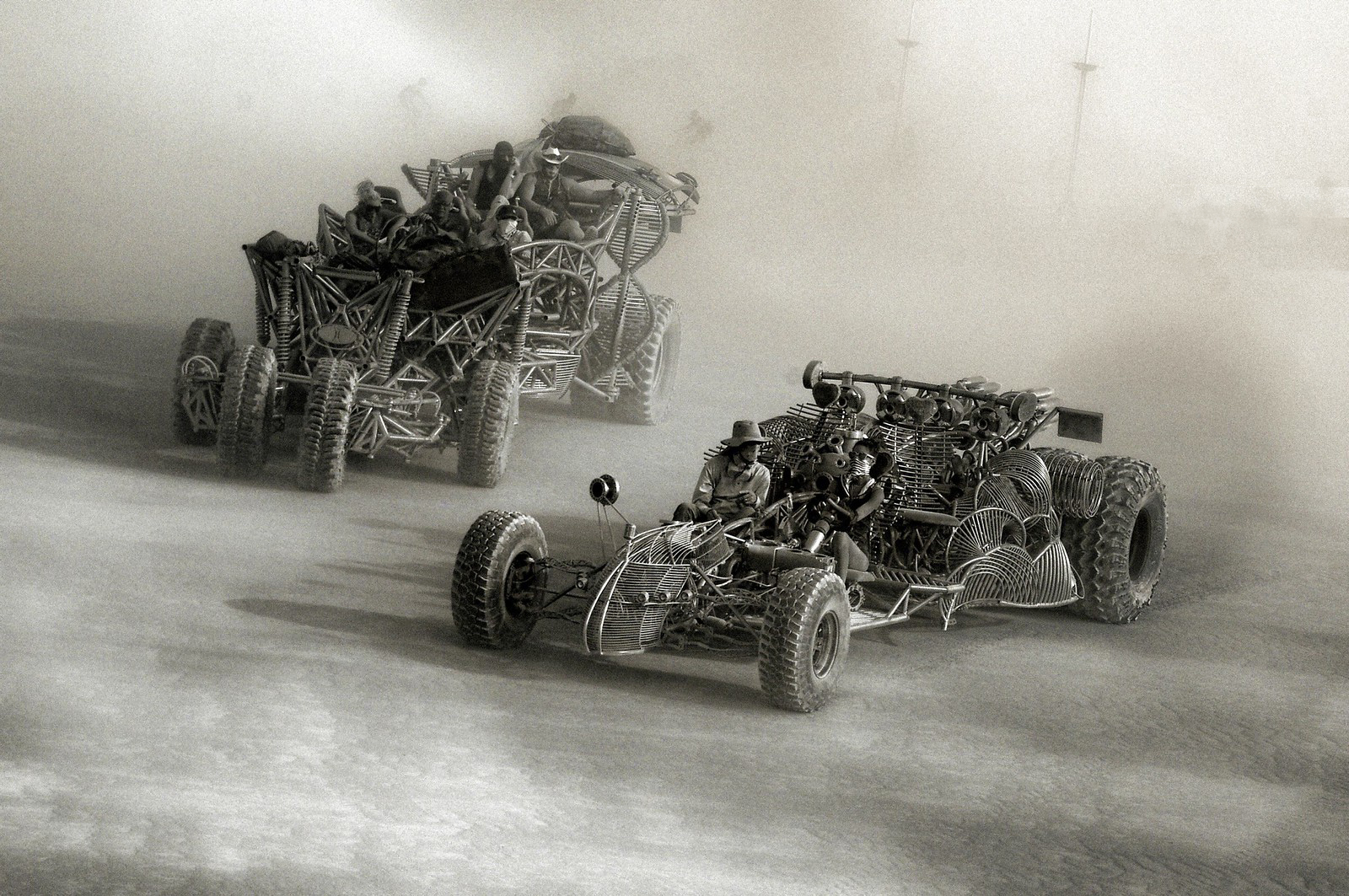
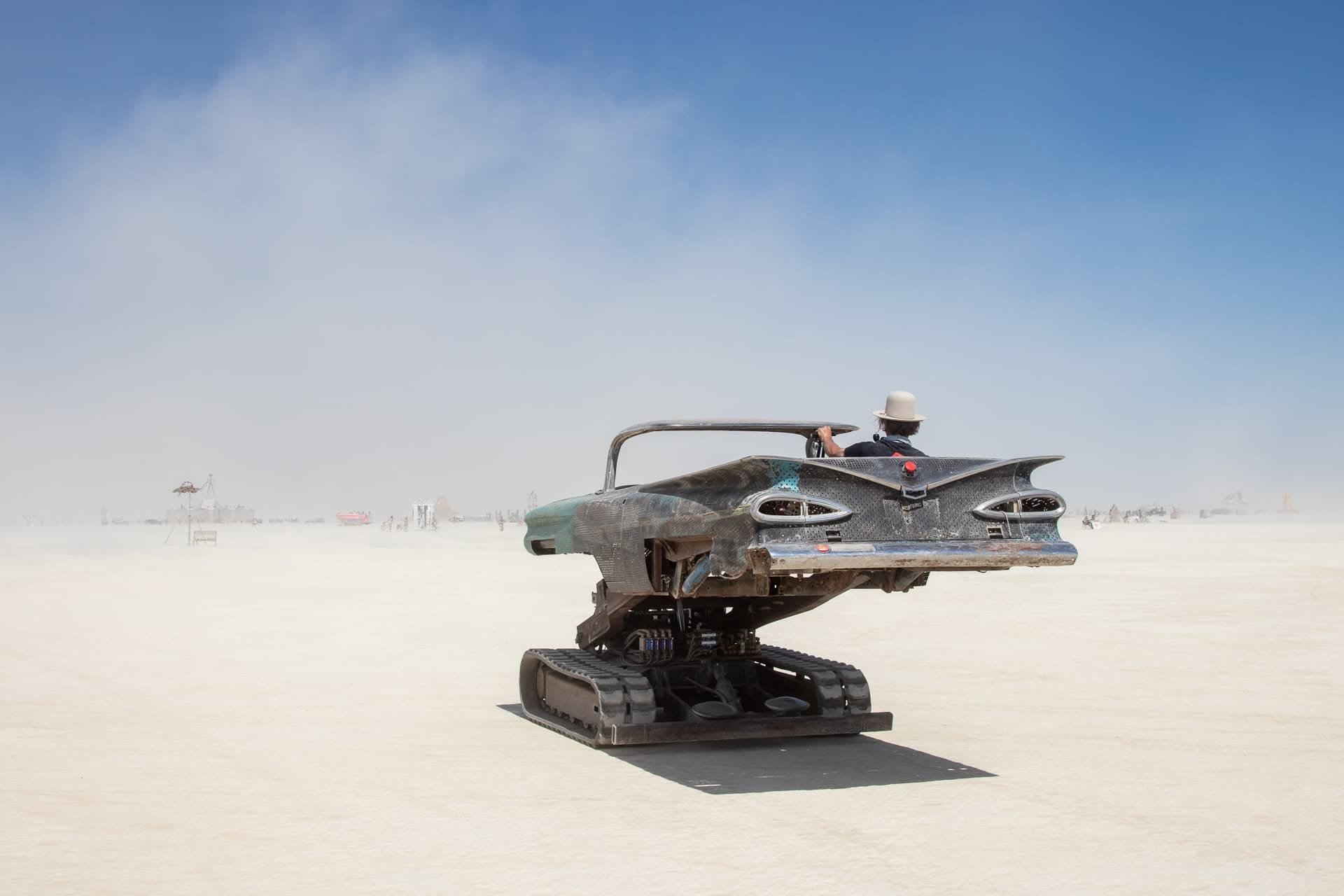
A lot of the cars are these crazy neon-lit party boats, but the ones I honestly can’t stop looking at are the purely mechanical ones. The builds that look like rolling fallout shelters. You see rusted chassis reinforced with whatever salvaged steel pipe someone could find, lookout towers bolted straight to the flatbeds. They look totally utilitarian, built to survive the insane alkaline dust that eats normal car engines alive. It’s pure survivalist design, usually hacked together in some Oakland warehouse by a random mix of aerospace nerds, pipe organ restorers, and first-time welders.
The actual process of building these things borders on obsessive. It's DIY taken to the absolute extreme. You might need a master welder, but if the only person in your crew with free time is a woodworker, you just figure out a way to solve a structural problem with wood. They spend months fighting over blueprints and wiring diagrams, just to drag this massive thing out to a desert that has zero infrastructure. When you really think about it, the vehicle itself is almost just a byproduct. The real point is the friction of building it. By the time one of these heavily armored, scrap-metal flatbeds actually rolls across the dirt, it doesn't just feel like festival art. It’s a physical record of people figuring out how to build their own reality from scratch, using whatever heavy, rusted parts they could get their hands on.
Inquiry