
Raw Utility: Fisherman

Pragmatism is the original design language. Long before material libraries or mood boards, there was a clear, unyielding problem—bitter cold, high winds, salt water, hard physical labor—and someone who had to solve it with whatever was in front of them. Fishermen didn't set out to invent fashion. They engineered function so precise that the apparel industry has been borrowing from it ever since.
This is where survivalism and genuine utility intersect. Both are built by workers, for workers, in response to conditions that don't negotiate. Across three distinct cultures and three completely different material solutions, necessity didn't yield uniform results. It produced absolute specificity—every fiber, stitch, and treatment shaped by the exact nature of the water it was built to withstand.
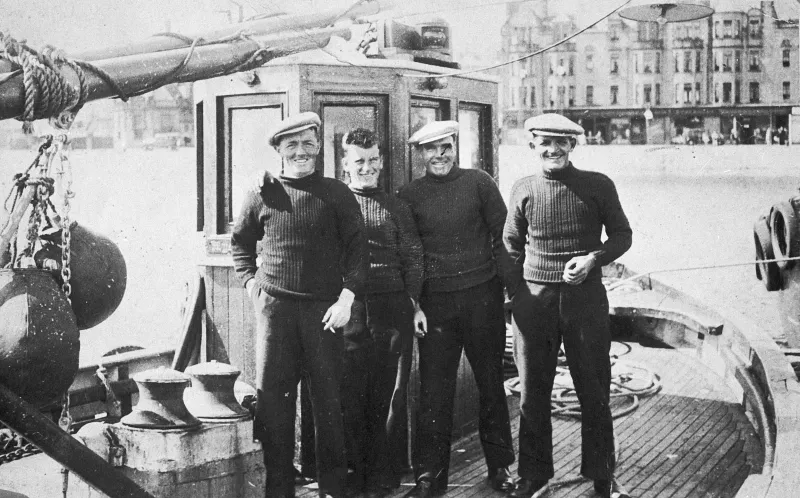
The Aran Sweater & The Guernsey
Sitting at the edge of Galway Bay on Ireland's westernmost point, the Aran Islands face the full force of the Atlantic. The knitwear born here wasn't designed—it was demanded by the environment. The original Aran sweaters were crafted from unwashed báinín, a heavy wool yarn that retained its raw lanolin. By skipping the scouring process, the naturally occurring sheep's oil stayed intact, turning the textile into an inherently water-resistant shell.
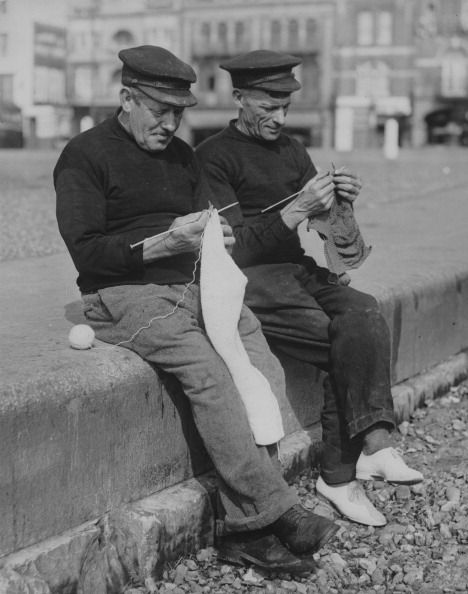
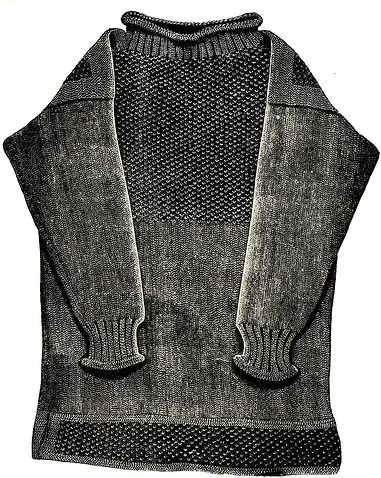
(Left) Fishermen Knitting Their Own Wool Gears (source: unknown) (Right) Guernsey Fisherman's Sweater (source: unknown)
A traditional Aran sweater contains around 100,000 dense, structural stitches and can absorb up to 30% of its weight in water before feeling damp. The density isn't a decorative choice; it's the garment's thermal architecture.
Across the Channel, the Guernsey approached the same problem from a different angle. These pullovers were tightly knitted from 5-ply worsted wool—known on the docks as "Seamen's Iron"—using a high-gauge process that rendered the fabric almost entirely windproof. Underarm diamond gussets were added to allow full mobility on deck, while the torso and sleeves were cut remarkably slim. The narrow fit wasn't an aesthetic preference; it kept excess fabric from getting soaked or caught in heavy ship rigging.
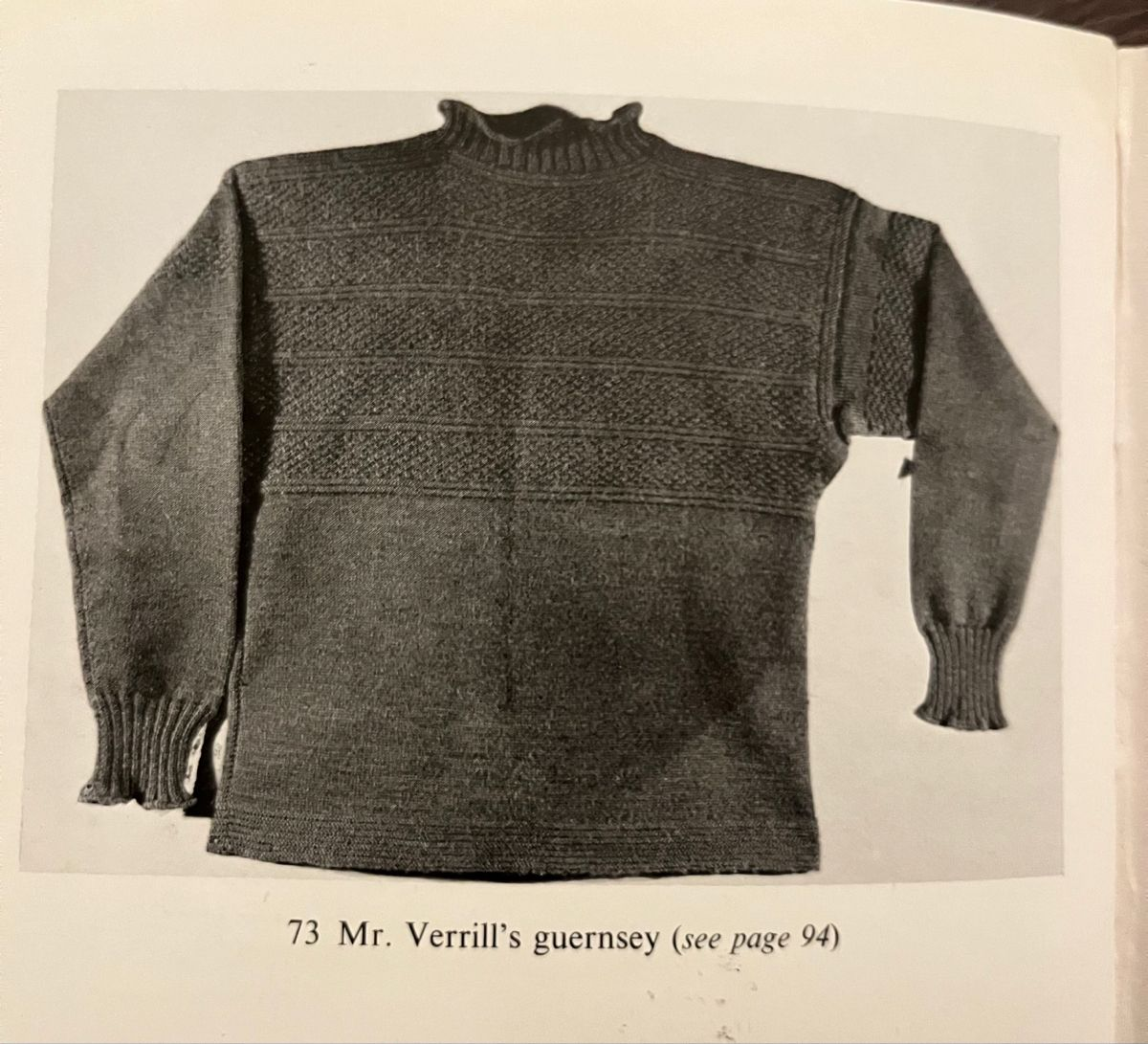
Guernsey Sweater (source: unknown)
Waxed Canvas (Oilskin)
The origins of oiled sailcloth go back to Scottish mariners who noticed that their heavy canvas sails caught the wind more efficiently when treated with linseed oil. Once a sail reached the end of its working life, crews cut up the aged scrap canvas and repurposed it into heavy weather-proof outerwear for life on deck.
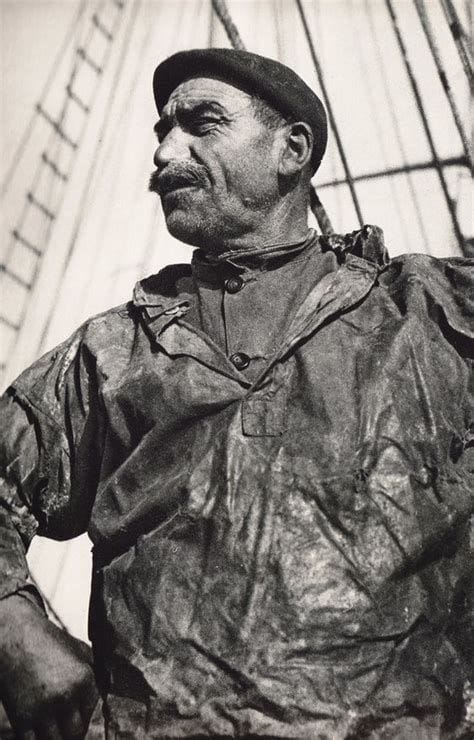
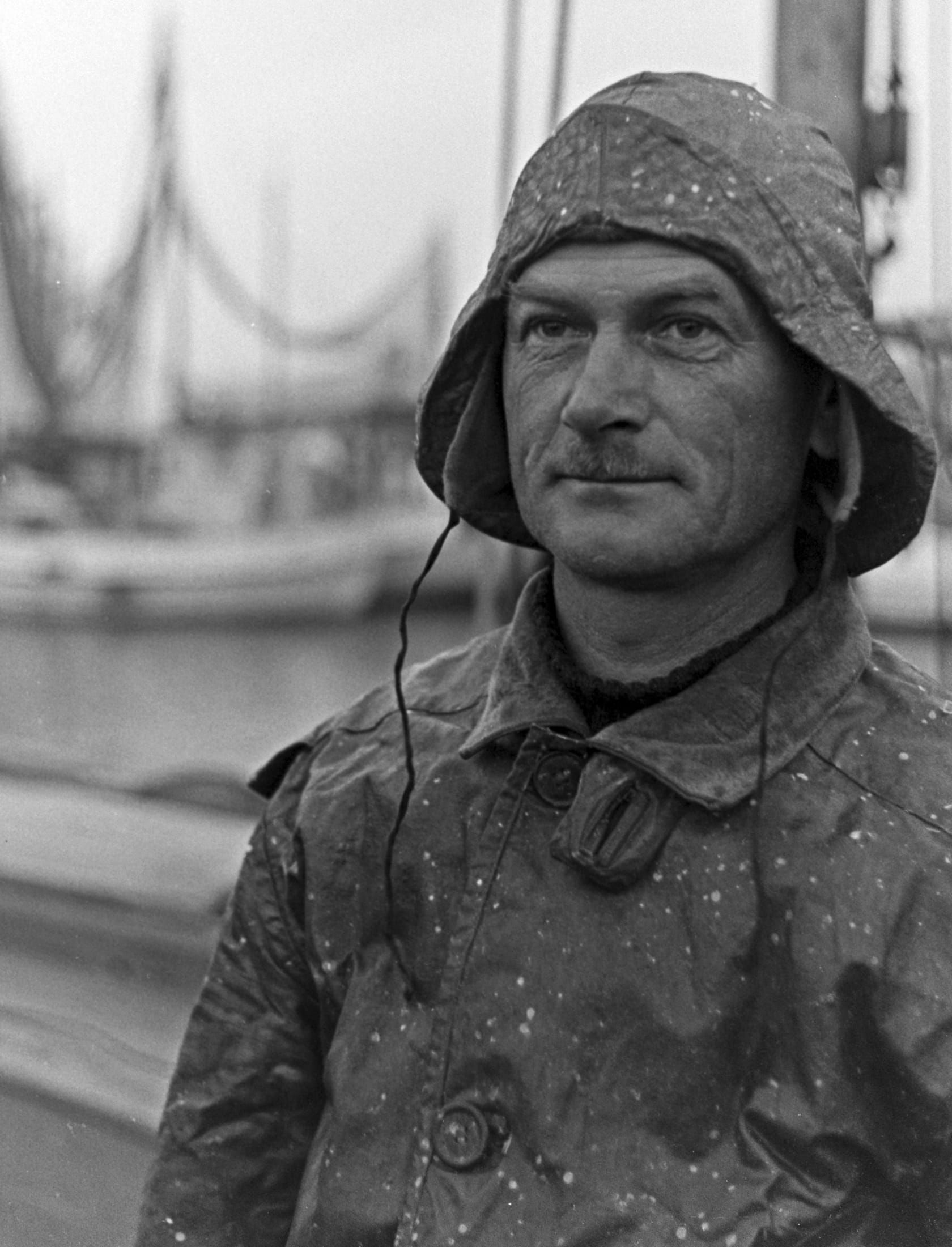
Fishermen in Oilskin or Waxed Canvas Gear (source: unknown)
It was upcycling born out of pure resourcefulness. One distinct side effect of curing canvas with linseed oil was that the oil yellowed over time as it aged and oxidized. That functional quirk is the exact reason fisherman's slickers are traditionally yellow today—a chemical reaction turned into a historical visual benchmark.
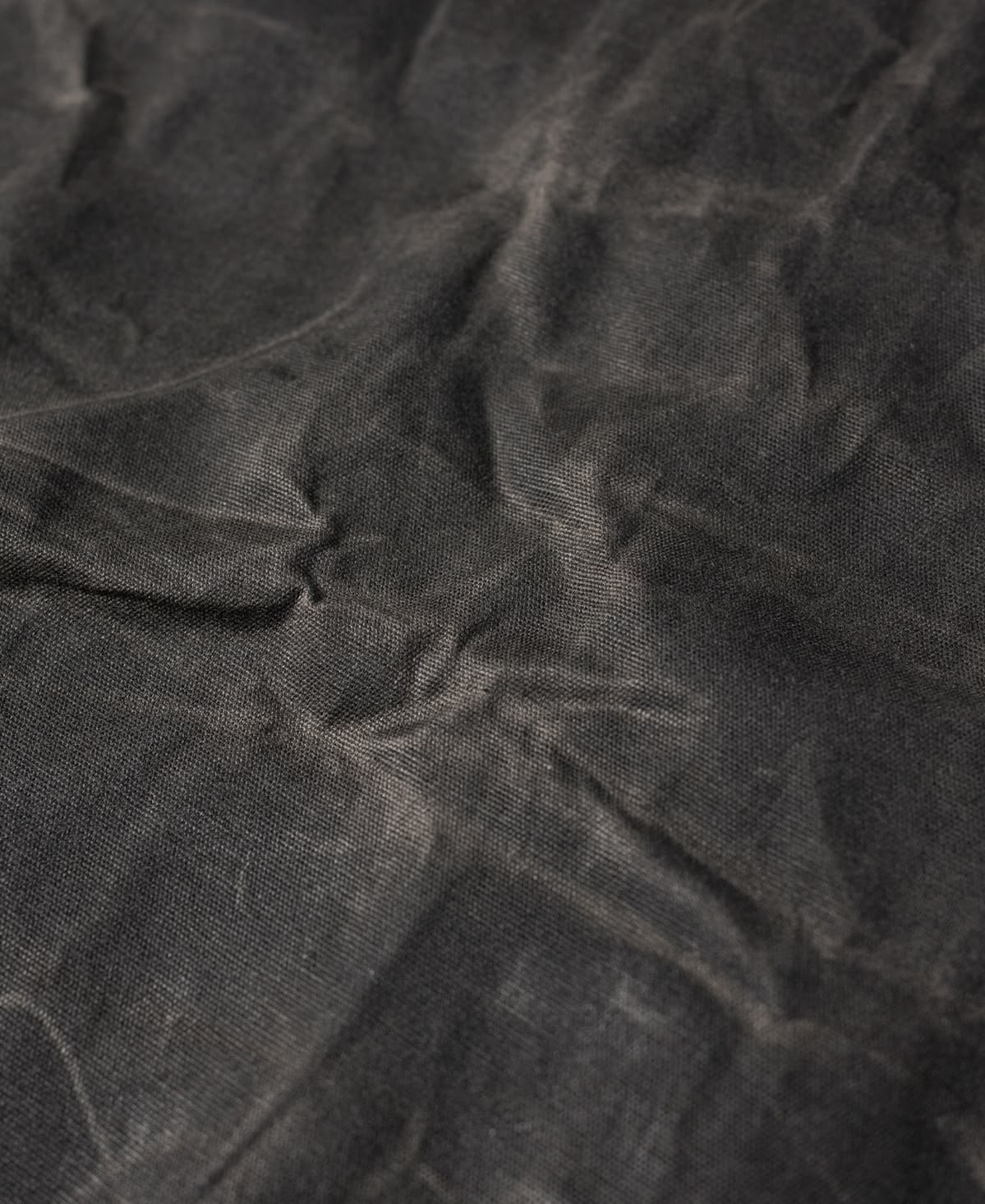
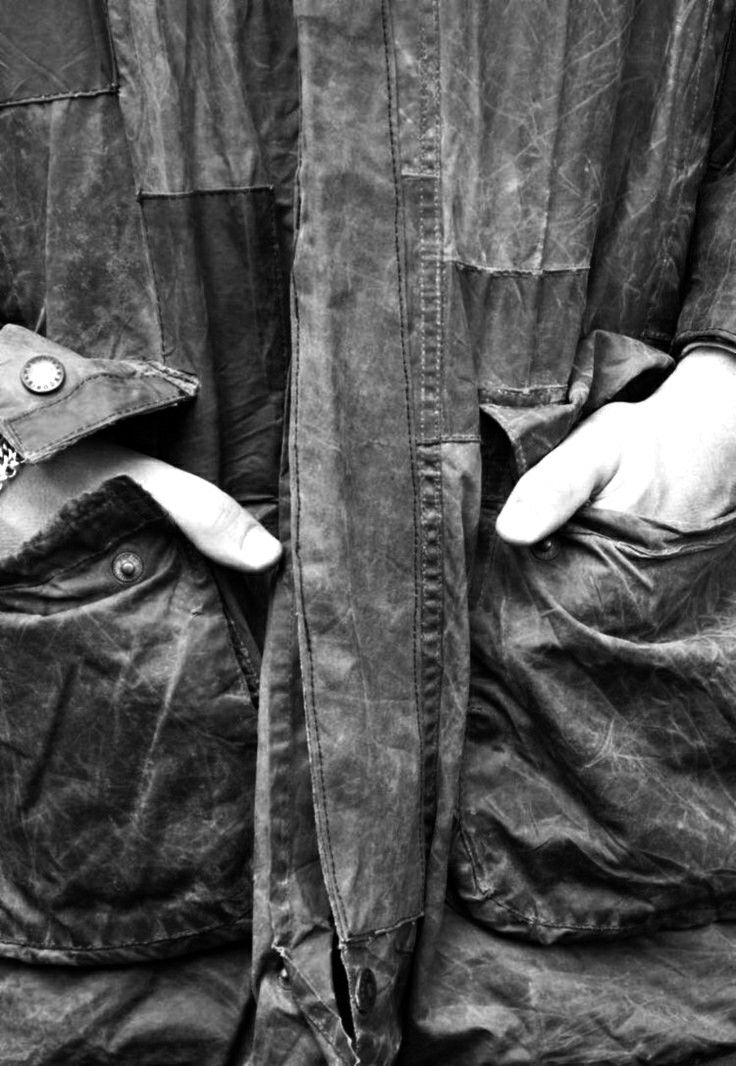
Waxed Canvas (source: unknown)
By the 1930s, paraffin-waxed cotton replaced linseed oil, offering a softer, more pliable hand that didn't stiffen or crack in freezing temperatures. Companies like J. Barbour & Sons, established in 1894 in South Shields, scaled the production of oiled outerwear for sailors, fishermen, and dockworkers. The waxed jacket that commands premium price points in urban boutiques today originated as basic workwear for men who simply couldn't afford to get wet.
Sashiko no Donza
In the coastal fishing communities of old Japan, workers relied on indigo-dyed, hand-quilted coats known as donza. The iconic versions from Awaji Island featured dense, white-on-indigo geometric stitching, crafted by hand to provide structural reinforcement and thermal barrier against sea winds.
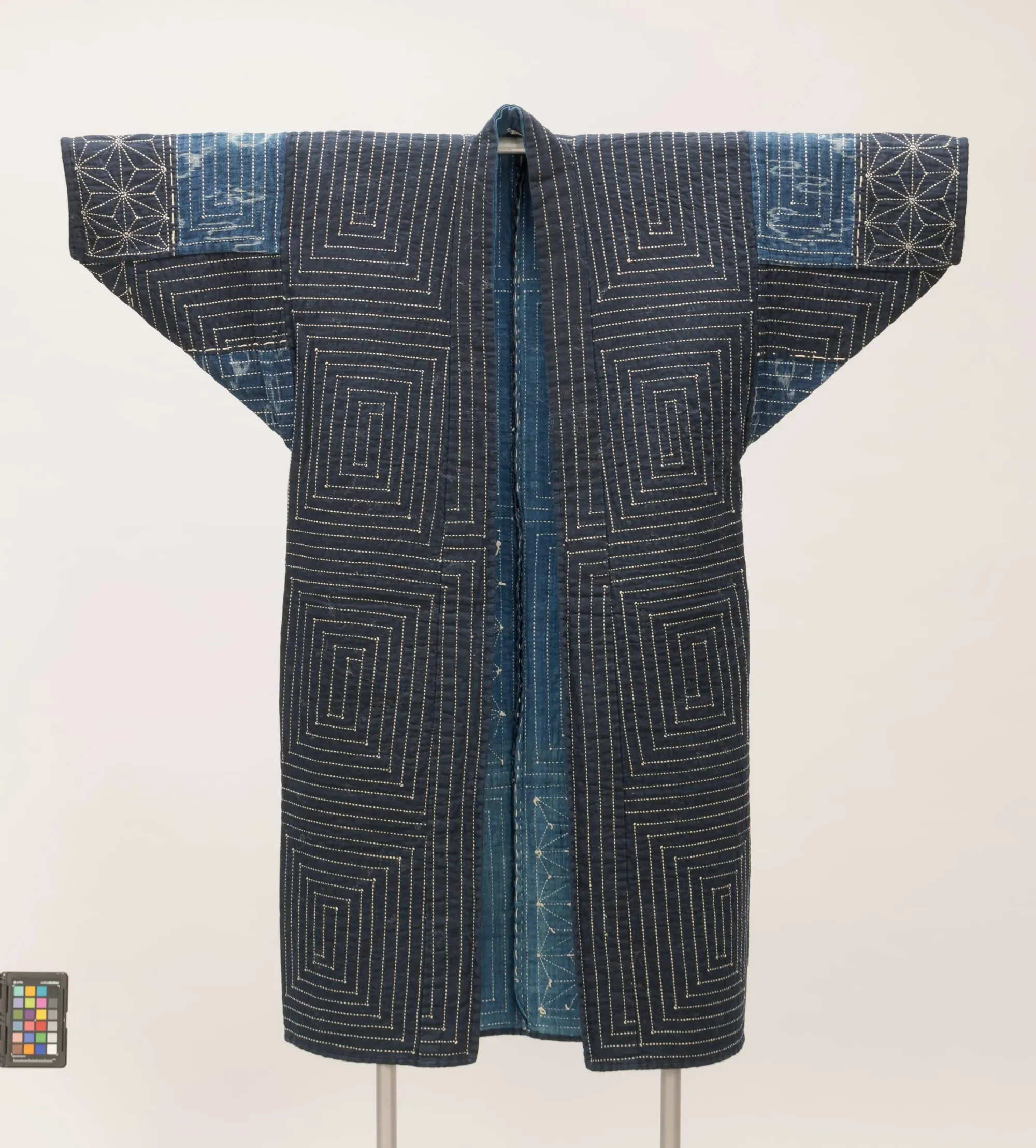
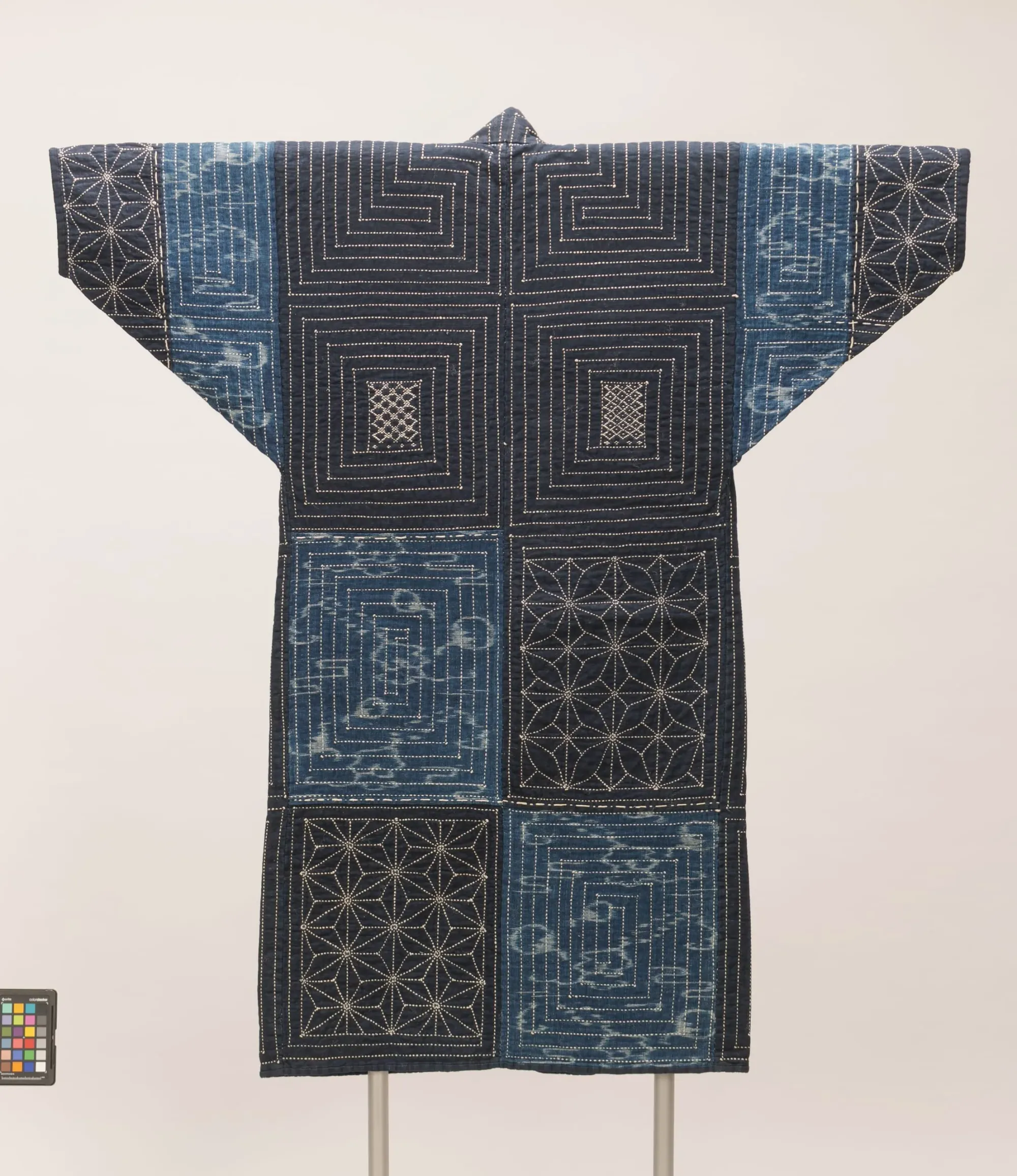
Fisherman's Coat from Early 20th Century (source: LACMA)
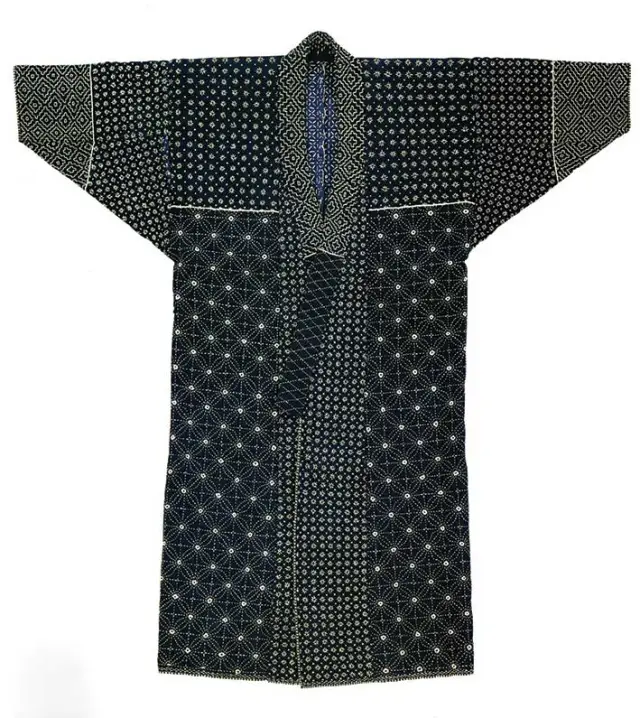
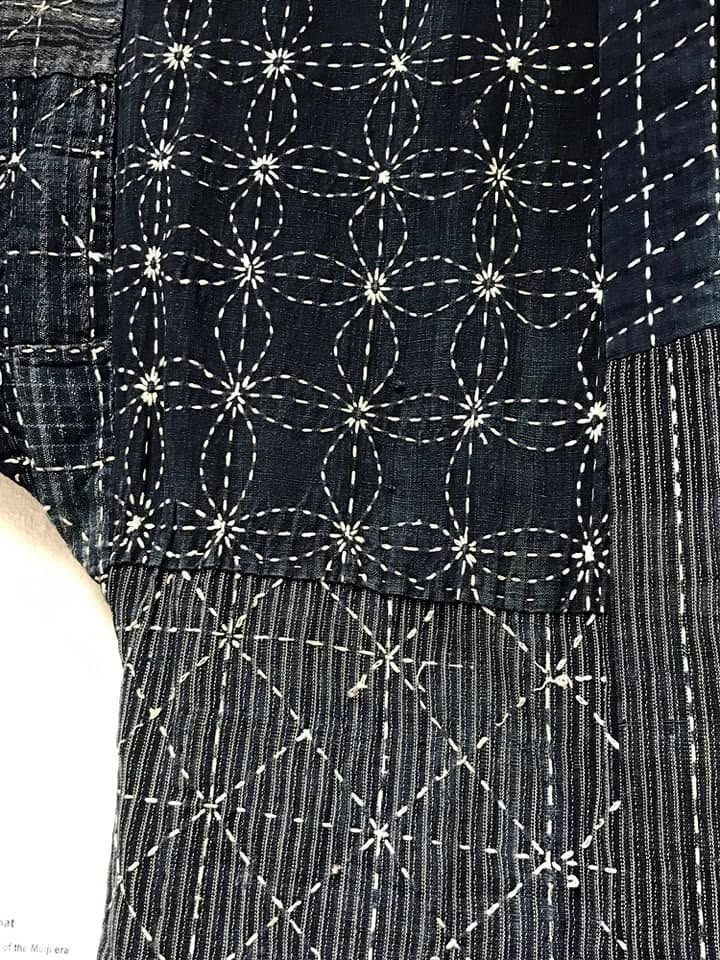
Sashiko no Donza (source: unknown)
Unlike standard Japanese quilting that used raw cotton wadding—which grew heavy and held water when wet—a sashiko no donza was built by layering multiple sheets of coarse cotton or bast fiber fabrics. These layers were bound together using thousands of tight sashiko running stitches. The decorative appearance was secondary; the primary purpose of the stitch density was to lock the layers together, increasing the fabric's tensile strength to survive the constant friction of wet ropes and nets.
The underlying textiles were dipped in natural indigo—a practical treatment, as indigo was known to toughen plant fibers and act as a natural repellent against insects and ocean pests during long days at sea.
Three different seas. Three distinct structural responses. Unwashed lanolin yarn, dense sashiko reinforcement, and recycled sail canvas impregnated with oil. None of it started with a design concept. Every detail started with a physical constraint, and the more accurately it solved that constraint, the longer it endured.
The mistake modern design often makes when referencing these garments is assuming their value lies in their appearance. They look good because they are exact. Strip away the functional purpose behind the construction and you are left with just a silhouette—and a silhouette without its reason for being is eventually just another passing trend.
True design language was never conceived in a studio. Given harsh enough conditions, it invents itself in the field.
Inquiry