Doomsday Product
In the summer of 1959, a Miami couple spent their honeymoon twelve feet underground. Life magazine shot them descending into a 22-ton steel and concrete shelter, designed for two weeks of survival after a nuclear attack. On the table between them: a small wedding cake. Behind them: survival rations, water drums, and a periscope punching through the earth. They are smiling. It isn't forced propaganda.
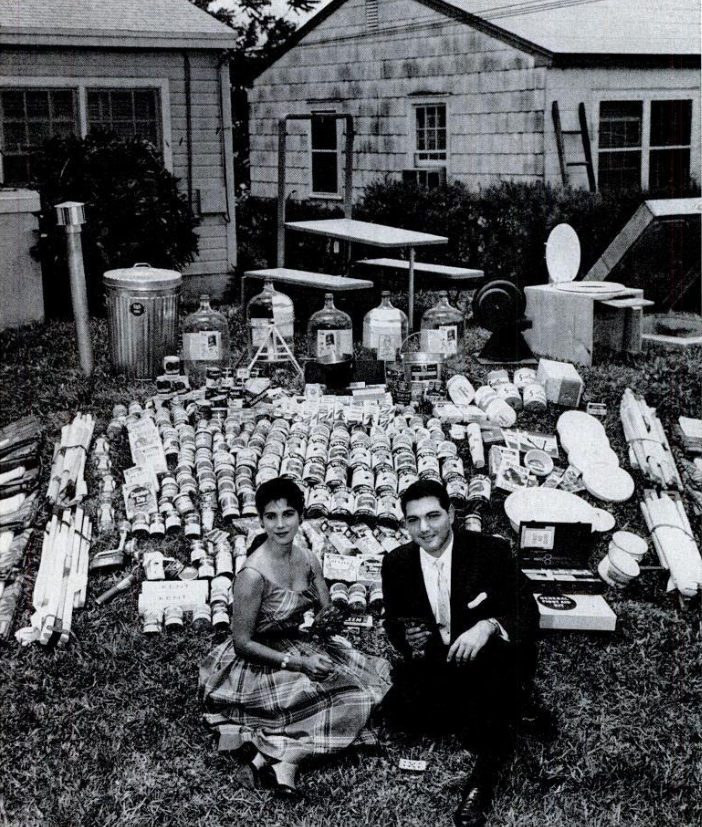
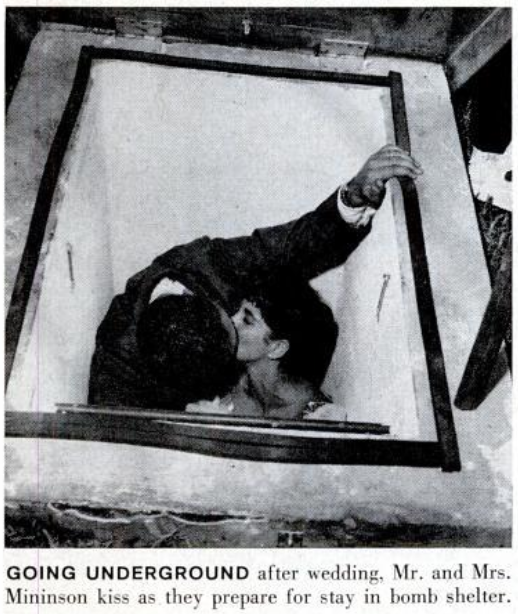
Mr. and Mrs. Melvin Mininson spent a 14-day honeymoon isolated inside a fallout shelter in Miami, Florida (source: Life Magazine August Issue, 1959)
The Suburban Interior, Underground
Look at the government pamphlets from 1961. A mother in an apron watches her husband and son build a basement shelter. It perfectly captures the era's visual logic: the grammar of the American suburb, transplanted into a concrete box built for the end of the world.
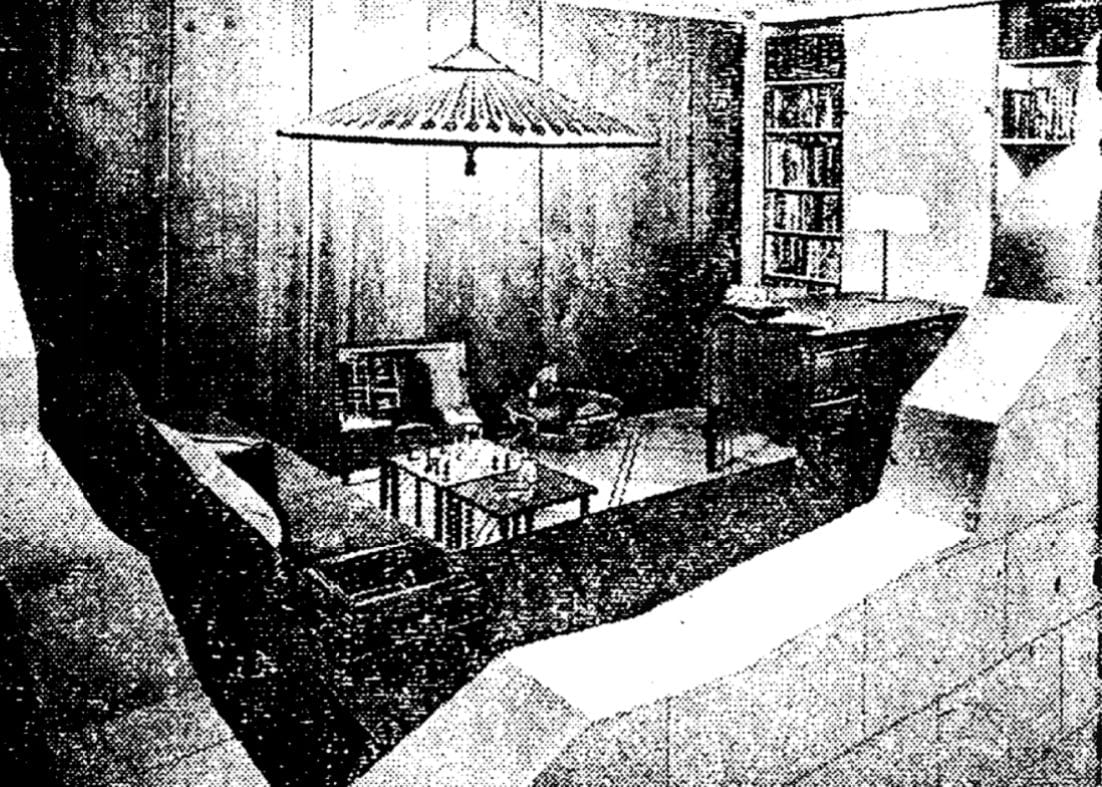
The interiors looked remarkably like standard dens. Thick concrete walls and ventilation pipes disguised as utility conduits were softened by the staging: fathers in dress shirts reading newspapers, kids playing board games. The embedded assumption was that the correct response to total annihilation was to maintain a middle-class aesthetic.
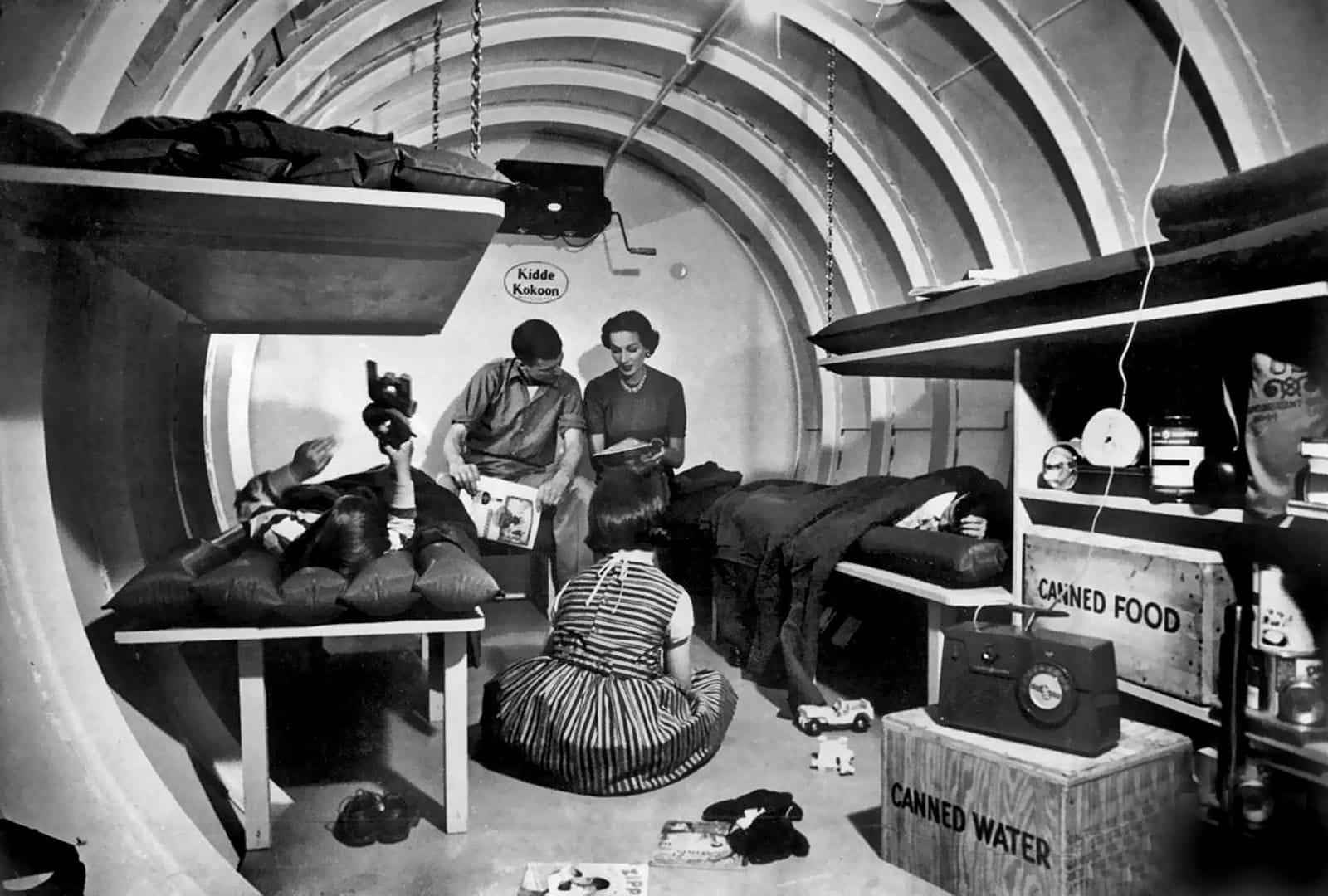
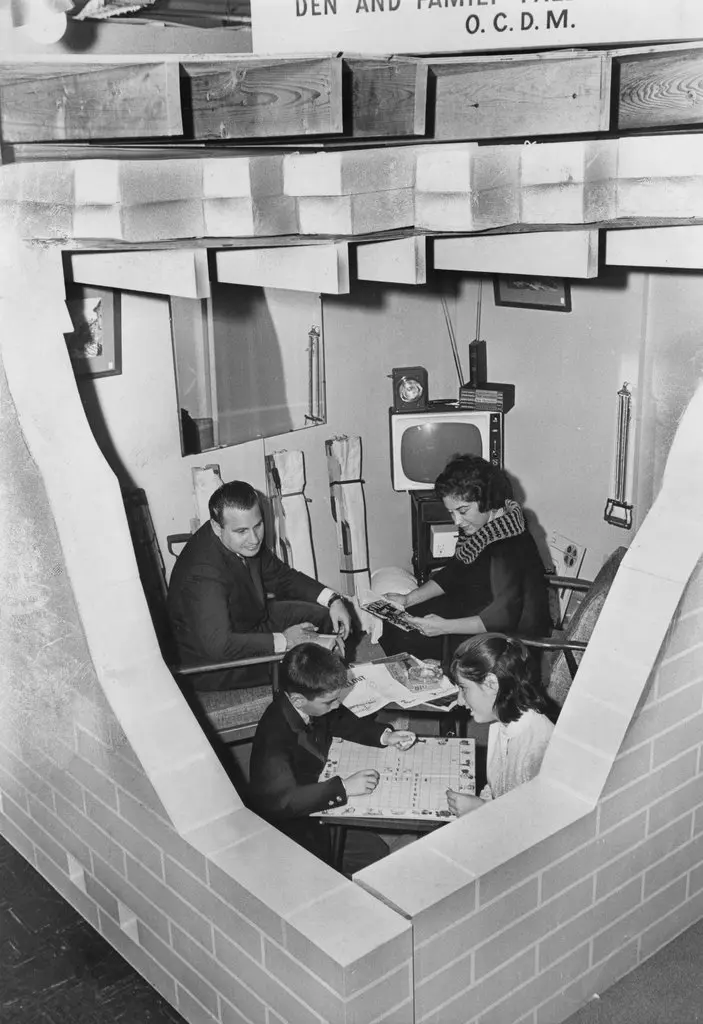
(Left) A Family Posing Inside a "Kidde Kokoon" Underground Fallout Shelter (source: Flickr) (Right) Den and Family Fallout Shelter, Promoted by the Office of Civil Defense and Mobilization (O.C.D.M.) (source: The New York Times)
This visual dissonance is the point. Dropping the most mundane domestic routines—dinner, a board game, a wedding cake—into a sealed chamber designed for the apocalypse doesn't reassure. It disturbs. It reads as a desperate performance of calm staged against a backdrop of catastrophe.
Doomsday as a Consumer Product
For six months in 1961, doomsday was a massive consumer bubble. Fallout shelters were displayed at local malls and marketed exactly like refrigerators or station wagons. The only difference was the implicit threat: if you didn't buy one, your family would perish.
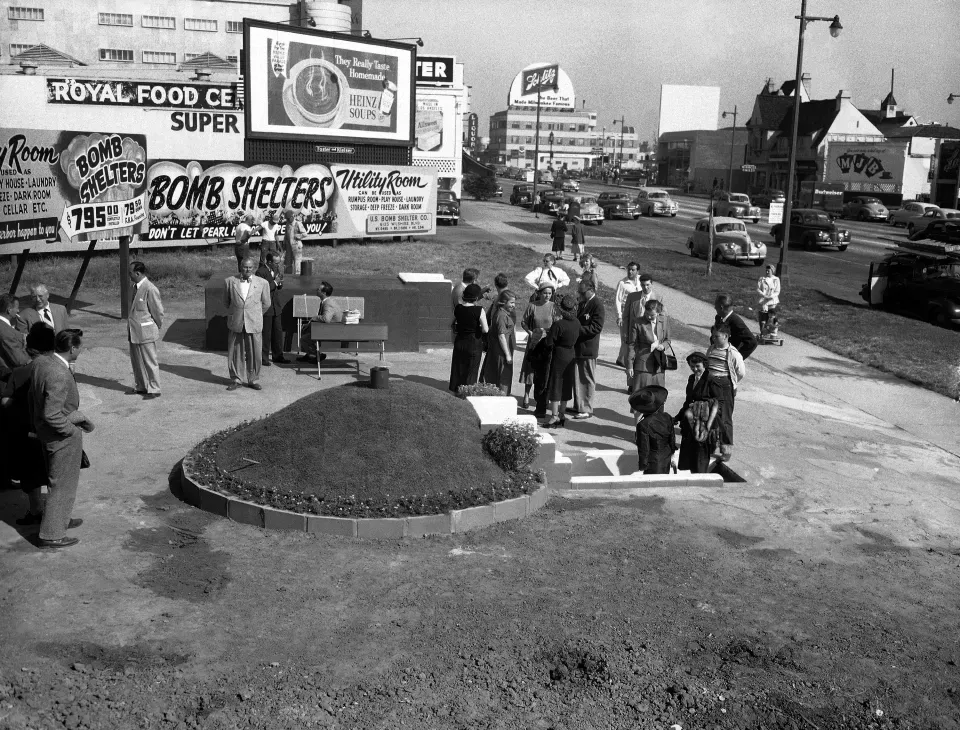
Bomb Shelter Mart in Los Angeles (source: AP:Associated Press)
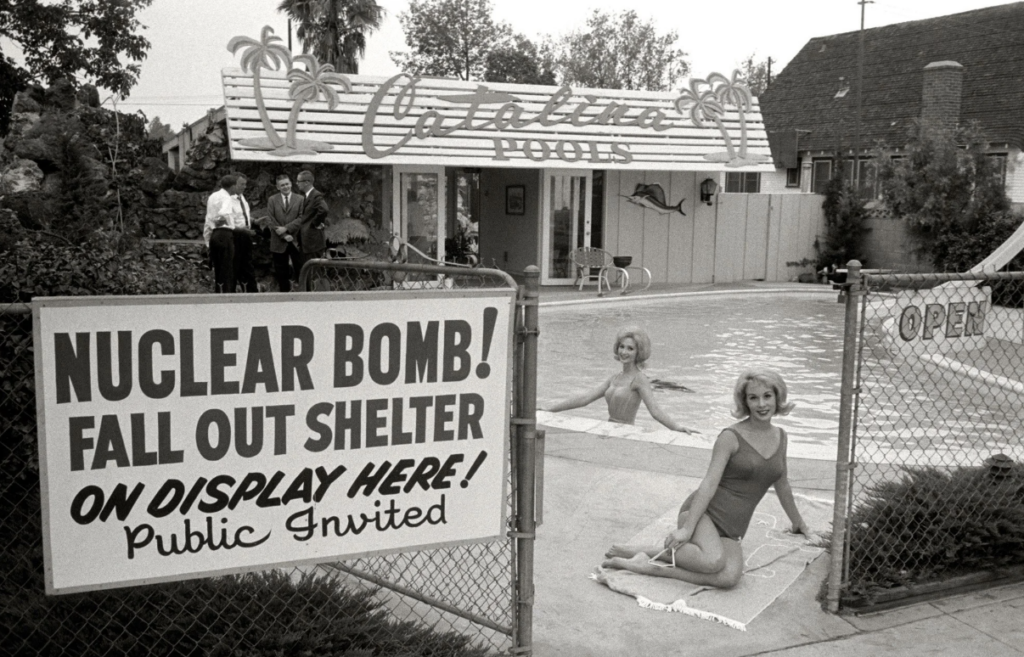
A Surreal Juxtaposition of Cold War anxiety and Suburban Leisure at Catalina Pools in Los Angeles, 1961 (source: unknown)
Upscale New York retailers like Hammacher Schlemmer ran two-page spreads in the Sunday Times for "Shelters for Living," highlighting brand-name interior finishes like Kalistro wall coverings with the same attention to detail as a luxury home renovation. The pitch was clear: the quality of your shelter reflected your family's status. Survival was just another appliance you purchased.
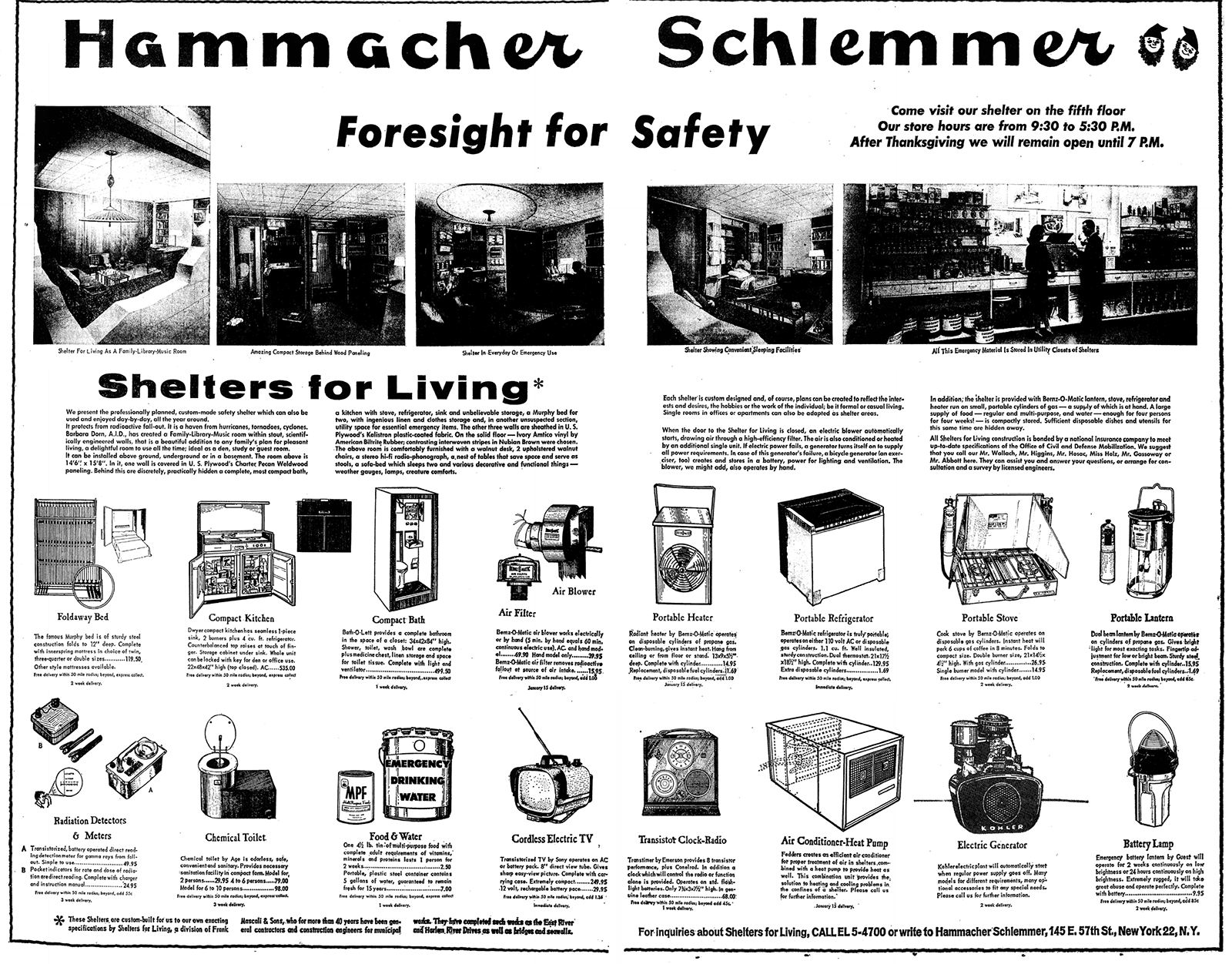
A Two-Page Ad in the New York Times, 1961 (source: Gnomenclature - The Hammacher Schlemmer)
Structurally, the bunker was a class object. A high-end shelter cost the equivalent of $15,000 today. Affluent families with backyards could buy in; urban apartment dwellers could not. It didn't just promise survival. It promised the right kind of survival, exclusive to those who could afford the premium finishes.
The Government Knew The brutal reality was that a backyard bunker's ostensible purpose—surviving a nuclear strike—was largely impossible. Unwilling to spend billions on a massive federal program, the government outsourced civil defense to the public. They rolled out posters and pamphlets encouraging citizens to build their own.
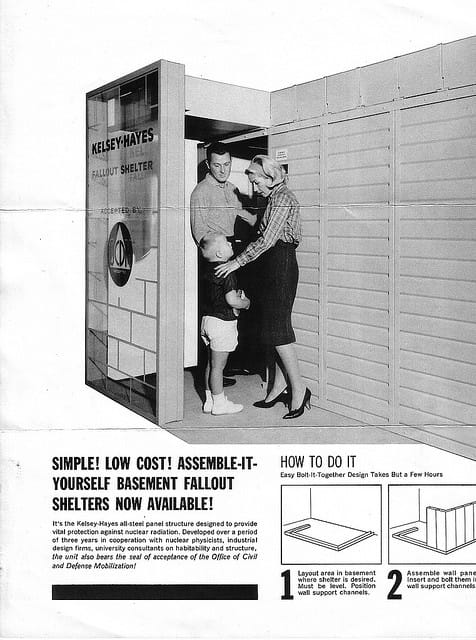
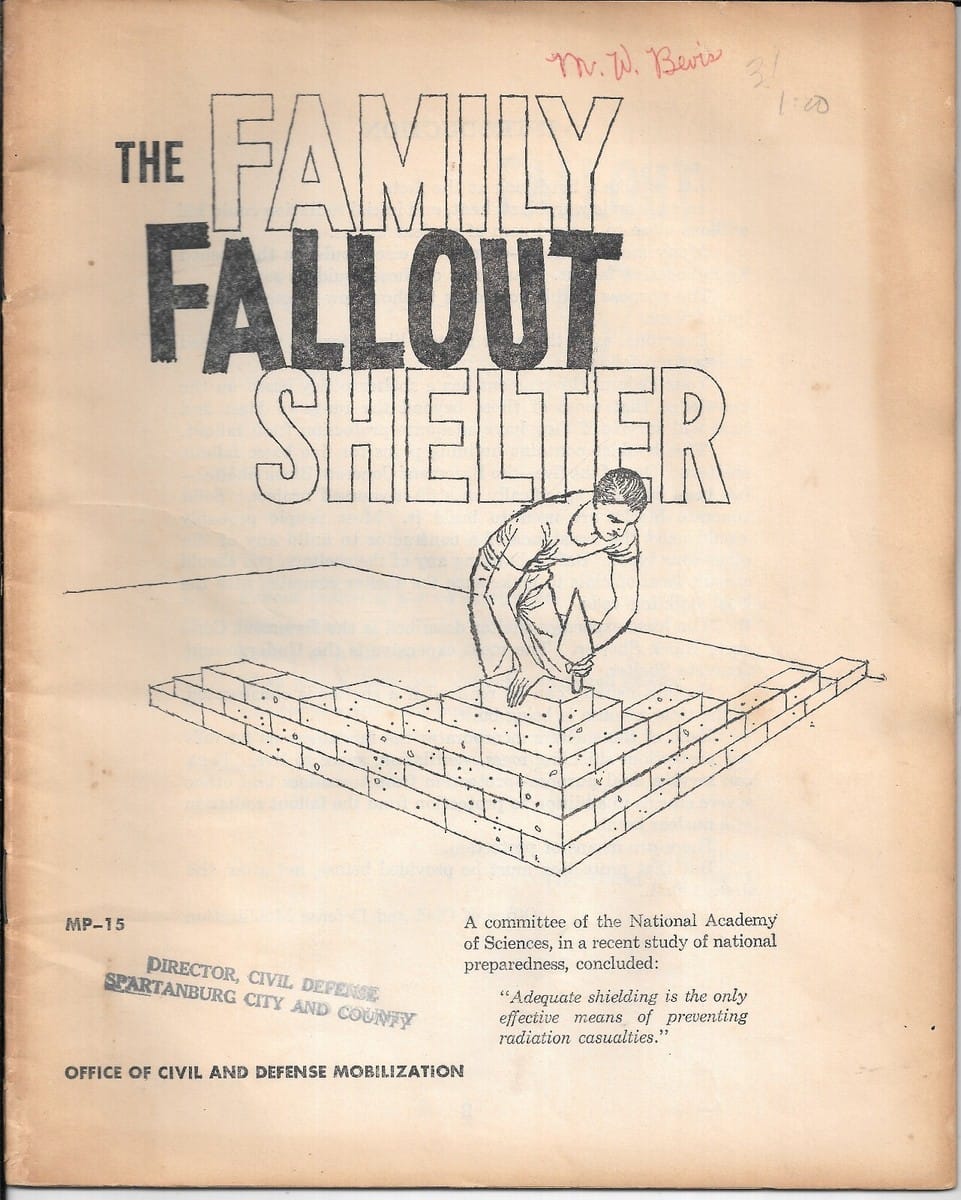
DIY Family Shelter kit Ad and a Booklet Published by Office of Civil Defense and Mobilization (O.C.D.M.) (source: unknown)
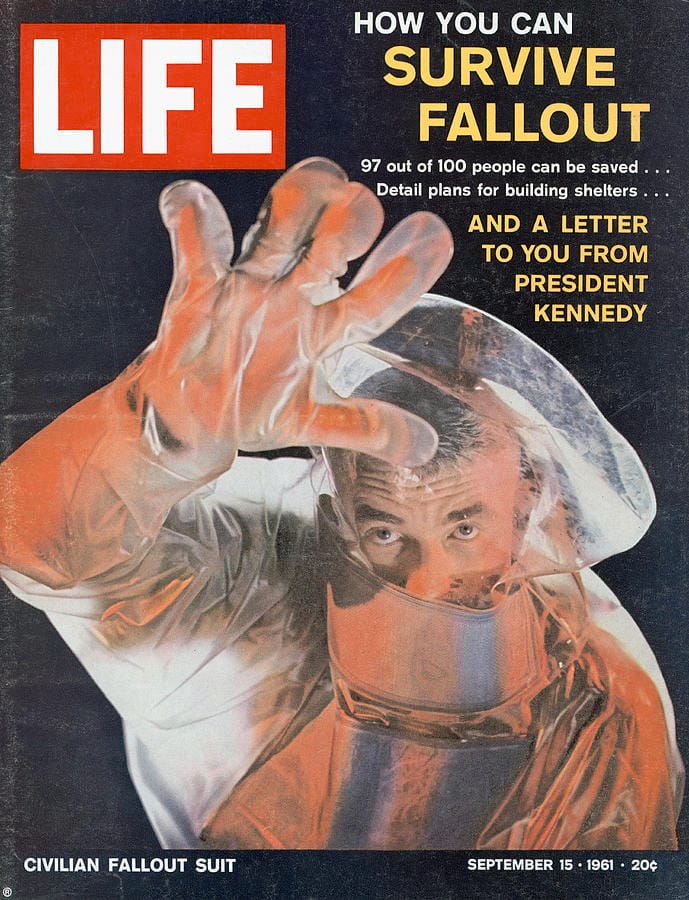
LIFE Magazine 1961 September Issue Cover (source: LIFE Magazine Archive)
The true function of the bunker was psychological, not architectural. A population that believes it can survive a nuclear war is a population that can be governed through one. The shelter was a mechanism for managing panic—converting existential dread into a weekend DIY project, and collective terror into individual consumer choice.
The cracks showed quickly. Some suburban owners publicly stated they would kill neighbors who tried to enter their shelters during an attack. The shelter program produced exactly the uncanny valley it was destined to: a country trying to make peace with annihilation by giving it a brand name and wall-to-wall carpeting.
The Archival Residue of Fear
Decades later, these spaces remain striking not as successful engineering solutions, but as the exact boundary where design becomes theater. Pastel wallpaper, canned goods, and neatly stacked board games inside a concrete tomb were never going to stop a war. They were built to make the unthinkable look digestible. When survival is reduced to a lifestyle product, the resulting design doesn't protect us—it simply archives our desperation.
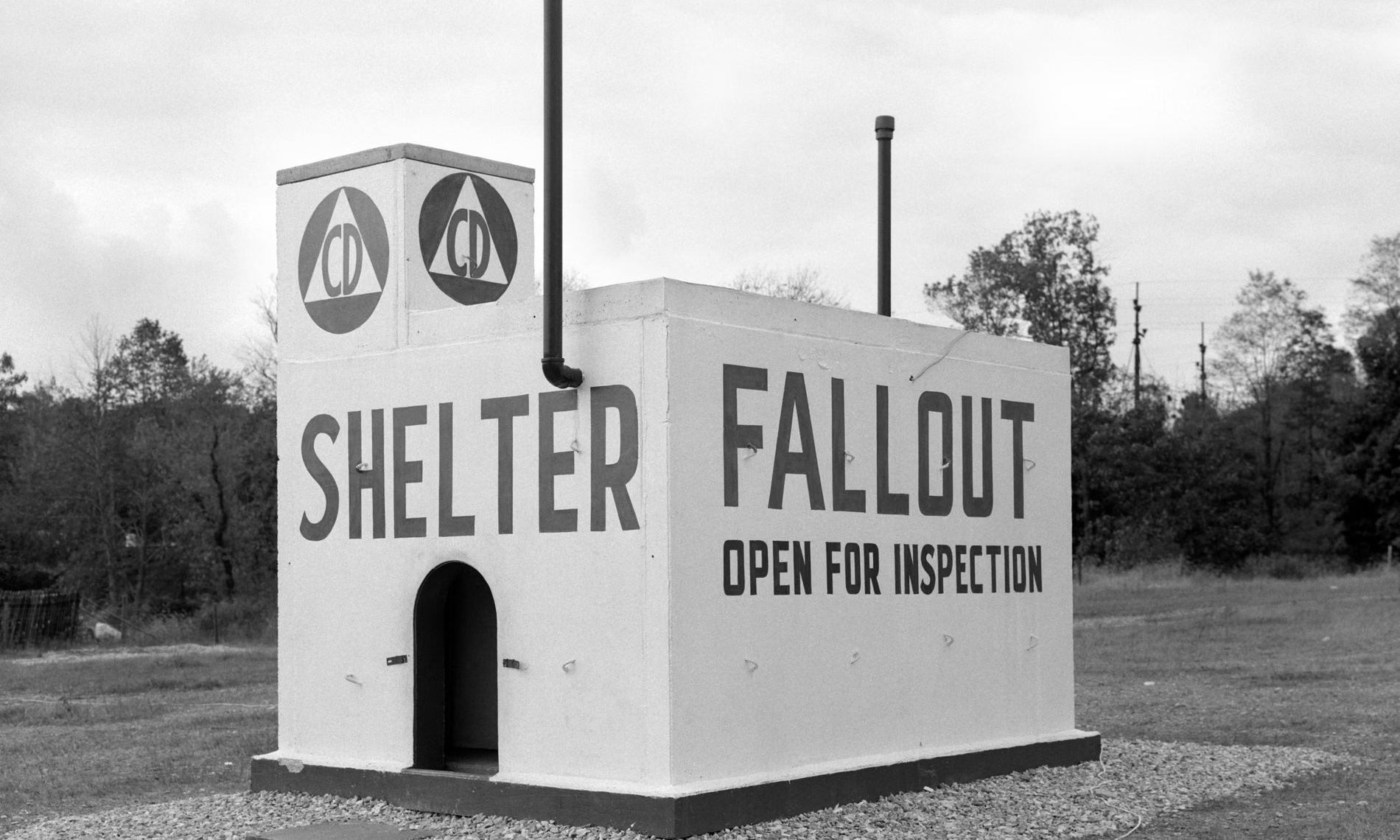
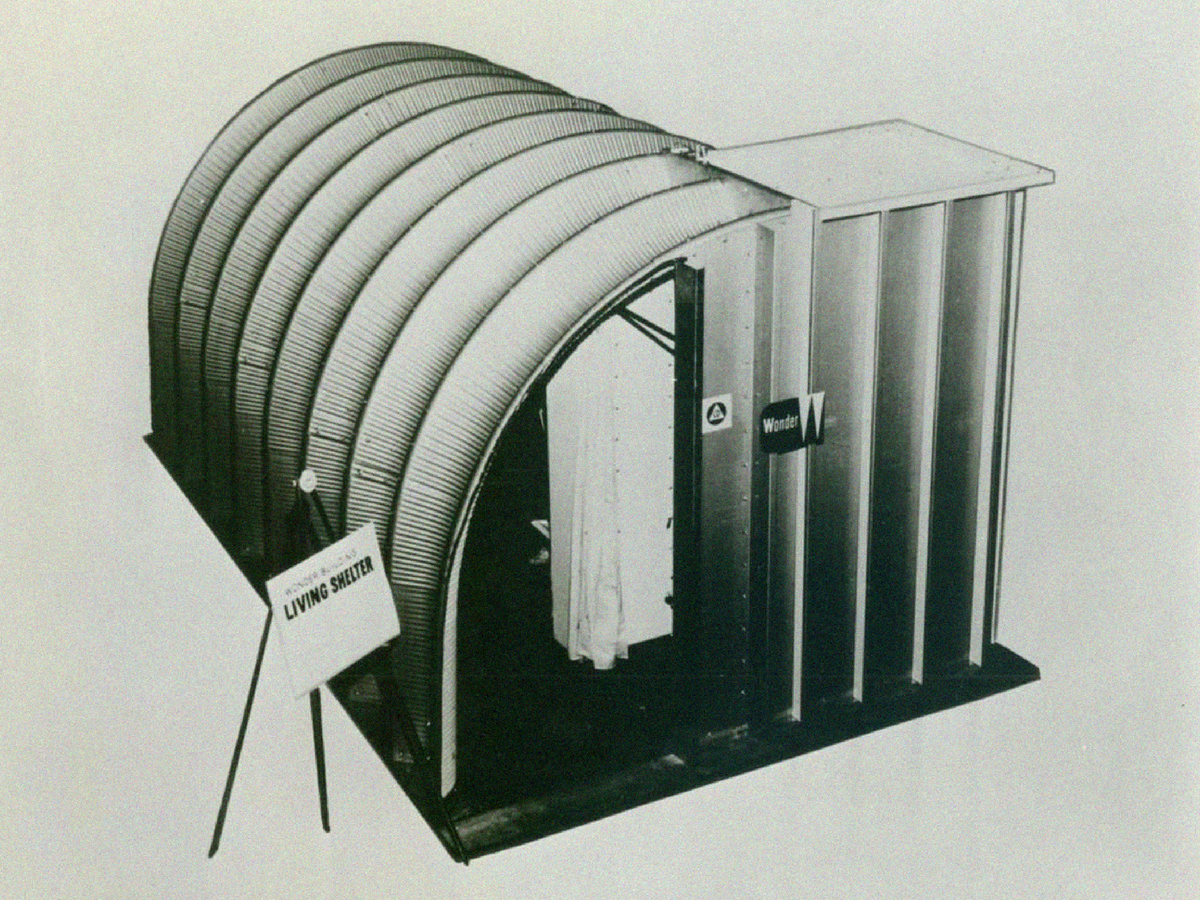
A Fallout Shelter Sample by Civil Defense in 1950s. (source: H Armstrong Roberts/ClassicStock)
Inquiry