Duality of Man
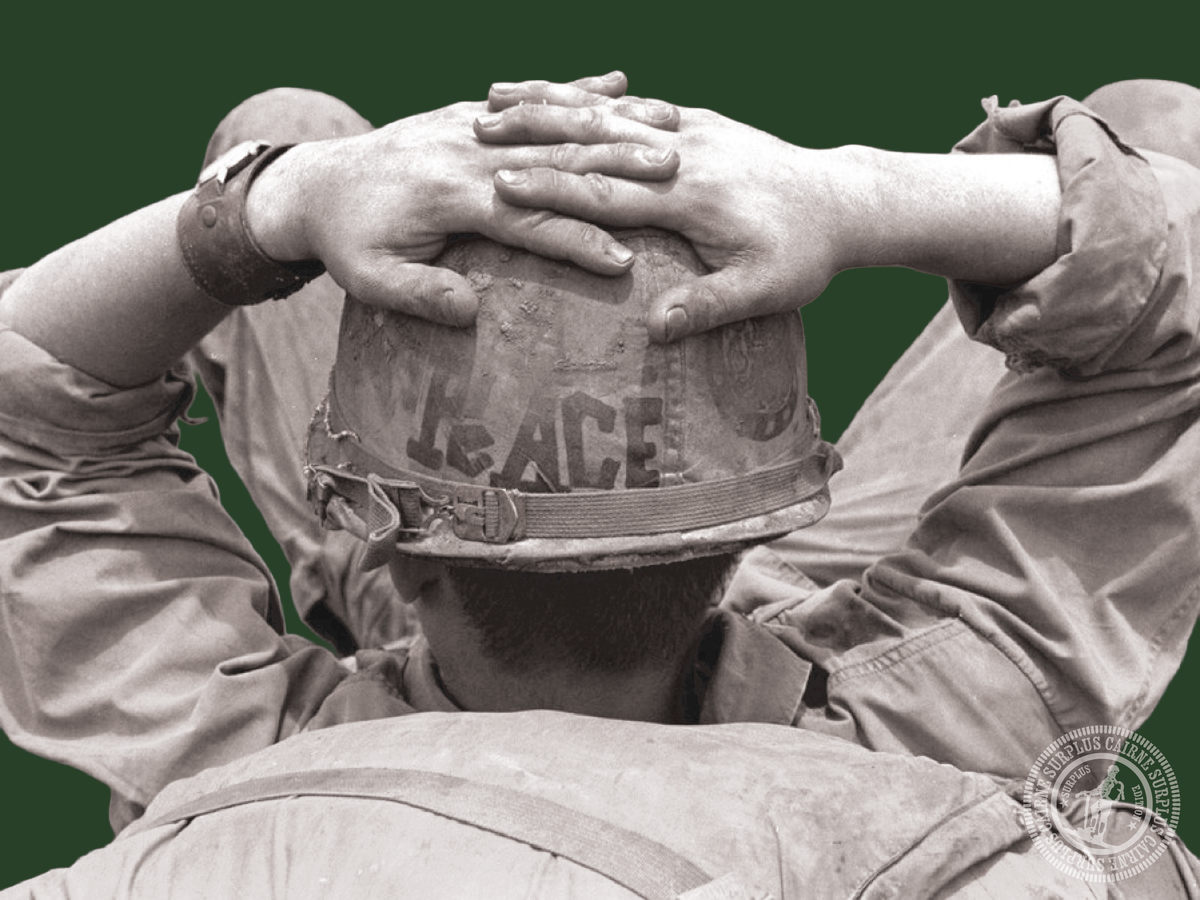
A soldier's helmet was never meant to be a diary. In traditional military culture, the individual existed only to serve the unit—personal expression was a disciplinary breach, a literal defacing of government property. Beyond the regulations, there was a darker, practical reality: a personalized helmet turned a nameless silhouette into a human being, and humans are far easier targets than shadows.
Vietnam changed that.
As conventional military advantages—tanks and strategic bombing—failed in the dense jungle, the war shifted into something close, disorienting, and relentless. Young conscripts, raised on the language of individuality and counterculture, were suddenly thrown into an environment specifically designed to erase the self. In this chaos, the camouflage cover of the M1 helmet became the last available surface for their identity. So, they started writing.
The Evolution of the Message
While these helmets can rarely be dated precisely, their messages follow a clear chronological shift in tone.
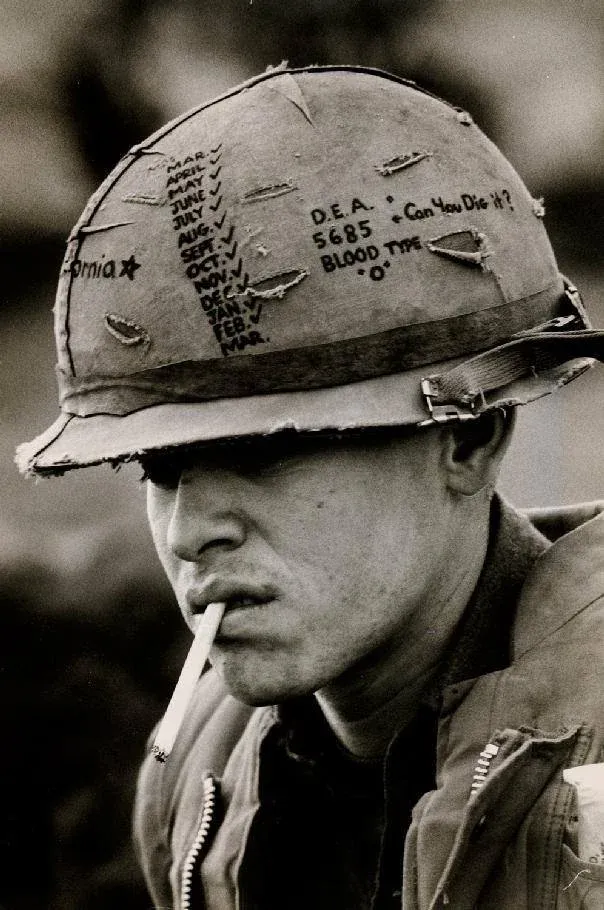
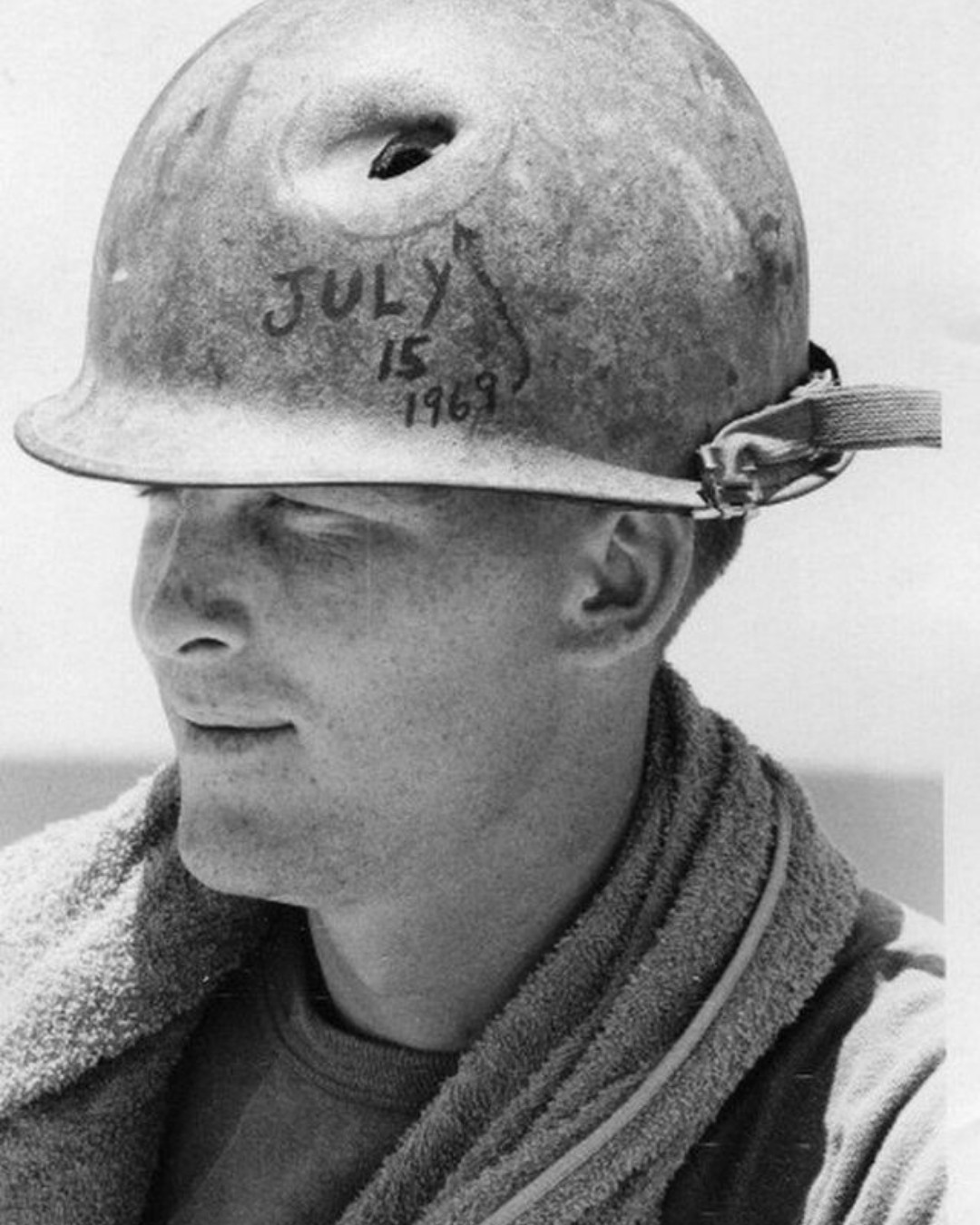
Vietnam war helmet graffiti (source: unknown)
The earliest markings were intimate and declarative—a girlfriend’s name, a hometown, or a calendar counting down the days. These were the helmets of men still clinging to who they were before the jungle took hold.
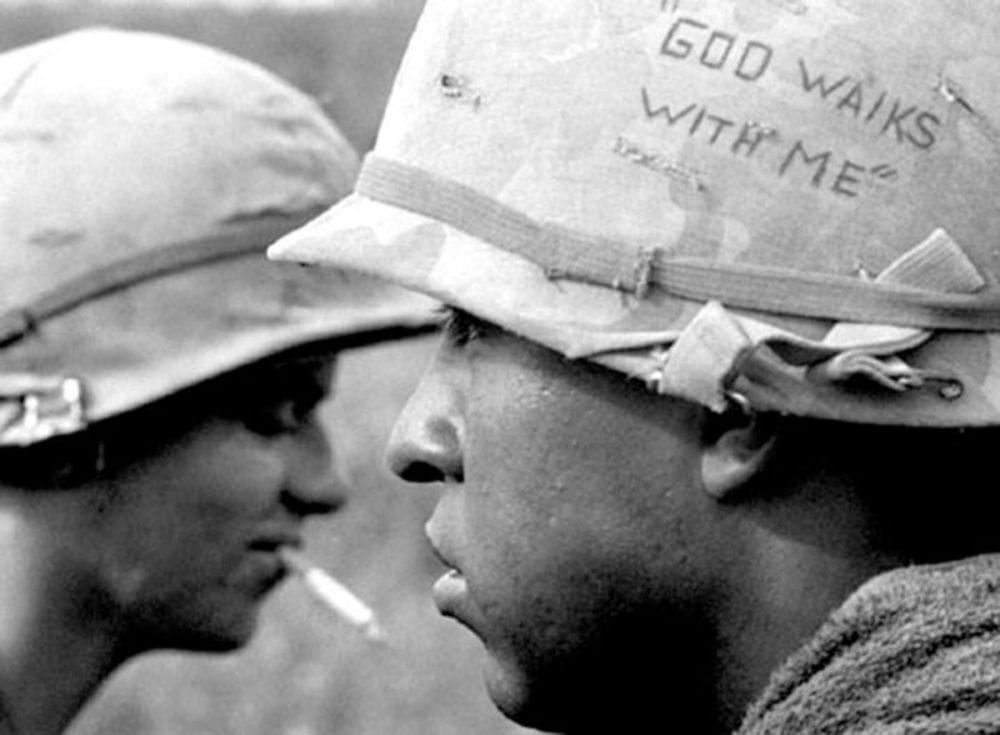
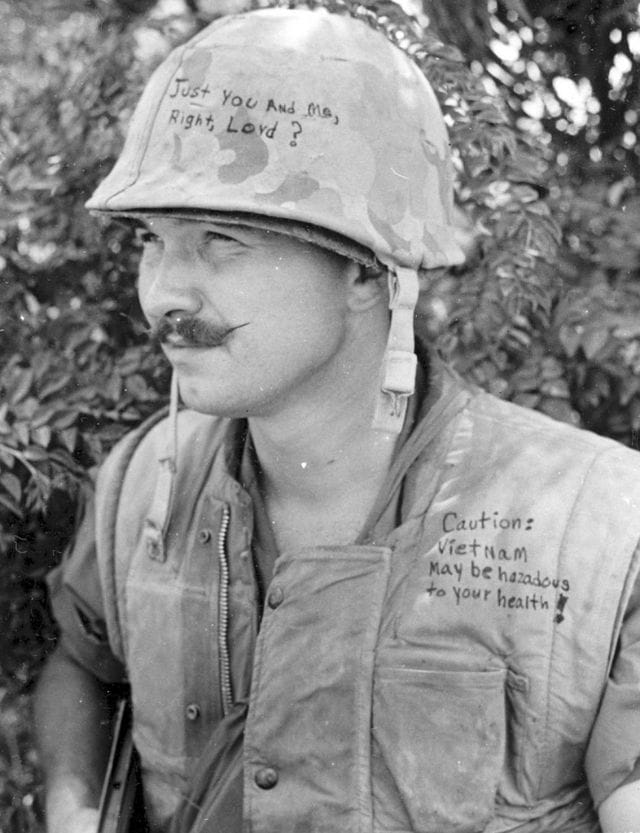
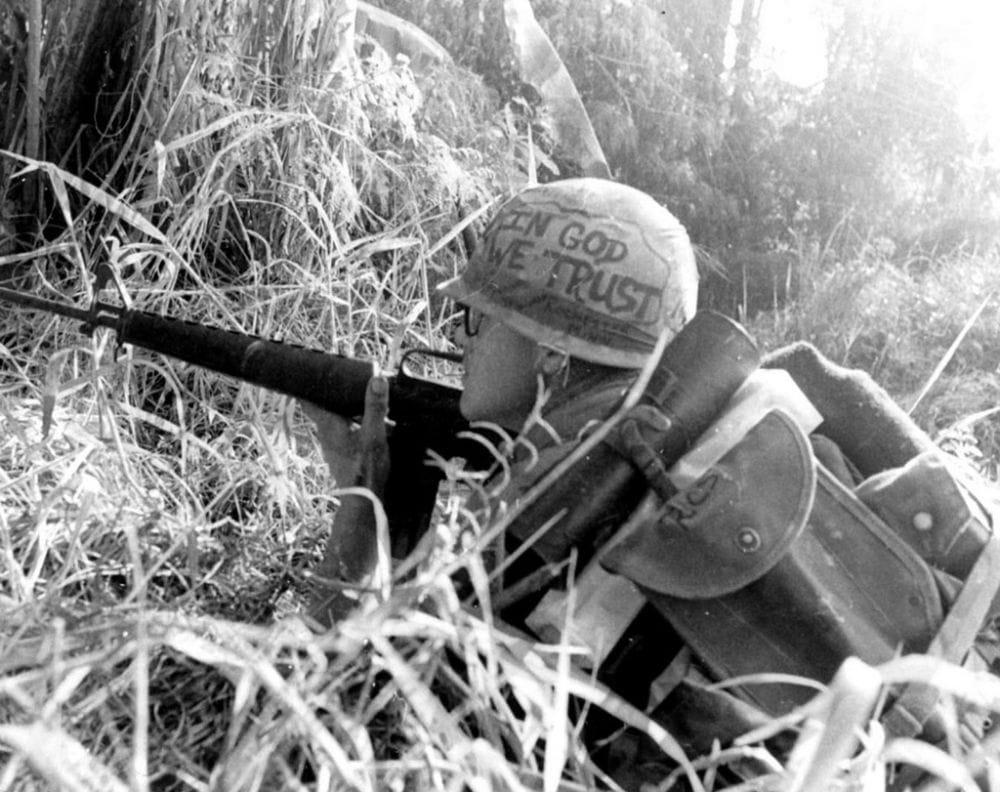
Vietnam War helmet graffiti (source: unknown)
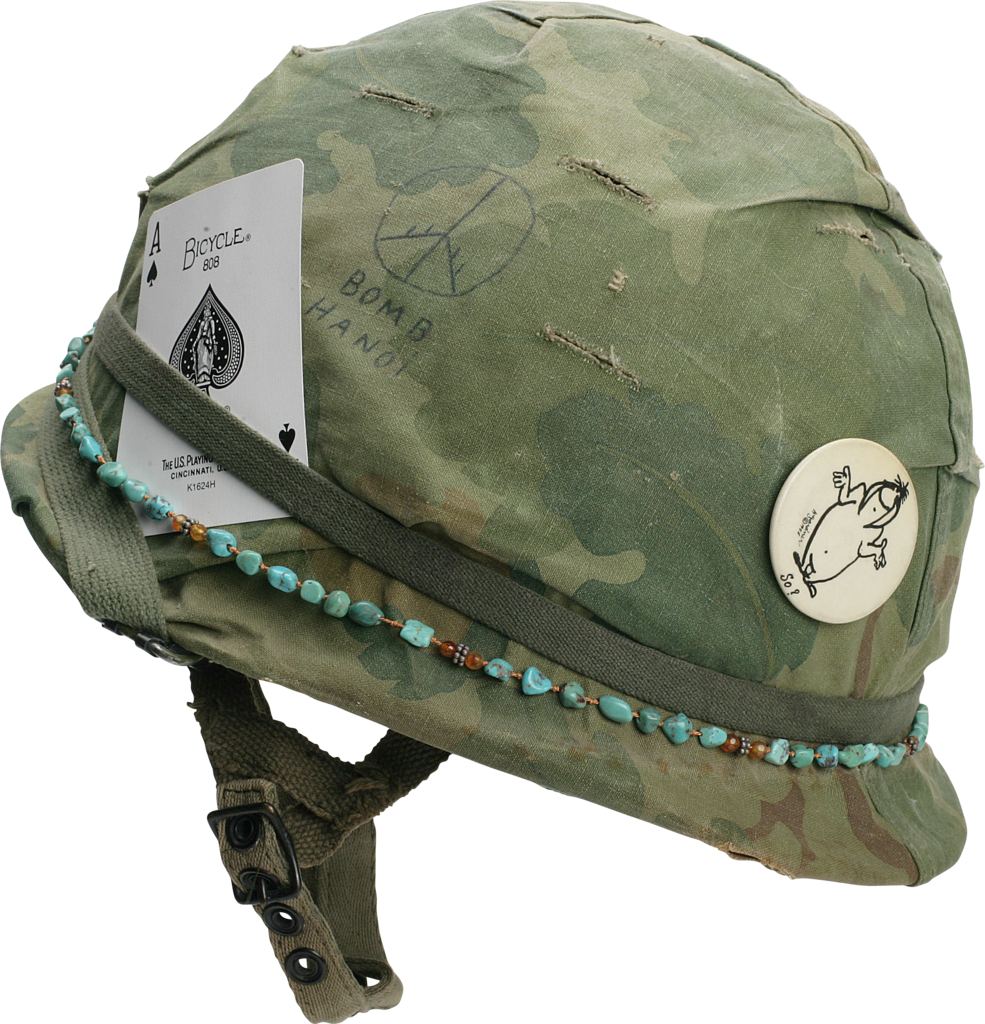
Then, the register changes. References to "God" multiply—less as an act of faith and more as something to grip when everything else has become unreliable. The Ace of Spades begins appearing in helmet bands. Originally a psychological weapon intended to terrify the enemy, it quietly transformed into a personal talisman. To carry the death card was to name the thing you feared most, and in doing so, making it yours.
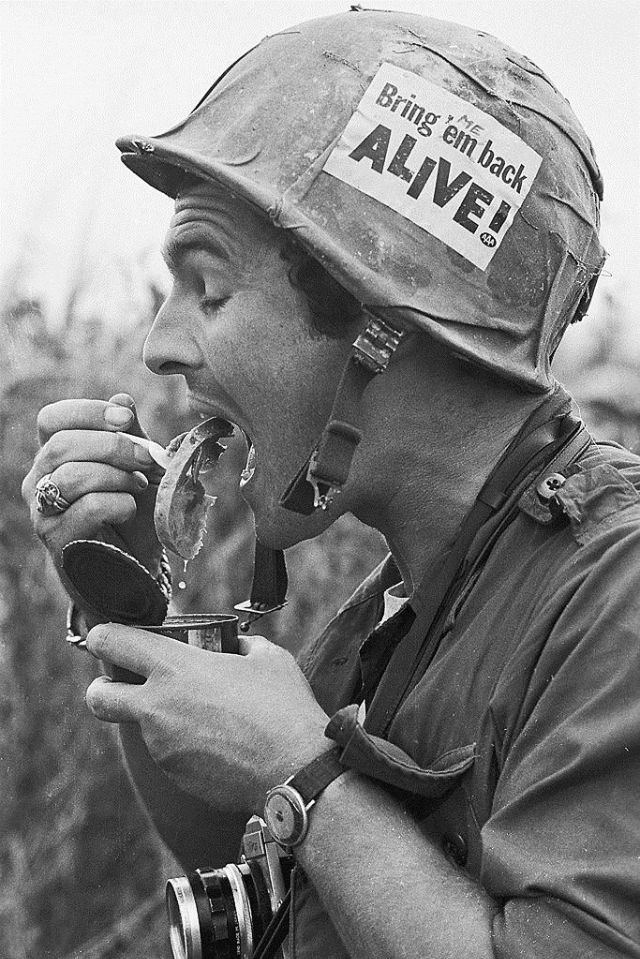
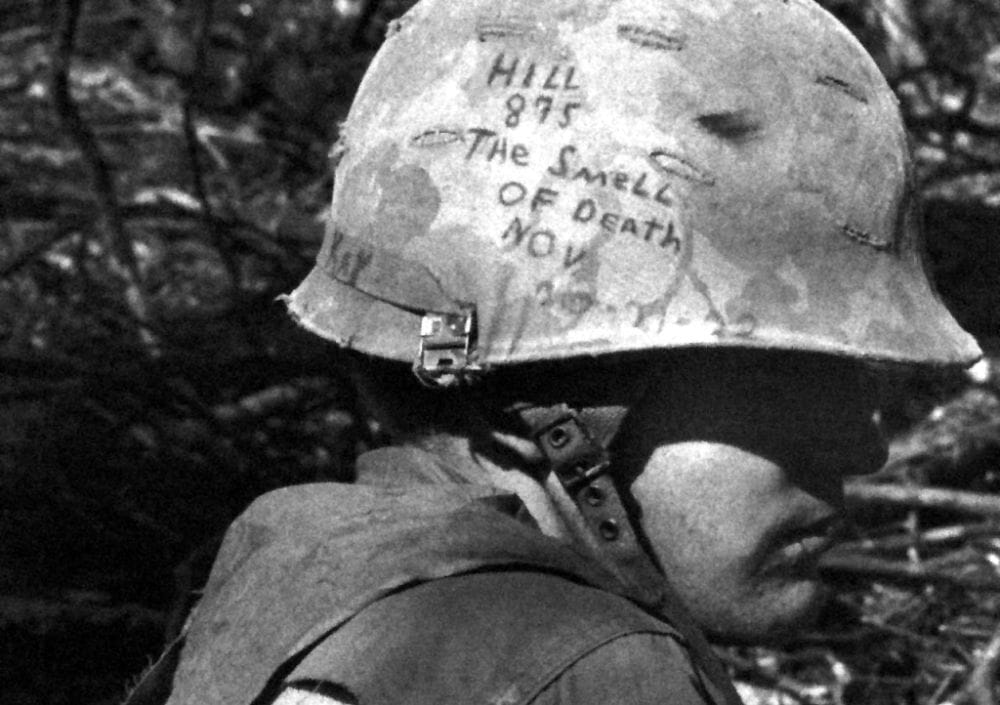
Vietnam War helmet graffiti (source: unknown)
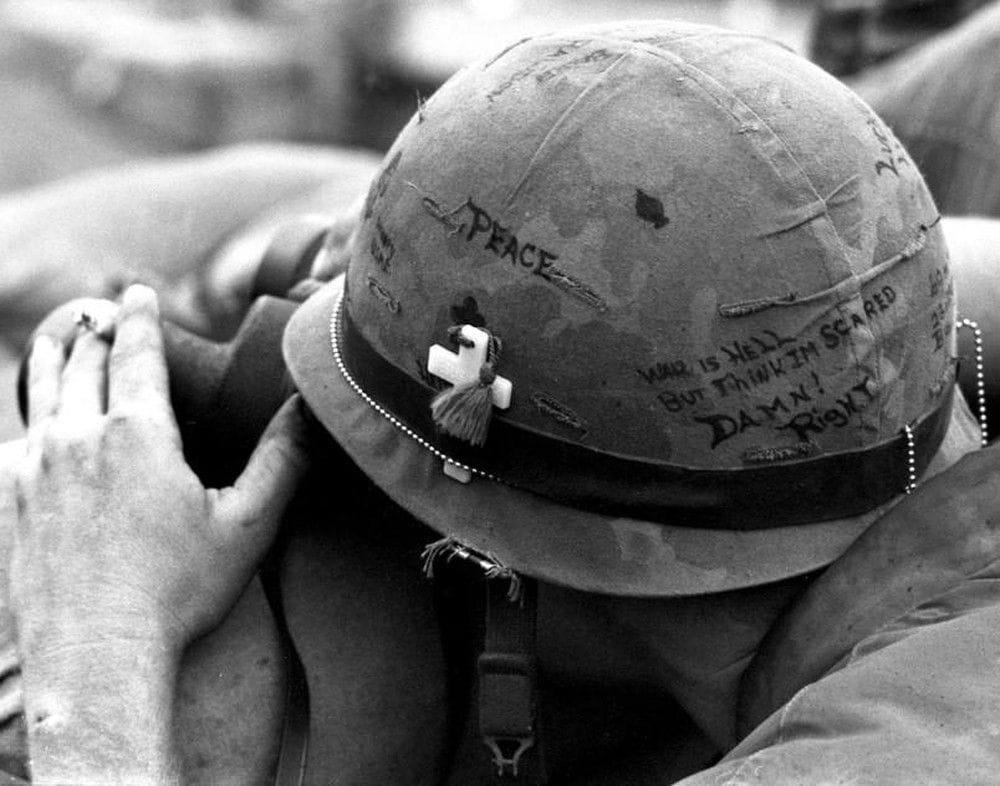
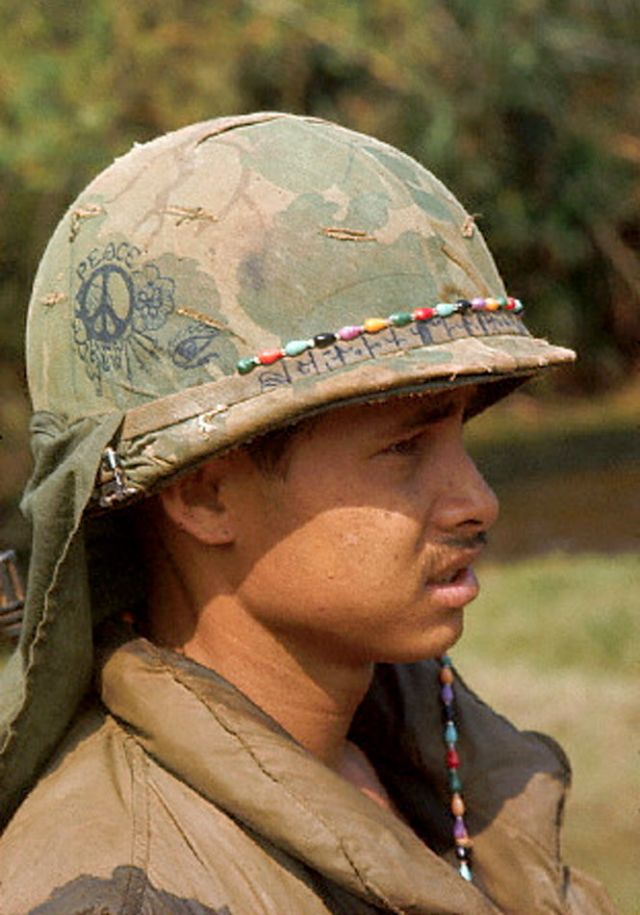
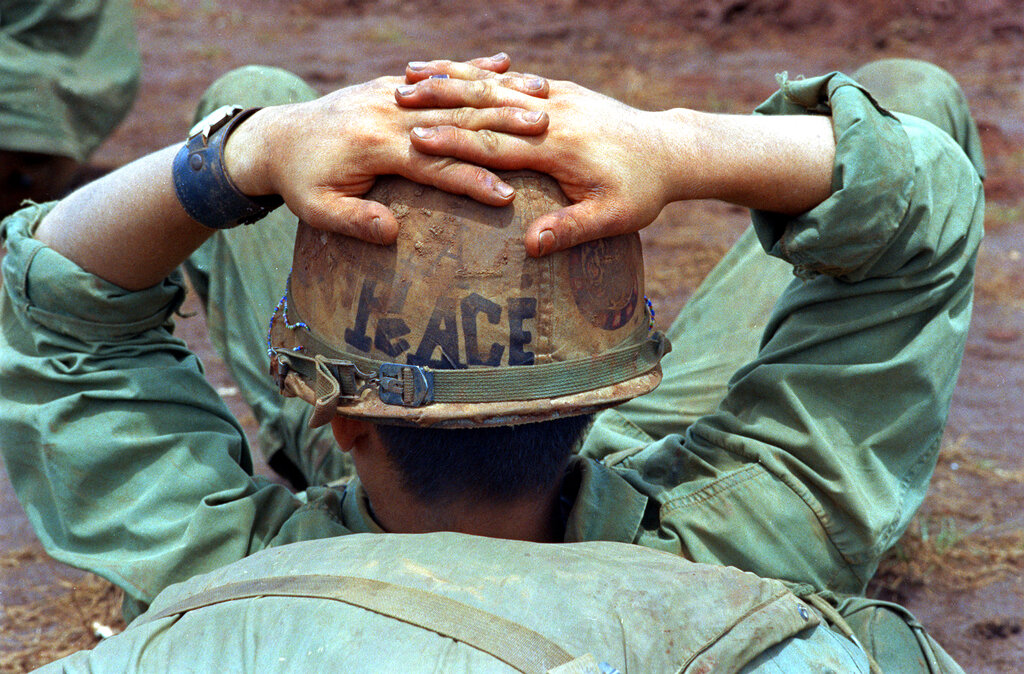
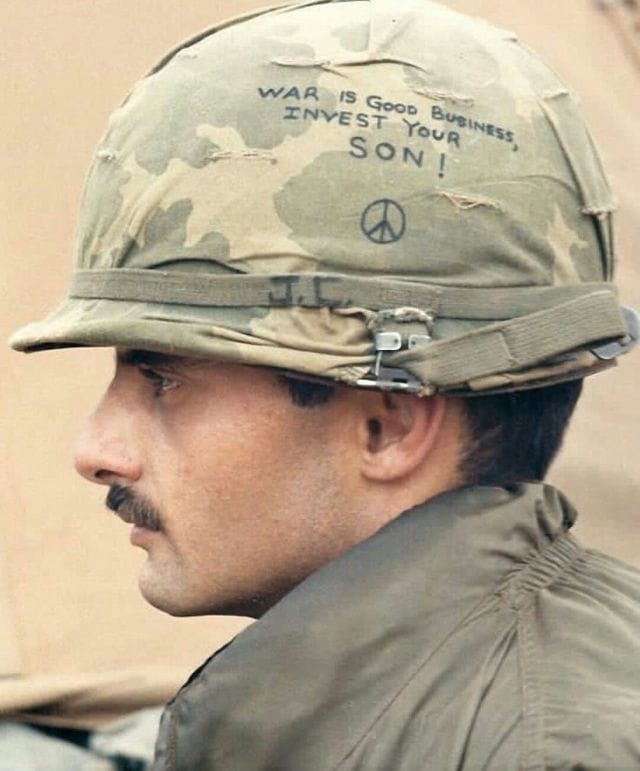
Vietnam War helmet graffiti (source: unknown)
By the war’s later years, the Peace Sign was everywhere, carrying more than one meaning at once. For some, it was a political echo of the anti-war movement at home; for others, it was simpler—a wordless prayer for the fighting to stop.
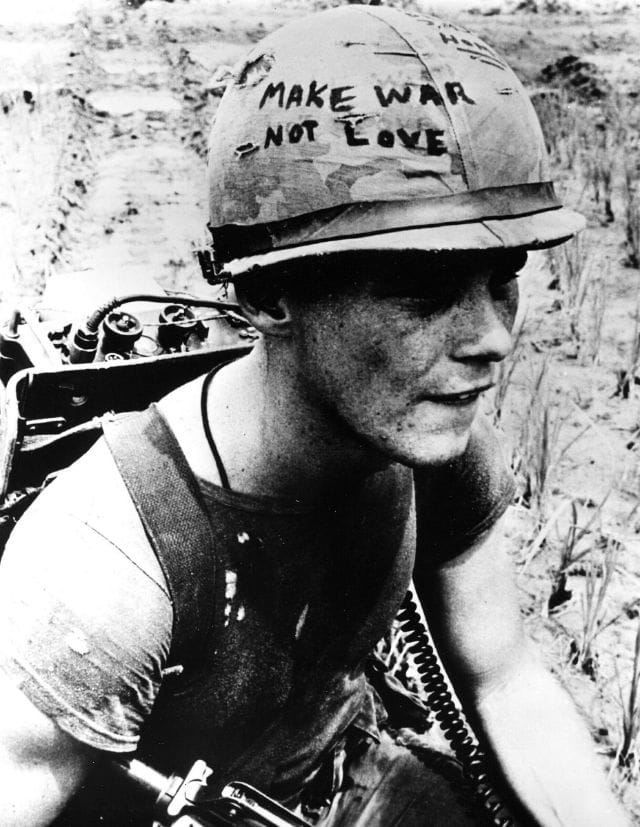
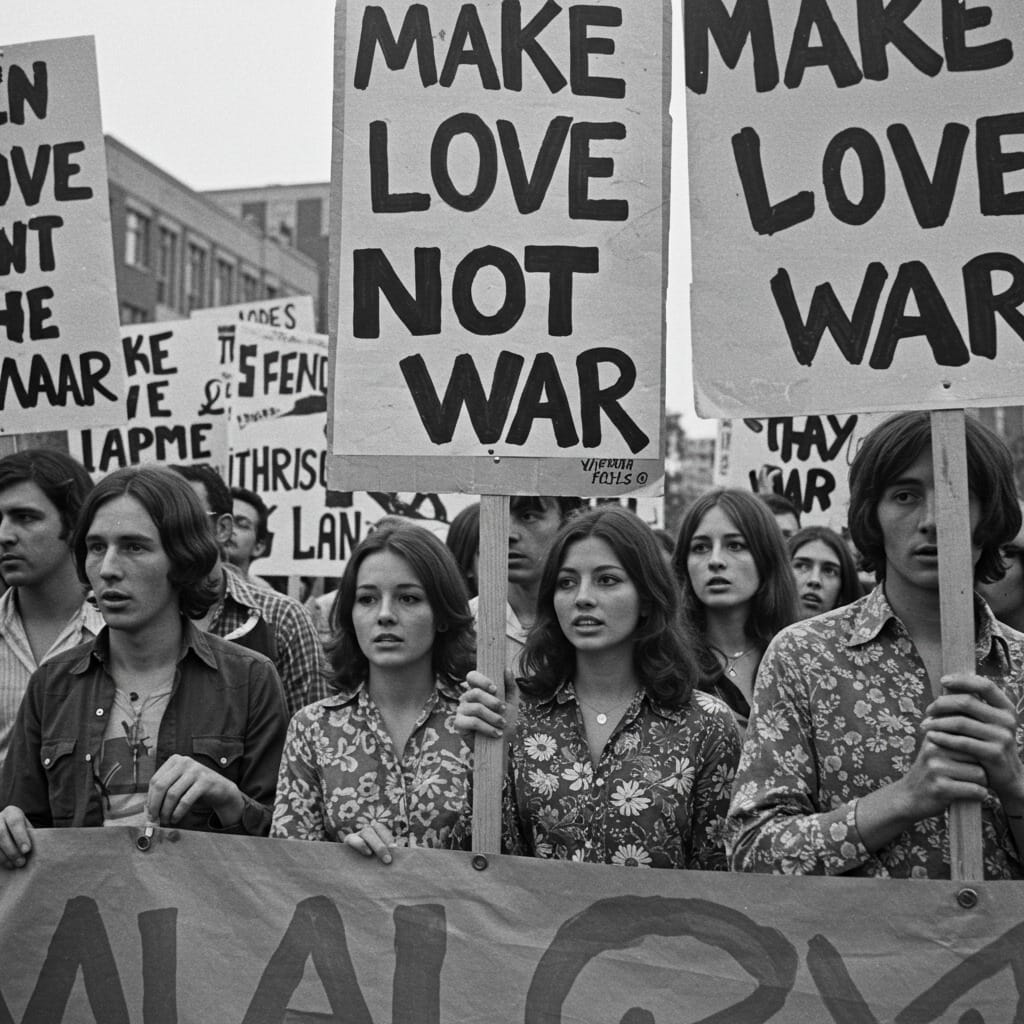
(Left) "Make war, not love" helmet graffiti from Vietnam War (source: Michael Wynn, Da Nang) (Right) Anti-war demonstration at the United Nations Building in New York City, 1967 (source: unknown)
The sharpest expression of this disillusionment was "Make War, Not Love"—a bitter inversion of the hippie slogan heard at protests across America. The original belonged to those with the freedom to choose; the soldiers who flipped it weren't taking sides with the hawks. They were marking the distance: "You are marching in the streets," it said. "We are here.". Five words. No room for misunderstanding.
What It Left Behind
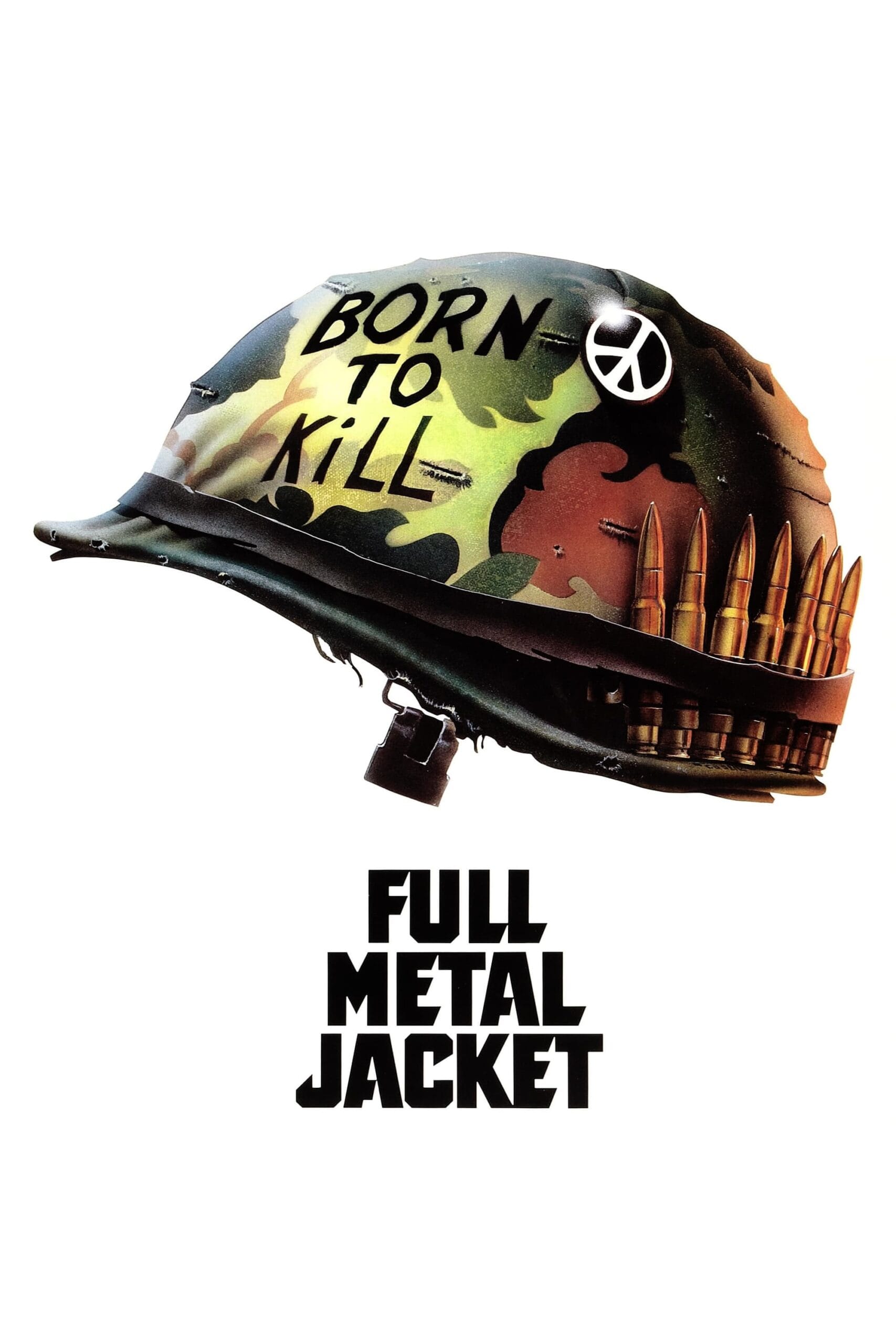
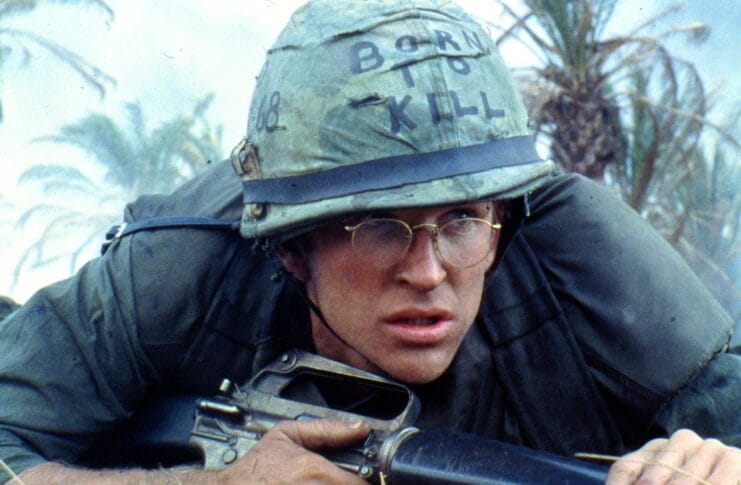
Full Metal Jacket by Stanley Kubrick, 1987 (source: Warner Bros)
Stanley Kubrick centered the imagery of Full Metal Jacket on this very contradiction: Private Joker’s helmet bearing "Born to Kill" alongside a peace button—the duality of man worn on a single head. Kubrick didn't invent this; he simply recorded what was already there, etched into the gear of actual people.
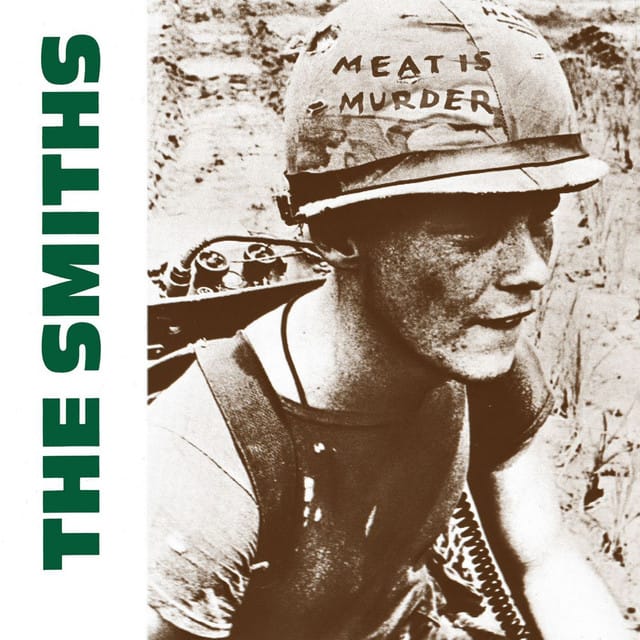
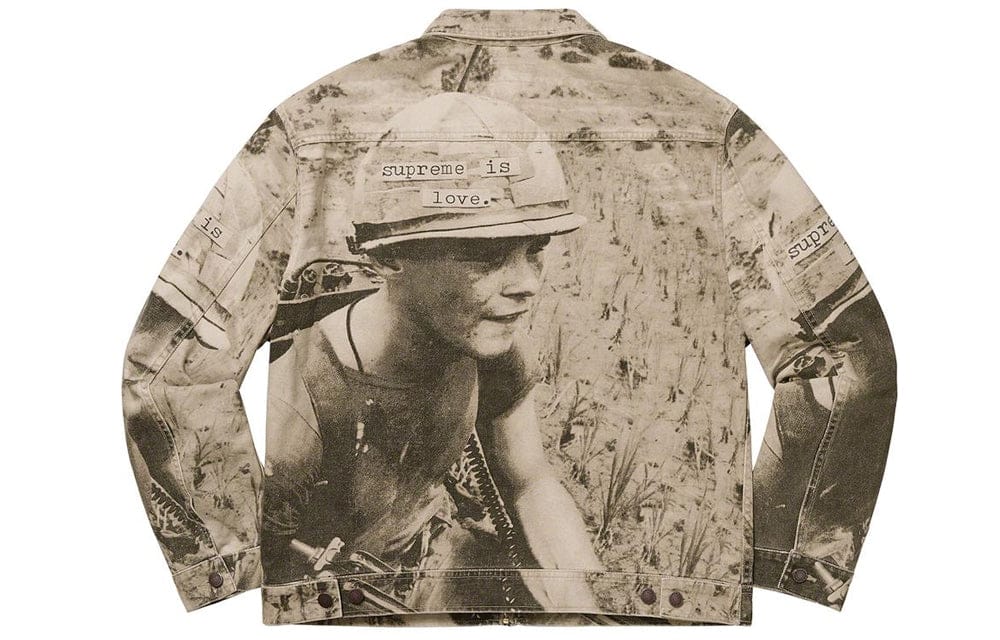
(Left) The Smiths "Meat Is Murder" album cover, 1985 (source: Sire Records) (Right) Supreme Fall/ Winter 2019 "Supreme is lover" Denim Jacket (source: Supreme)
The Smiths understood this friction differently. Their 1985 album Meat Is Murder featured Marine Corporal Michael Wynn’s 1967 photograph, replacing "Make War Not Love" with their own title. While Wynn was unhappy with the change, the underlying logic remained the same: using military equipment to carry a message that refuses the very system it represents.
By the time this image appeared on a Supreme jacket in 2019, the visual language of helmet graffiti had been fully absorbed into streetwear. Its origin had shifted from a source of truth to a stylistic reference.
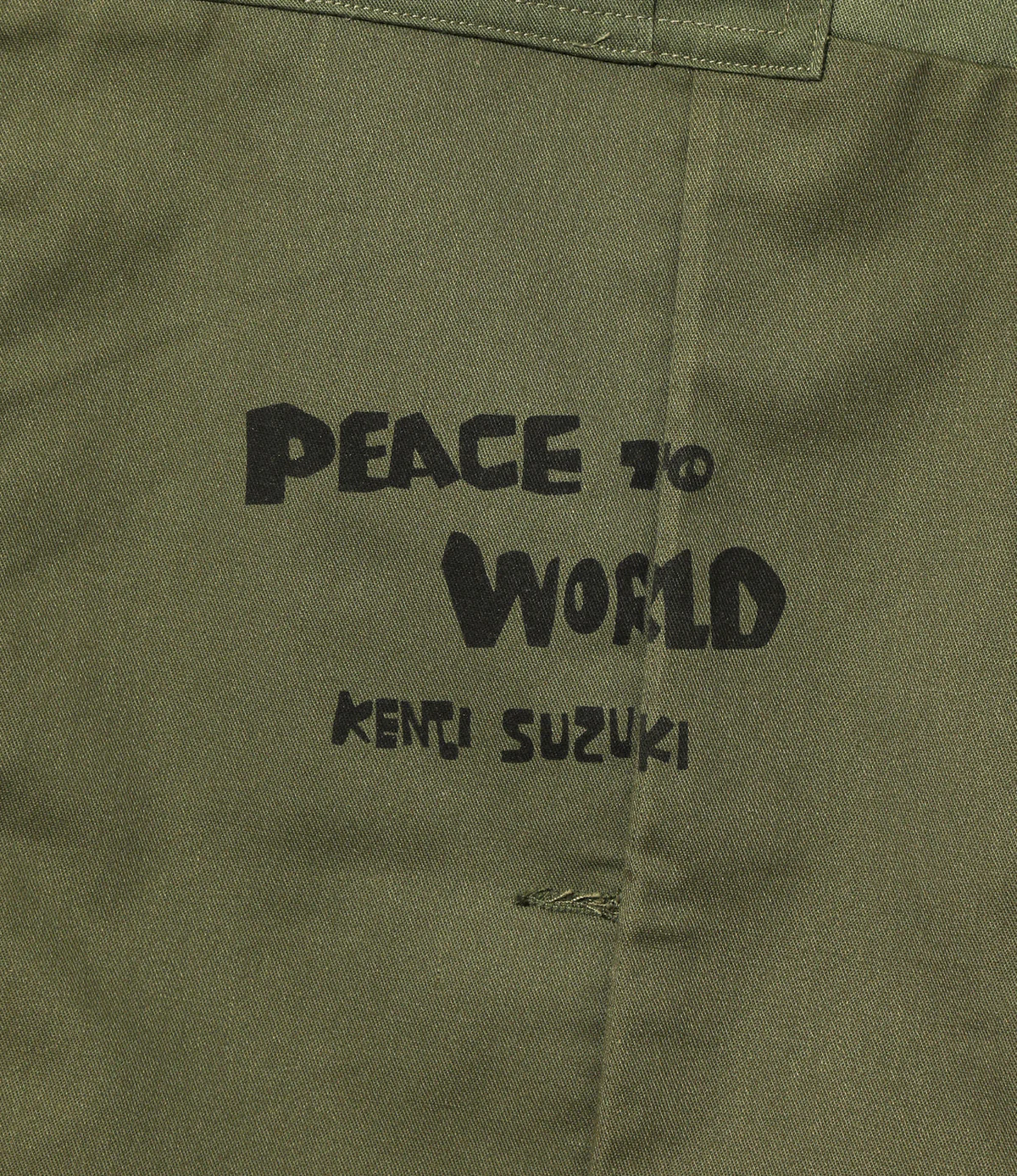
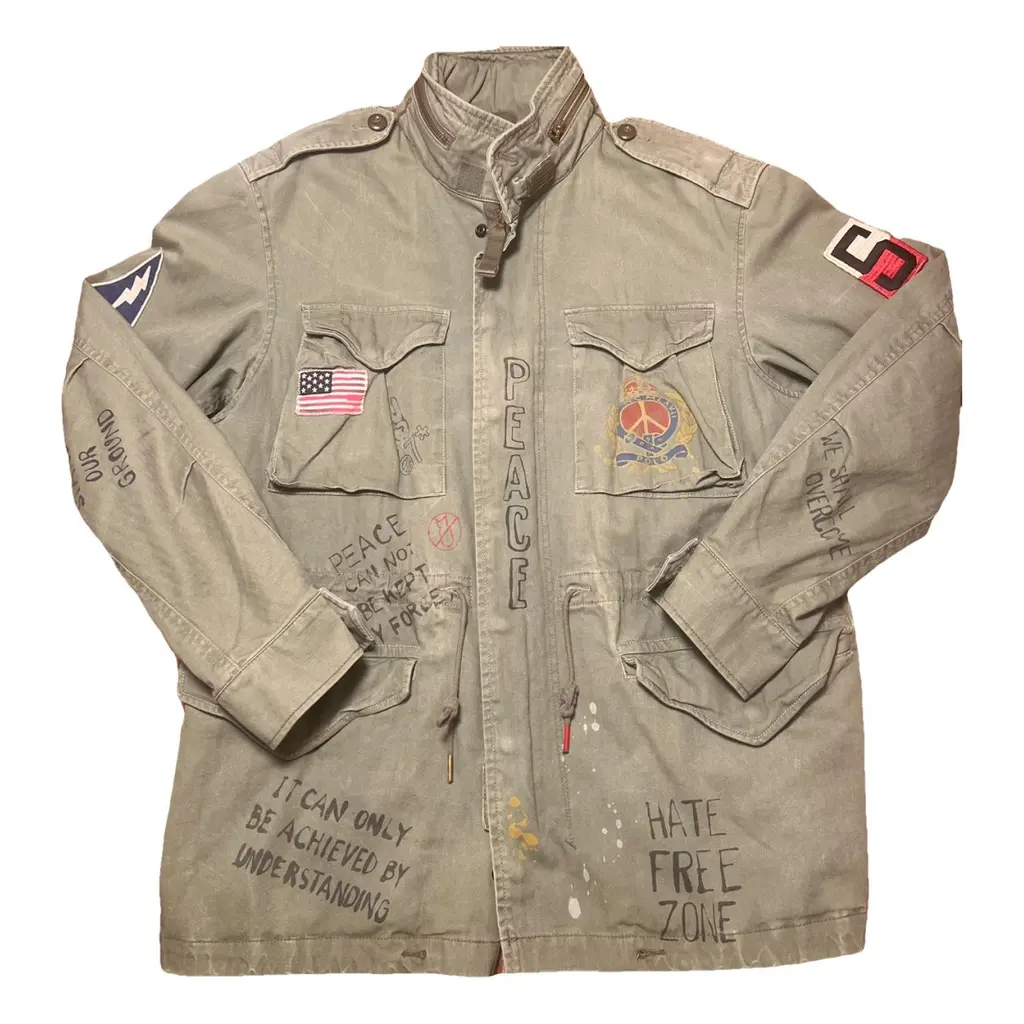
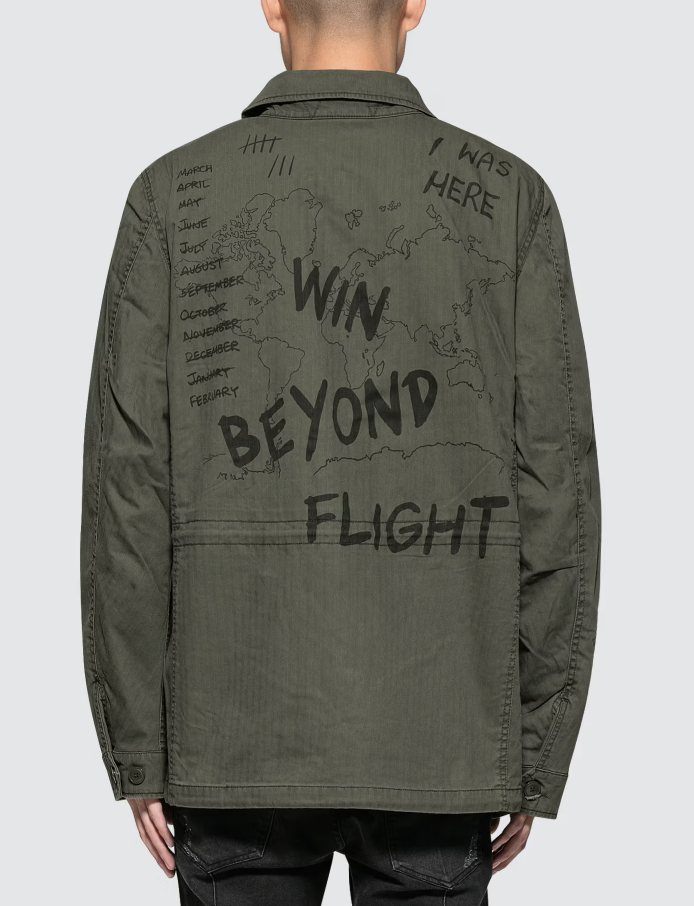
(Left) Polo by RL Army M65 Multi-Patch Peace Jacket (source: Desert Moss Vintage) (Right) Alpha Industries Revival Decorated M-51 Field Jacket (source: HBX)
The soldiers who wrote on their helmets weren't making art. They were insisting on their own interiority in a situation designed to eliminate it. What began as a desperate cry for identity in the jungle has now become a permanent silhouette in our visual culture. We wear their rebellion, sometimes without knowing its weight, as a reminder that the most powerful statement is always personal.
Inquiry