Sanctity Under Cover
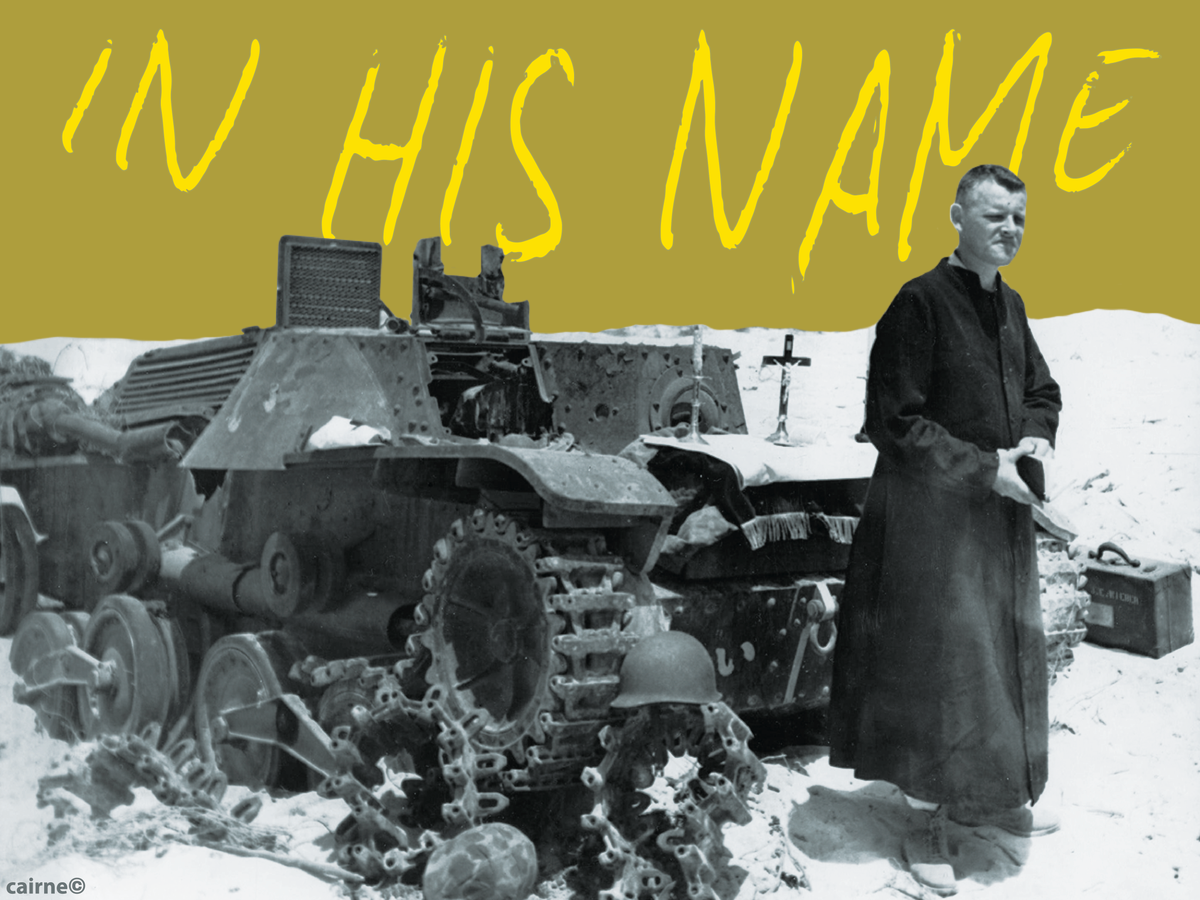
On the battlefield, sanctity and survival share the same space.
This archive records the strange paradox of a "Word" that had to be strictly concealed to be shared, and instruments of death that were reborn as symbols of salvation.
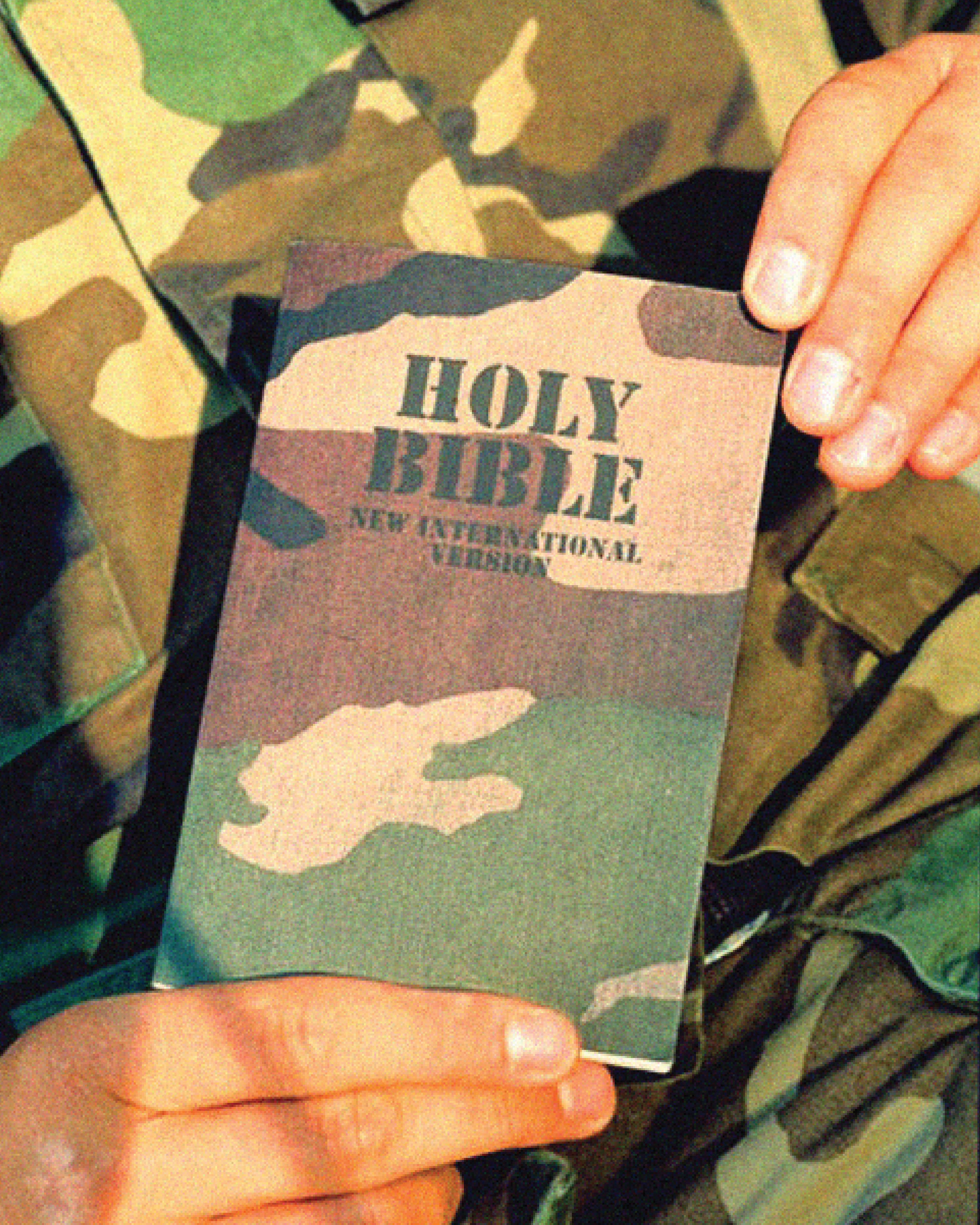
The Bible in the US woodland camouflage pattern, first introduced in 1989 Photo: Nicholas Pencelle © Courtesy DPM (source: Tate Modern)
The Concealed Word & Vestments
Camouflaging Bibles and vestments was a tactical necessity, not a design choice. On the front lines, this visual shift served three vital roles:
- Anti-Reflection: Matte covers and fabric suppressed light glints that could alert snipers.
- Visual Continuity: Disruptive patterns transformed the Bible and the priest's robes into integrated "gear," maintaining a seamless tactical silhouette.
- Durability: Rugged canvas and nylon replaced traditional leather and silk to survive the unforgiving humidity and mud.
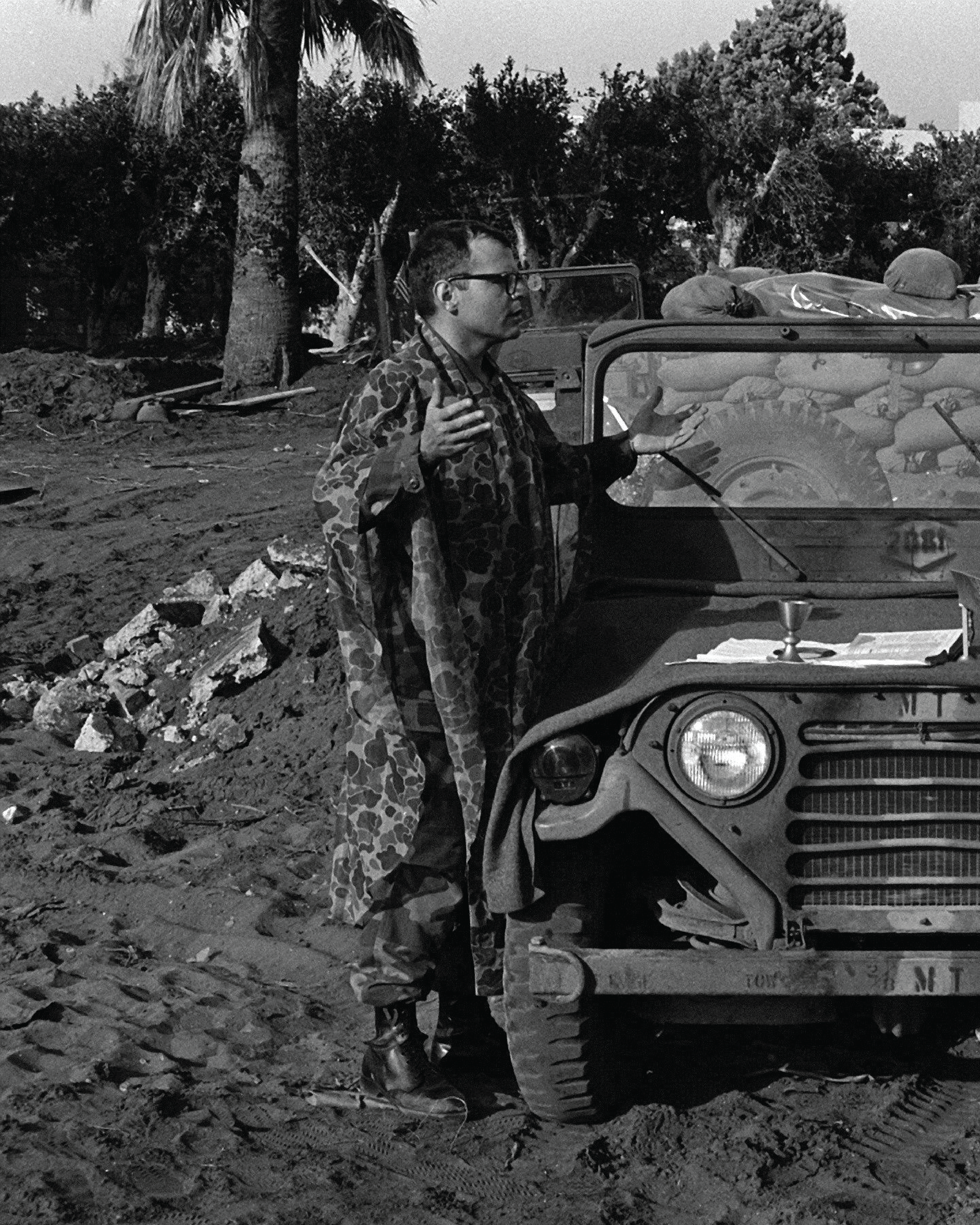
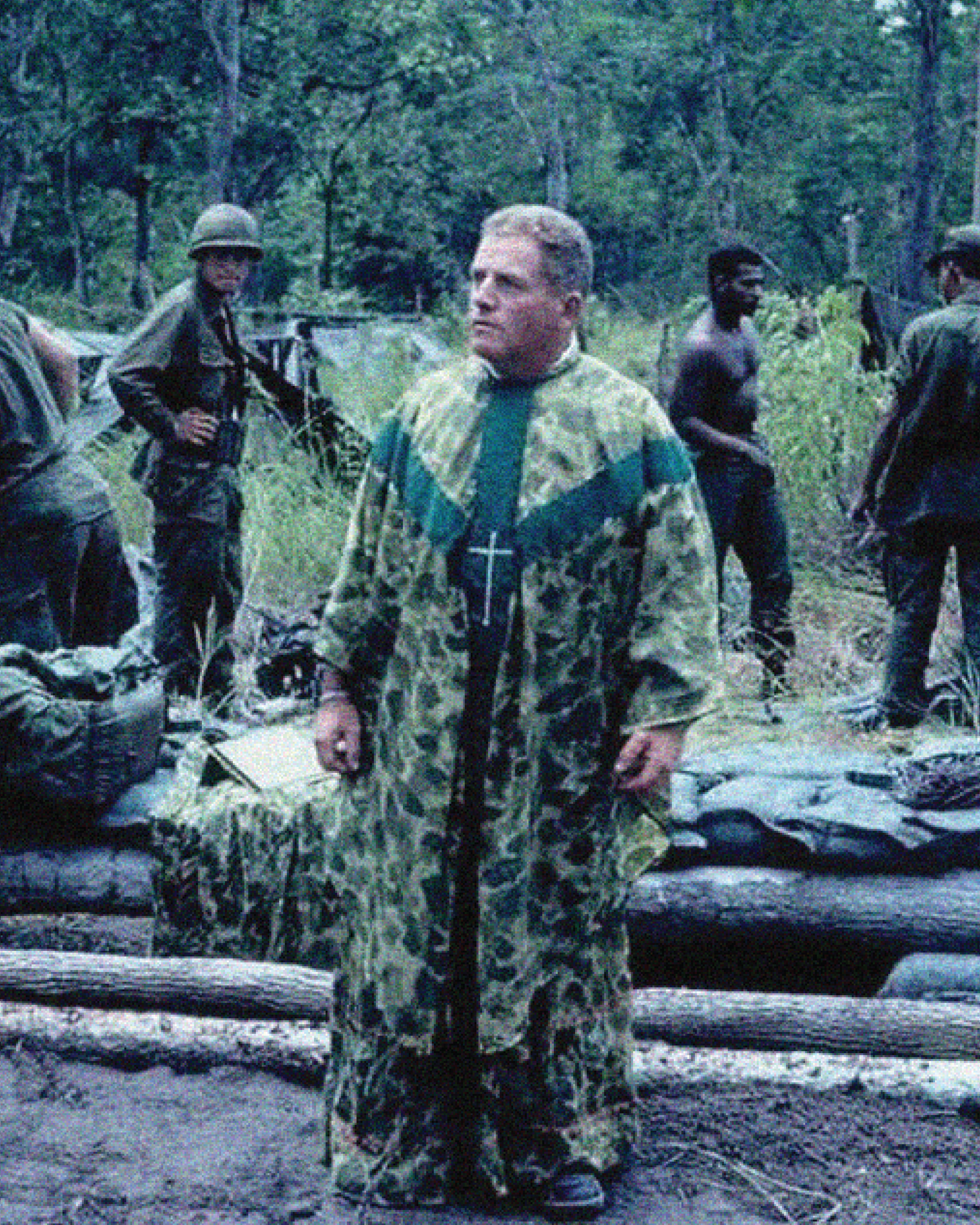
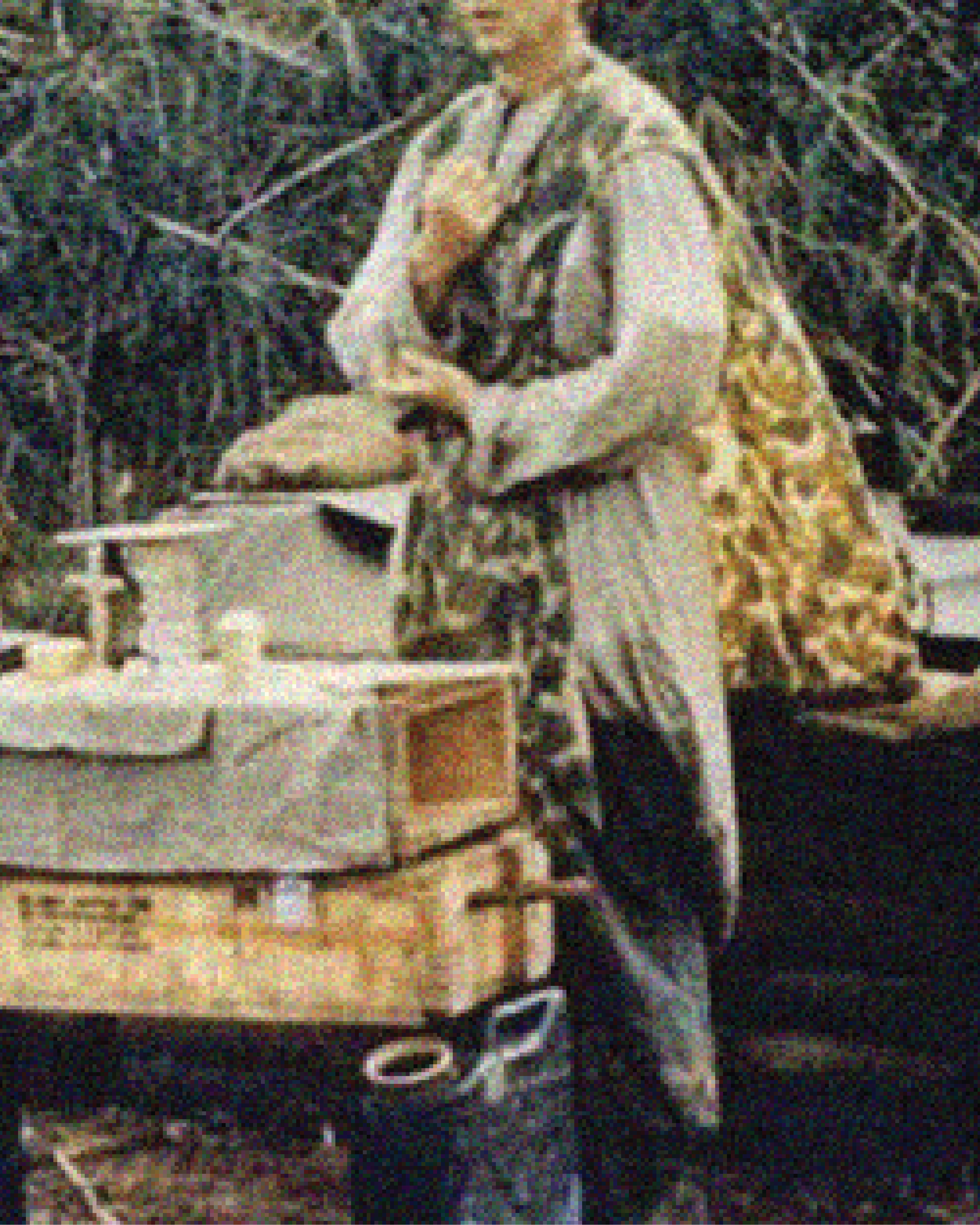
(Left) Military chaplain improvising by using the hood of a M151 MUTT utility truck as an altar to conduct a religious service in Lebanon (source unknown) (Right) Army Priest in a camouflage cassock, Vietnam 1968 (source unknown)
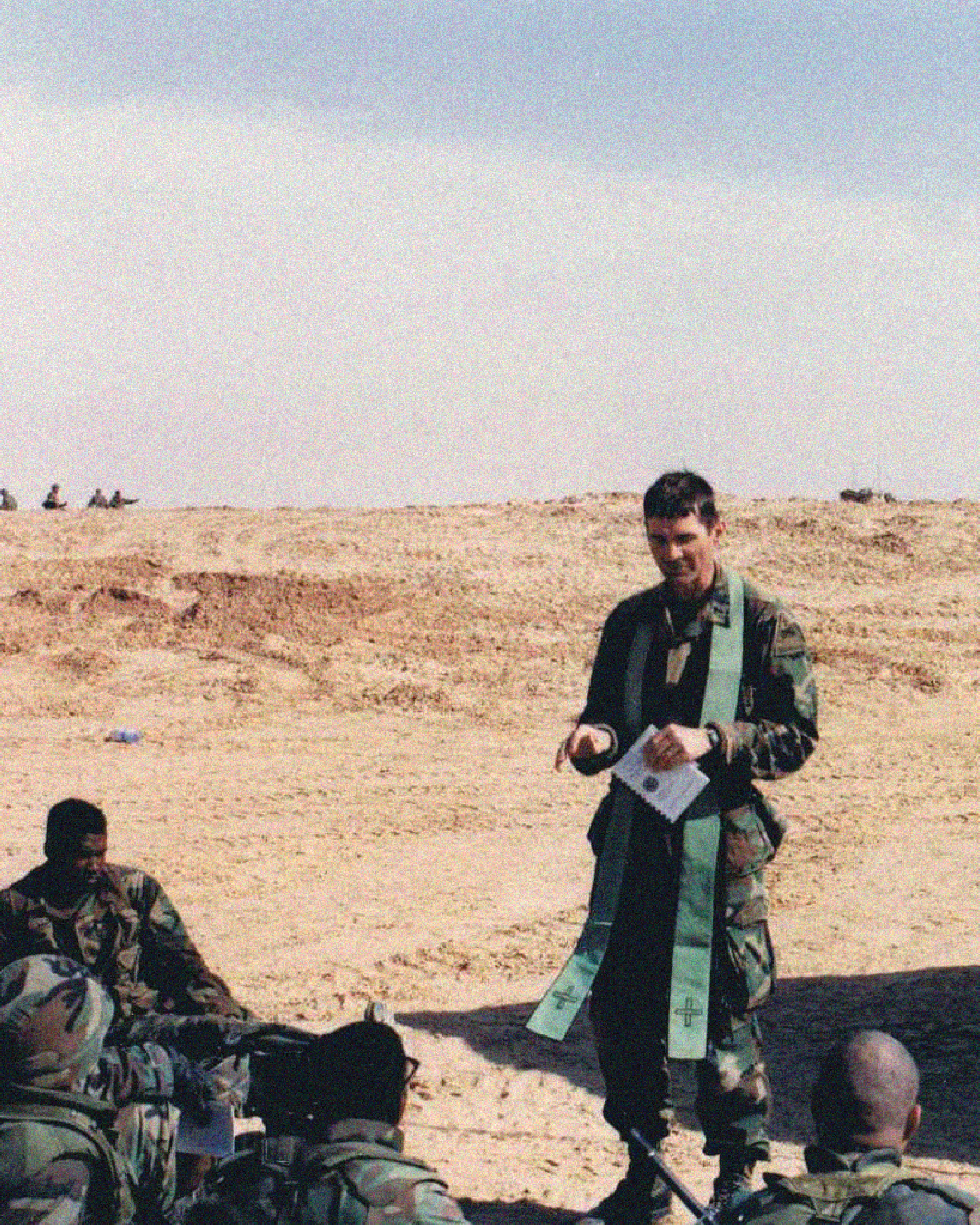
(Left) Chaplain in a camouflaged vestment leads worship for Soldiers, February 1991 (source unknown) (Right) Chaplain in an army uniform conducting worship in Vietnam (source unknown)
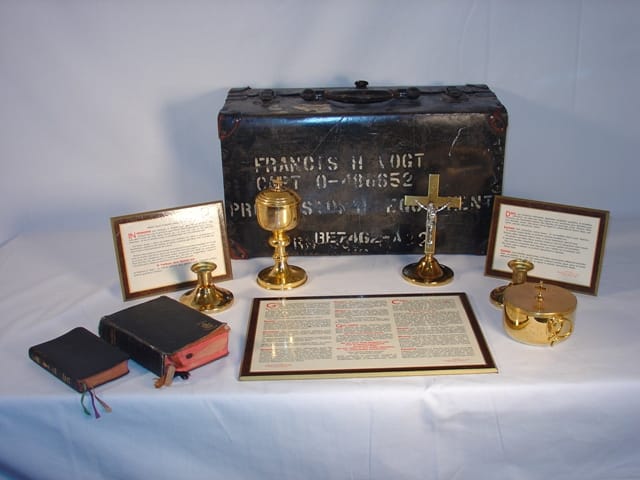
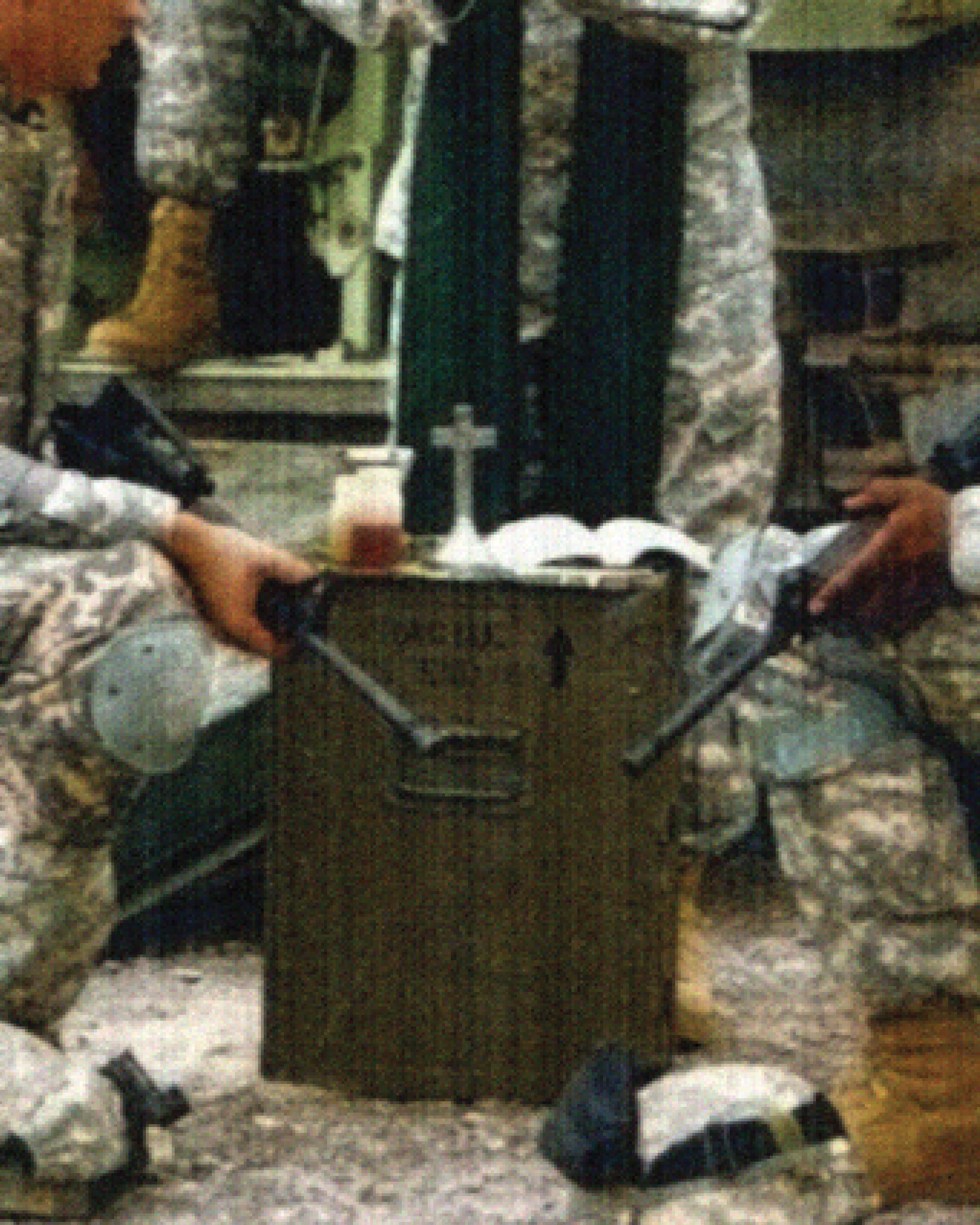
(Left) Chaplain kit used by Chaplain Francis Vogt (source: The Chaplain Kit) (Right) A Roman Catholic priest and U.S. Army chaplain celebrating Holy Mass for soldiers in the field during the Iraq War (source unknown)
The Sacred Gear
In the chaos of the front lines, the machinery of war is reclaimed for the spirit. A steel ammo box is overturned to serve as a holy altar, and the heavy hull of a tank becomes a makeshift sanctuary for mass. Here, the objects of destruction lose their violent intent, repurposed into rugged instruments of spiritual refuge.
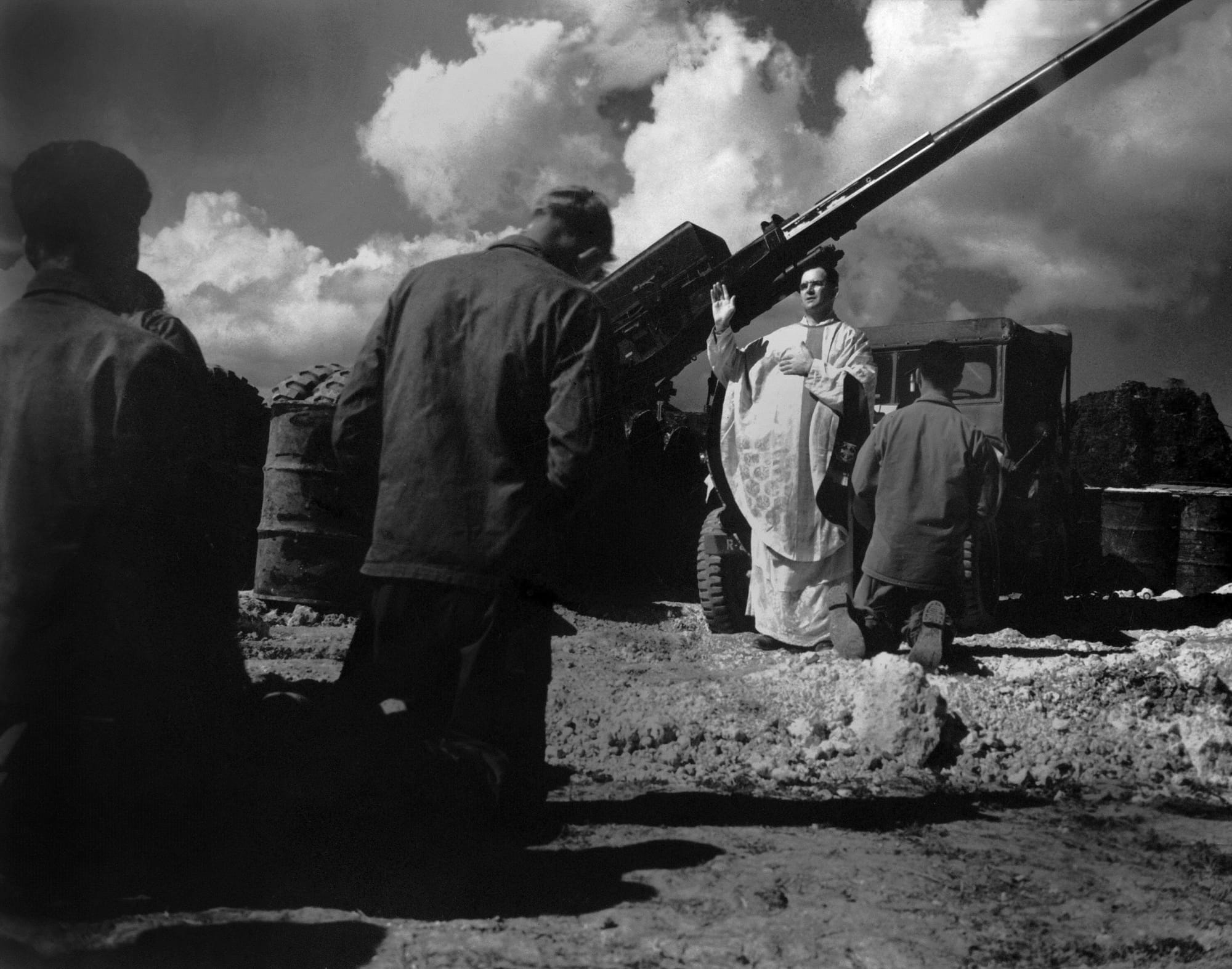
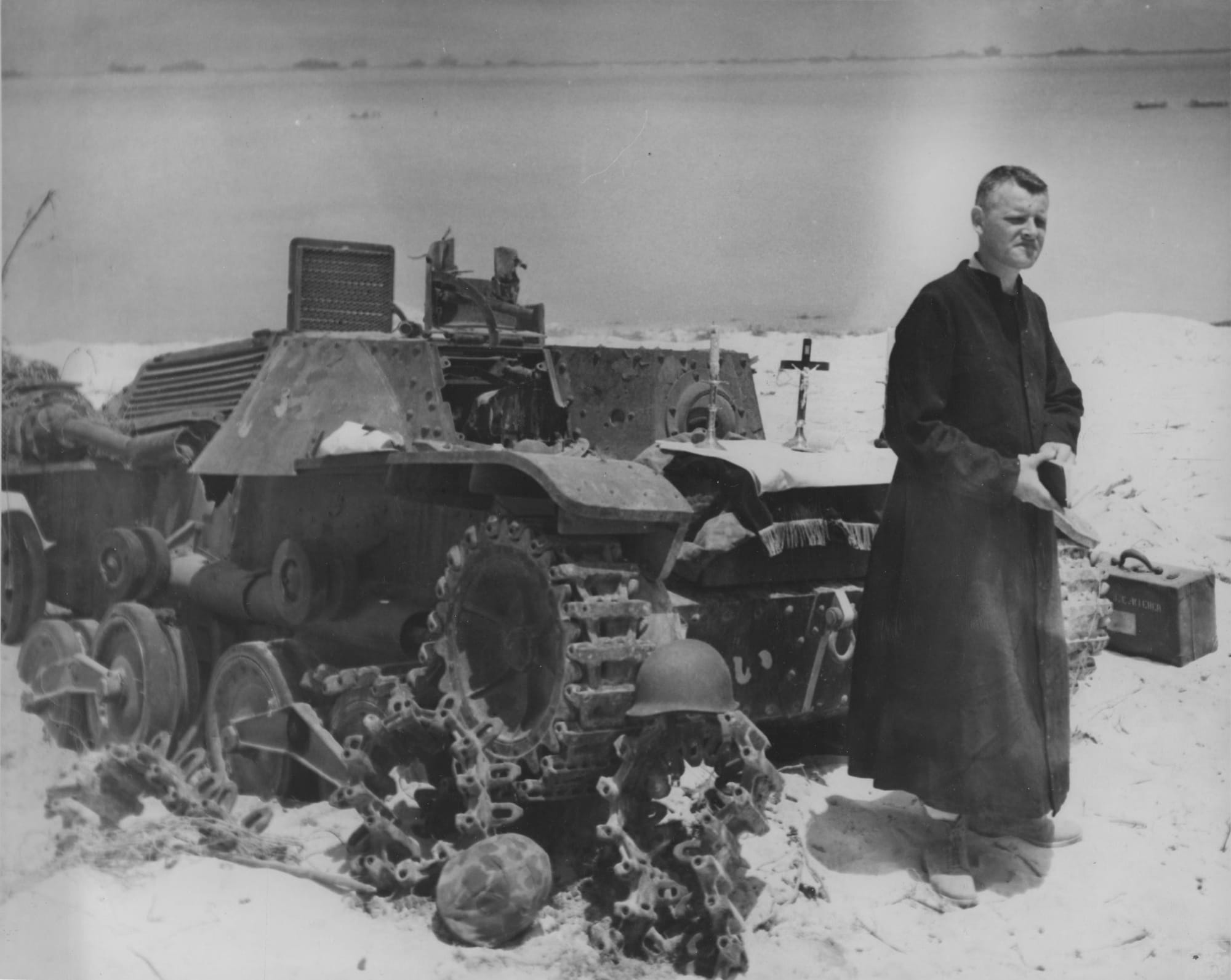
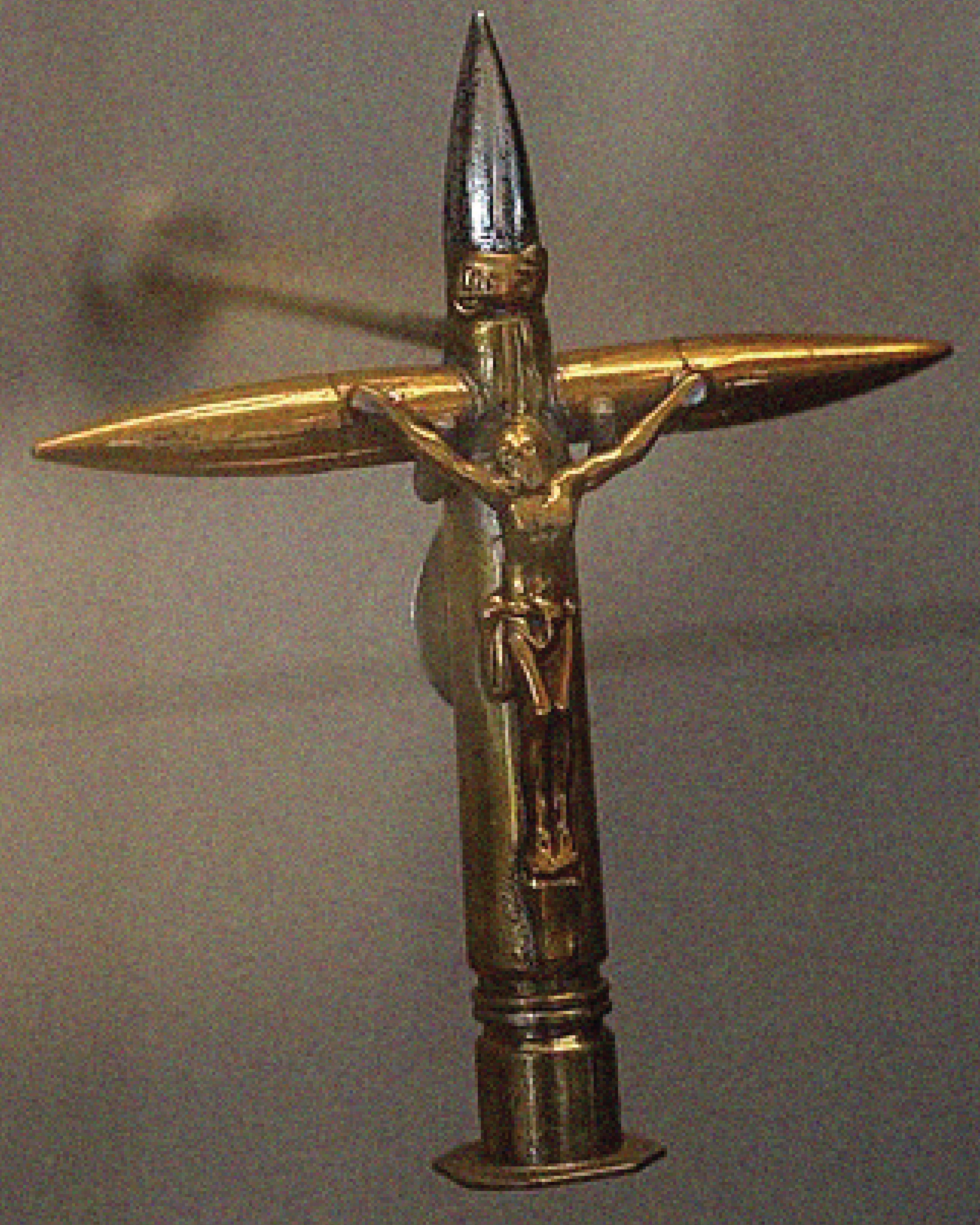
Trench art, a crucifix made of bullet casings (source: Army Museum Paris)
The Artifact of Peace
A shell casing designed to kill becomes a cross for prayer in a soldier’s hands. This is 'Trench Art' at its heart—a simple, desperate way to hold onto humanity in the middle of a brutal war. Spent brass and pointed bullets are welded together to form a crucifix, transforming a tool of violence into a physical object of faith.
Inquiry