Japanese Americana
Why Japanese Street Fashion Cannot Stop Reaching for the American Flag?
There is something compulsive about it.
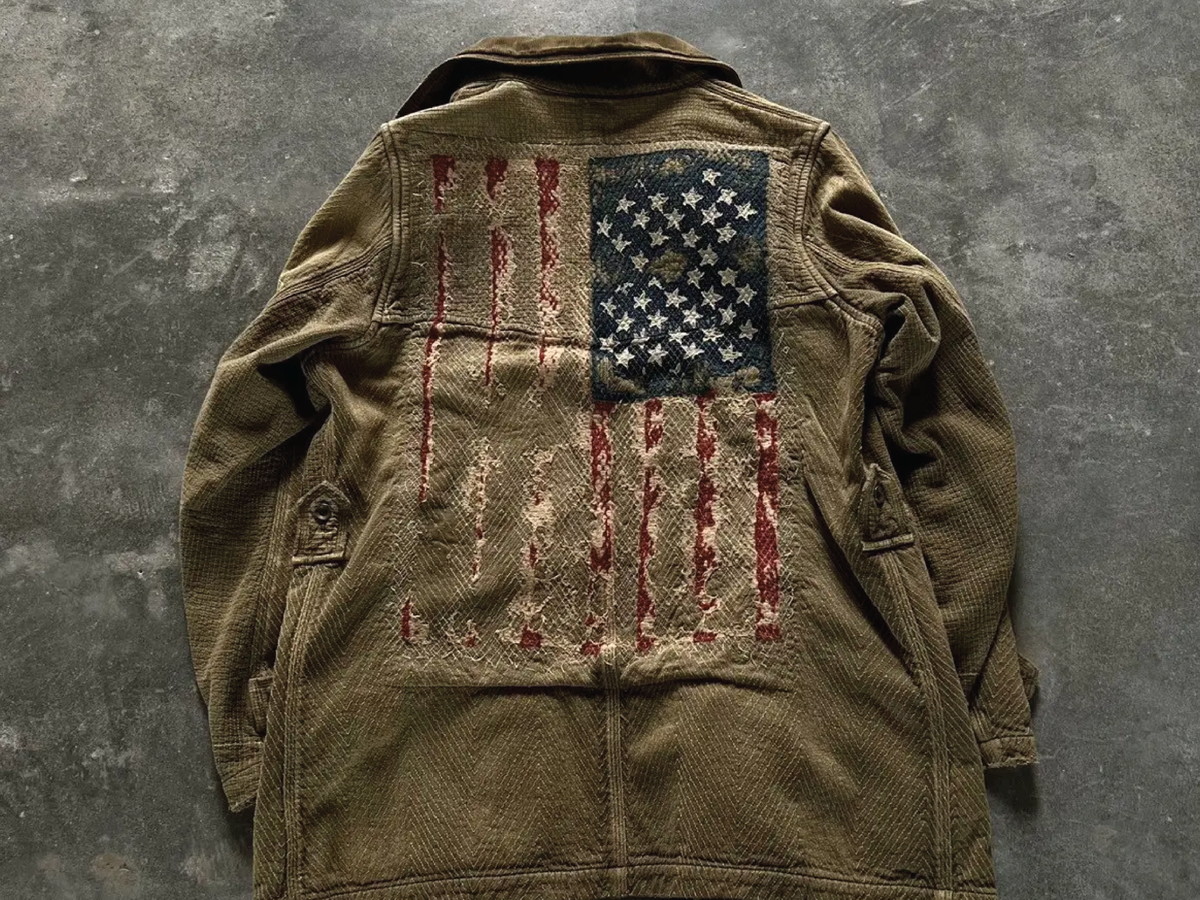
Walk through Harajuku on any given weekend and you will find the stars and stripes deployed with a frequency that would seem excessive even on the Fourth of July: on the back of a patched leather jacket, printed across a distressed flannel, stitched onto a military surplus bag, screened in faded red and blue across a graphic tee that has clearly been washed a hundred times. The American flag is everywhere in Japanese street fashion — and has been, in one form or another, for the better part of seven decades.
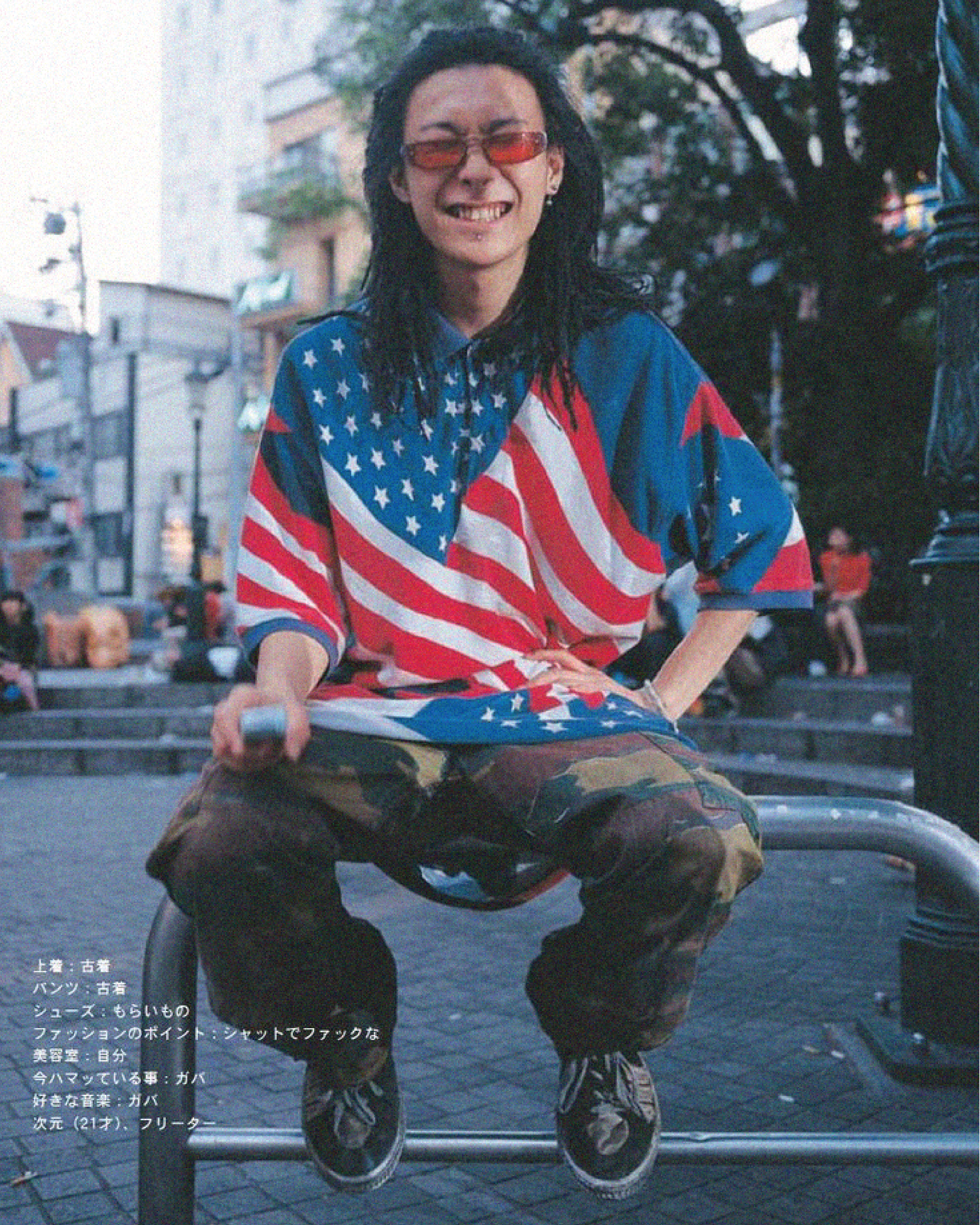
The obvious reading is admiration. Japan loves American culture. Japan loves American clothes. The flag comes with the territory.
But admiration alone does not explain the particular charge that the motif carries — the way it keeps returning, the way it keeps being distressed and deconstructed and recontextualized. Something else is happening. Something that has less to do with love, and more to do with the complicated grammar of relationships that are too close, too loaded, and too formative to ever be entirely resolved.
The Archive of Desire
The foundational story of Japanese Americana is one of extraordinary admiration.
W. David Marx's Ametora documents how a generation of postwar Japanese men became the world's most devoted students of American clothing — dissecting the construction of a Levi's 501 with archaeological seriousness, making pilgrimages to American mills, and ultimately building a denim industry more faithful to the original ideal than America itself had maintained. The copy outlasted the original. The student surpassed the teacher.
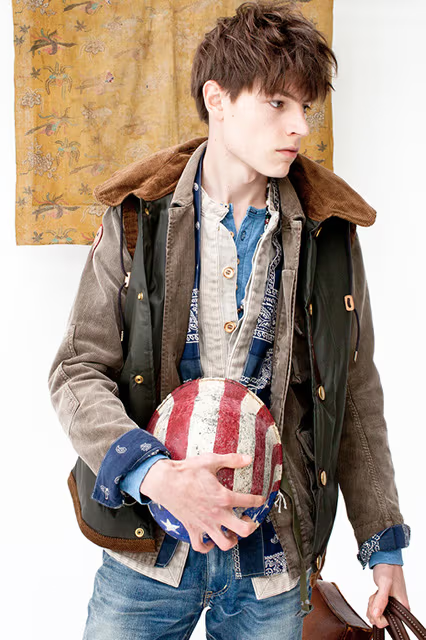
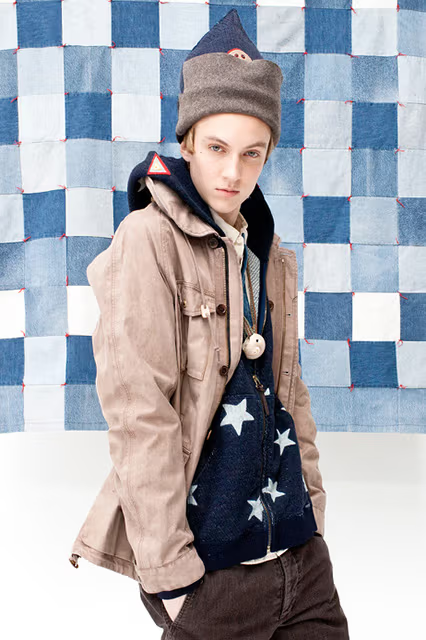
visvim 2013 Fall/Winter "Dissertation on a Man with No Country Vol.2" Lookbook (source: Hypebeast)
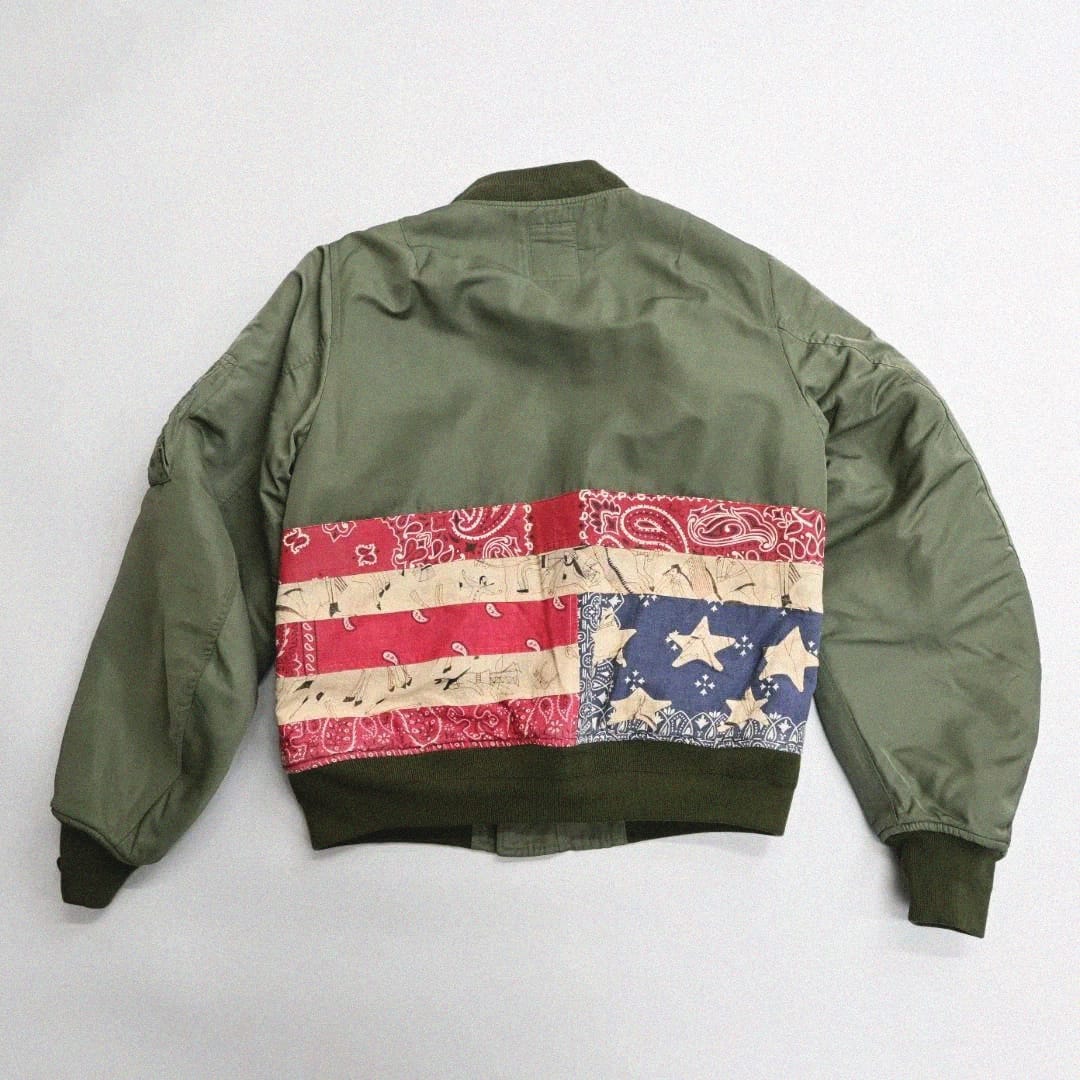
visvim 2016 Fall/Winter Thorson MA-1 Blouson Jacket (source: unknown)
This dynamic extends naturally to the American flag. In the hands of brands like Visvim, the flag is treated as a material document of a specific American mythology — the frontier, the open road, the promise of a land where anyone could remake themselves. Visvim's SS13 collection Dissertation on Symbolism and Our Prayer Flag drew from vintage flag prints and the intersection of American, Native American, and Japanese cultures — the stars and stripes appearing not as a national symbol but as one thread within a broader meditation on how cloth carries meaning across civilizations.
This is desire in its purest form: the longing for something never possessed, elevated by distance into something approaching the ideal. Japan loved the American flag the way it loved American denim — completely, studiously, and with a fidelity that America itself could no longer sustain.
But desire of this intensity is never uncomplicated.
The Weight Beneath the Wanting
The cities burned. The surrender was signed beneath the American flag. The occupation that followed lasted seven years — long enough to rewrite a constitution, restructure an economy, and fundamentally alter the symbolic architecture of Japanese public life.
This context matters because it changes what admiration means. The young Japanese men who fell in love with American clothing in the 1950s and 60s were not admiring from a position of equality. Japan was a defeated nation. America was the occupying power. And as historian John Dower documents in Embracing Defeat, what followed was not merely cultural fascination — it was, in part, the pull of the powerful. To wear American clothes was to reach toward the culture that had won, to absorb its symbols as a form of forward motion. As one study of postwar Japanese culture puts it, adopting Western style had become "not just an aesthetic choice, but a means of self-preservation and progression." Desire and pragmatism, indistinguishable from each other.
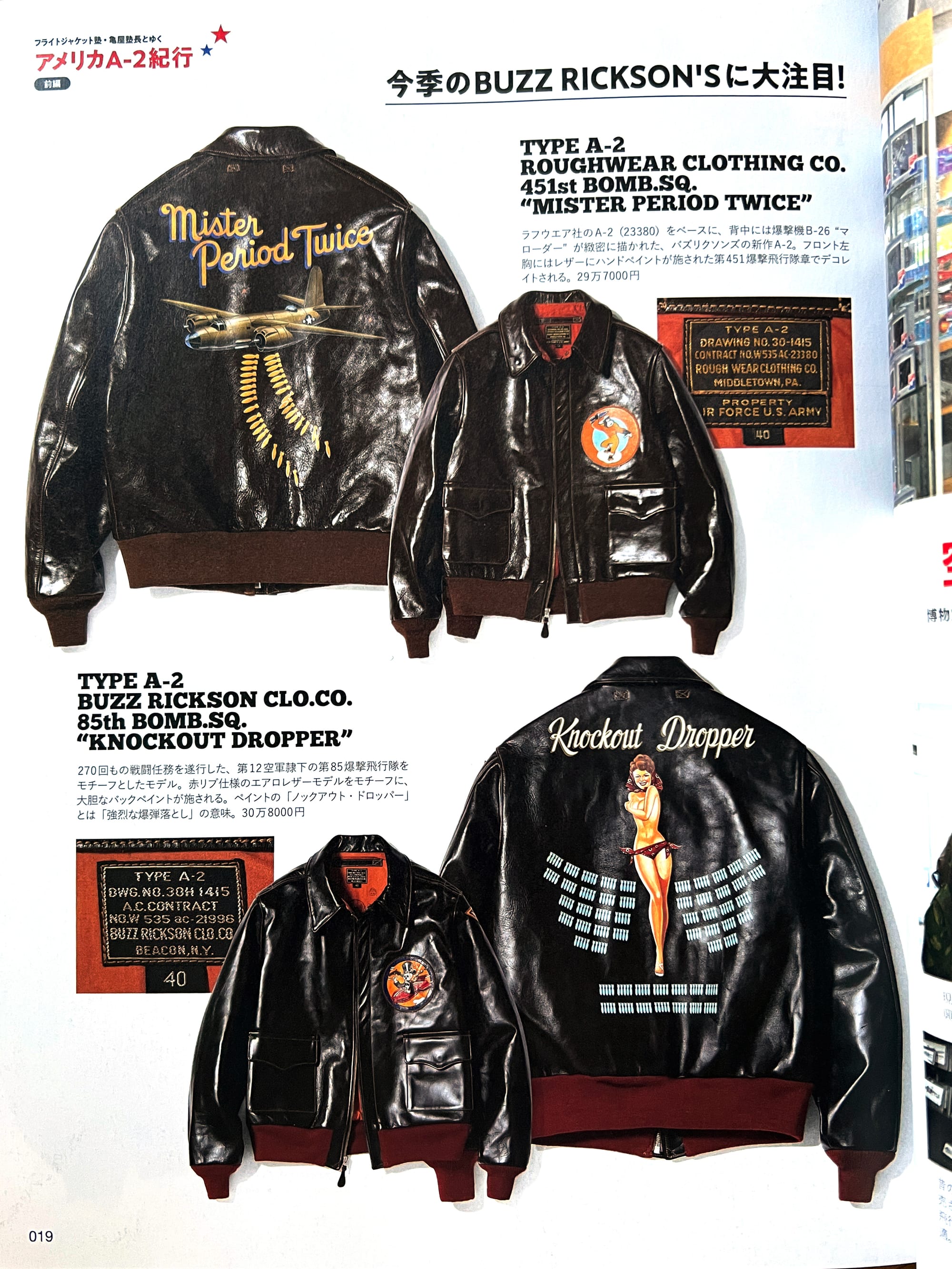
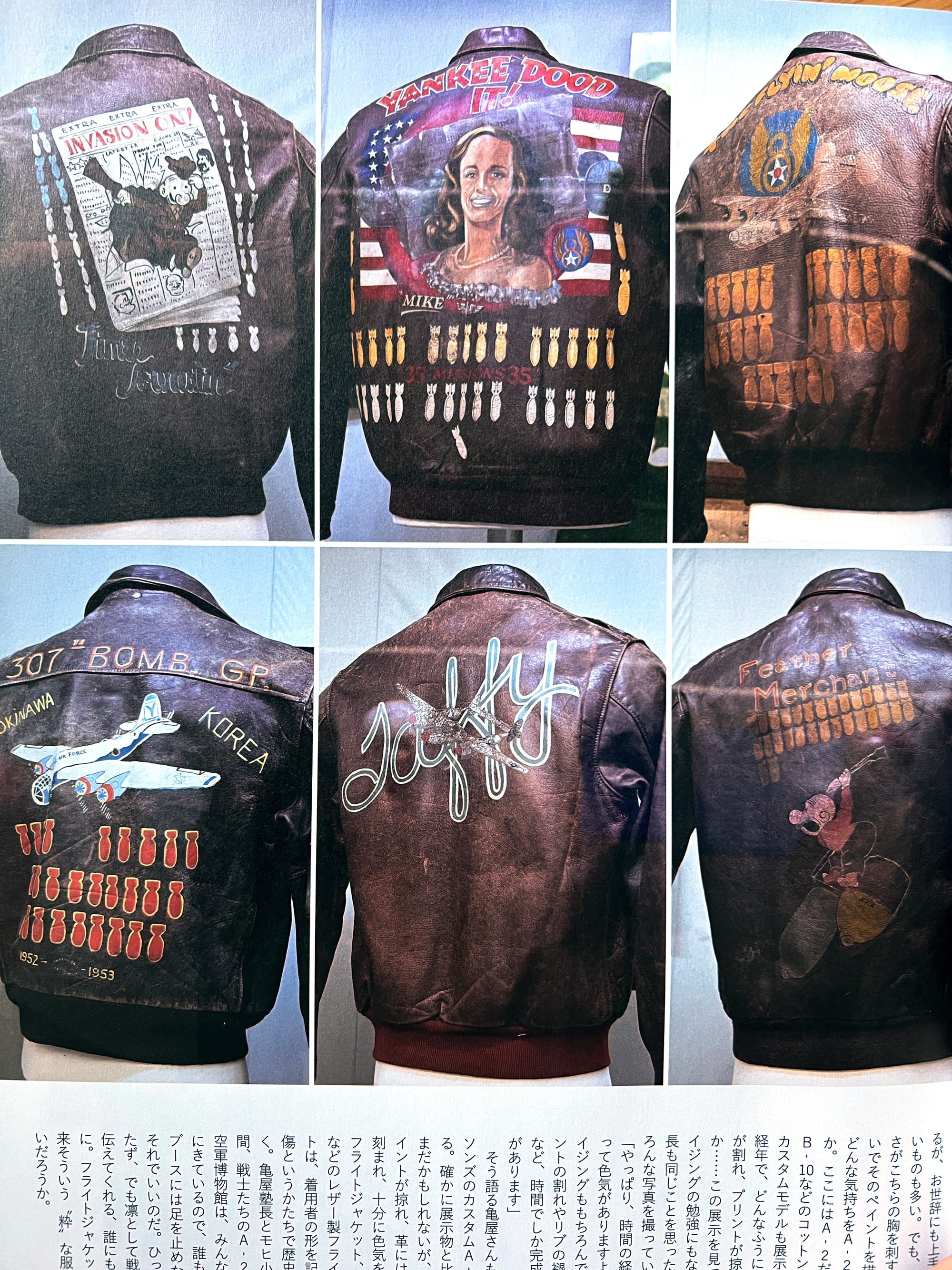
(Left) Buzz Rickson Military Inspired Leather Jacket (source: Lightning magazine - vol.379) (right) Vintage Leather Flight Jacket from National Museum of the US Air Force (source: Lightning magazine - vol.379)
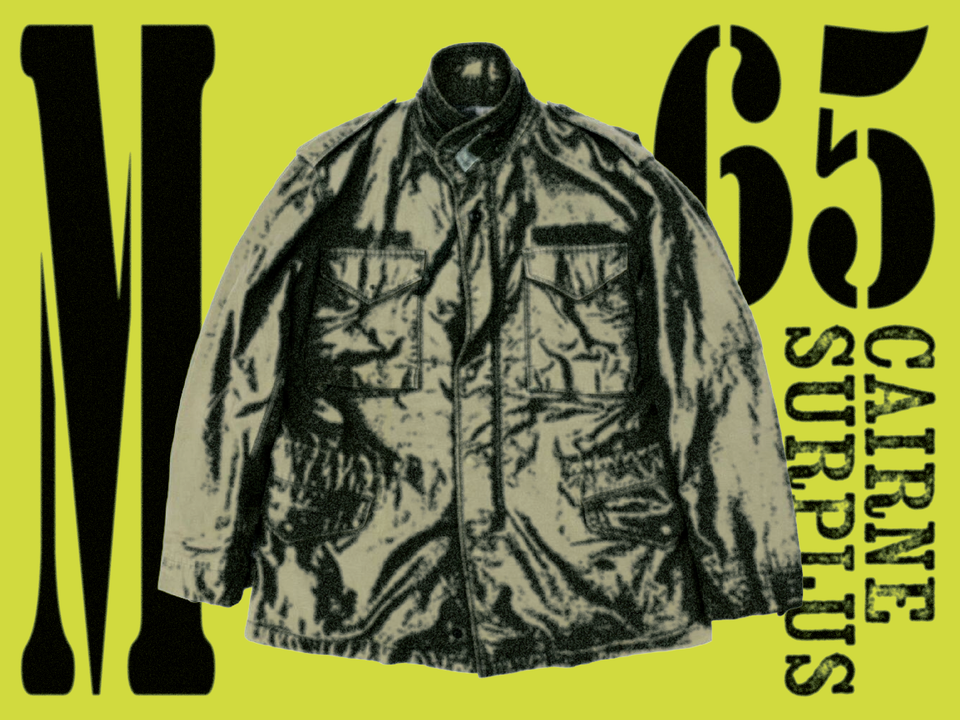
The most literal expression of this was not in boutiques but in surplus piles. As the occupation wound down, American forces left behind quantities of military clothing — A-2 leather flight jackets, M-65 field coats, fatigues, chambray shirts — that found their way into the hands of Japanese youth who had little money and abundant hunger for what these garments represented. The American flag patch sewn onto a sleeve, the unit insignia on a chest pocket: these were not symbols of an enemy. They were fragments of a power that had remade the world, worn by a generation trying to metabolize what had happened to them by getting as close to it as possible. Brands like The Real McCoy's and Buzz Rickson's would later build entire identities around the near-perfect reproduction of these same garments — spending decades reconstructing the A-2 and MA-1 with a precision that the original manufacturers had long since abandoned. The flag on the jacket was never simply decorative. It was a document.
What complicated this further was what happened when the surplus clothing crossed over from aspiration into subculture. The same flight jackets and military patches that middle-class youth wore as Americana signifiers were adopted by working-class street culture as something else entirely — the uniform of those who had been left out of the postwar recovery, who found in the occupier's castoffs not a symbol of power to emulate but a material to repurpose. The flag patch stayed on the jacket. The meaning reversed.
This is the logic that runs beneath seven decades of Japanese engagement with American iconography: the flag, the denim, the military surplus are never simply loved or simply resisted. They are held in a space where admiration and weight exist together — inseparable, unresolved, and more honest for it.
The Contemporary Tweak
The Japanese street fashion scene that emerged from the early 1990s Ura-Harajuku movement inherited all of this — the Ametora devotion, the postwar weight, the ambivalence — and found a way to hold it simultaneously, without resolving any of it.
The key word is tweak. Neither reverence nor rejection, but a precise, knowing adjustment — the flag taken from its official context and altered just enough to signal that the person wearing it understands exactly what they are doing.
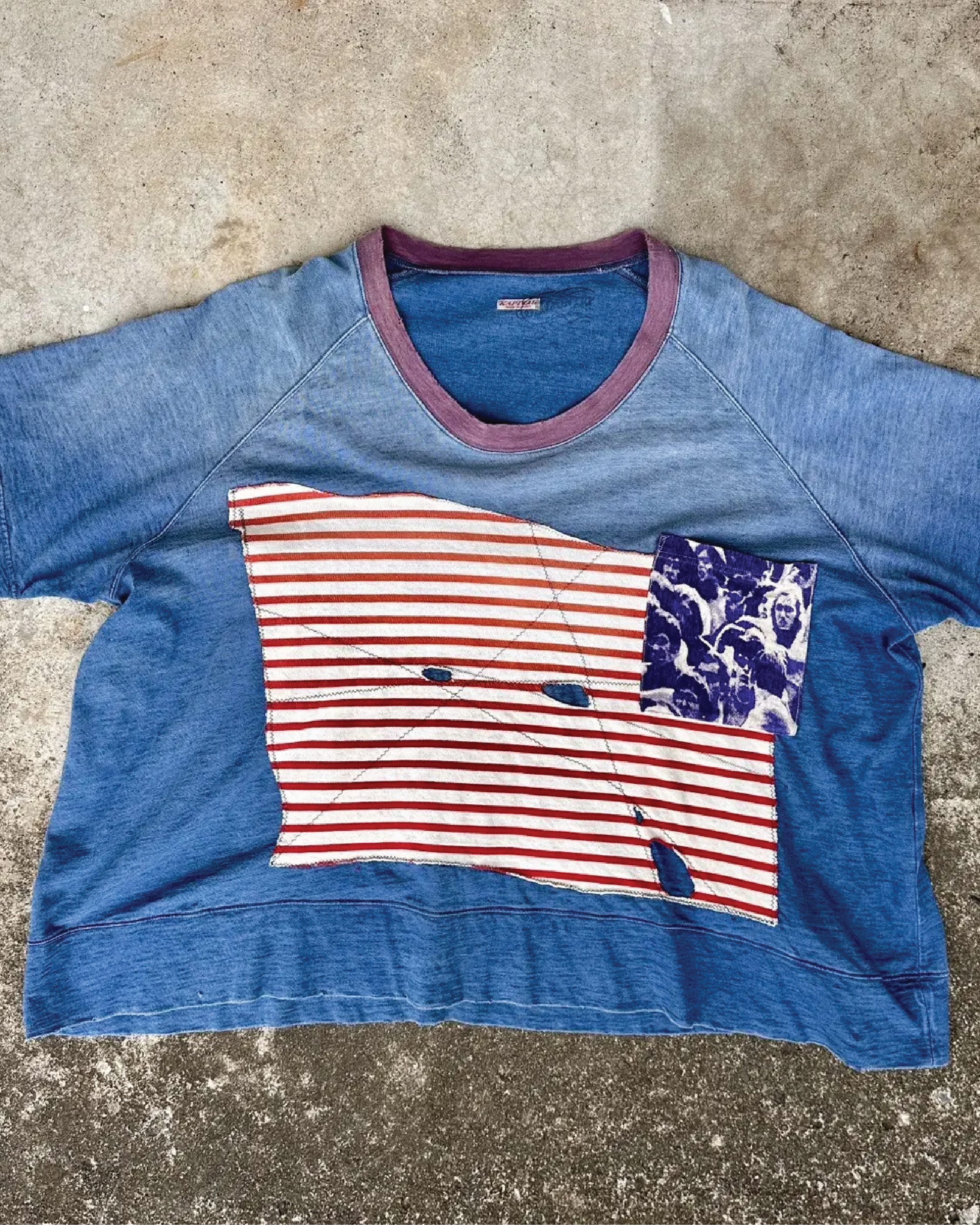
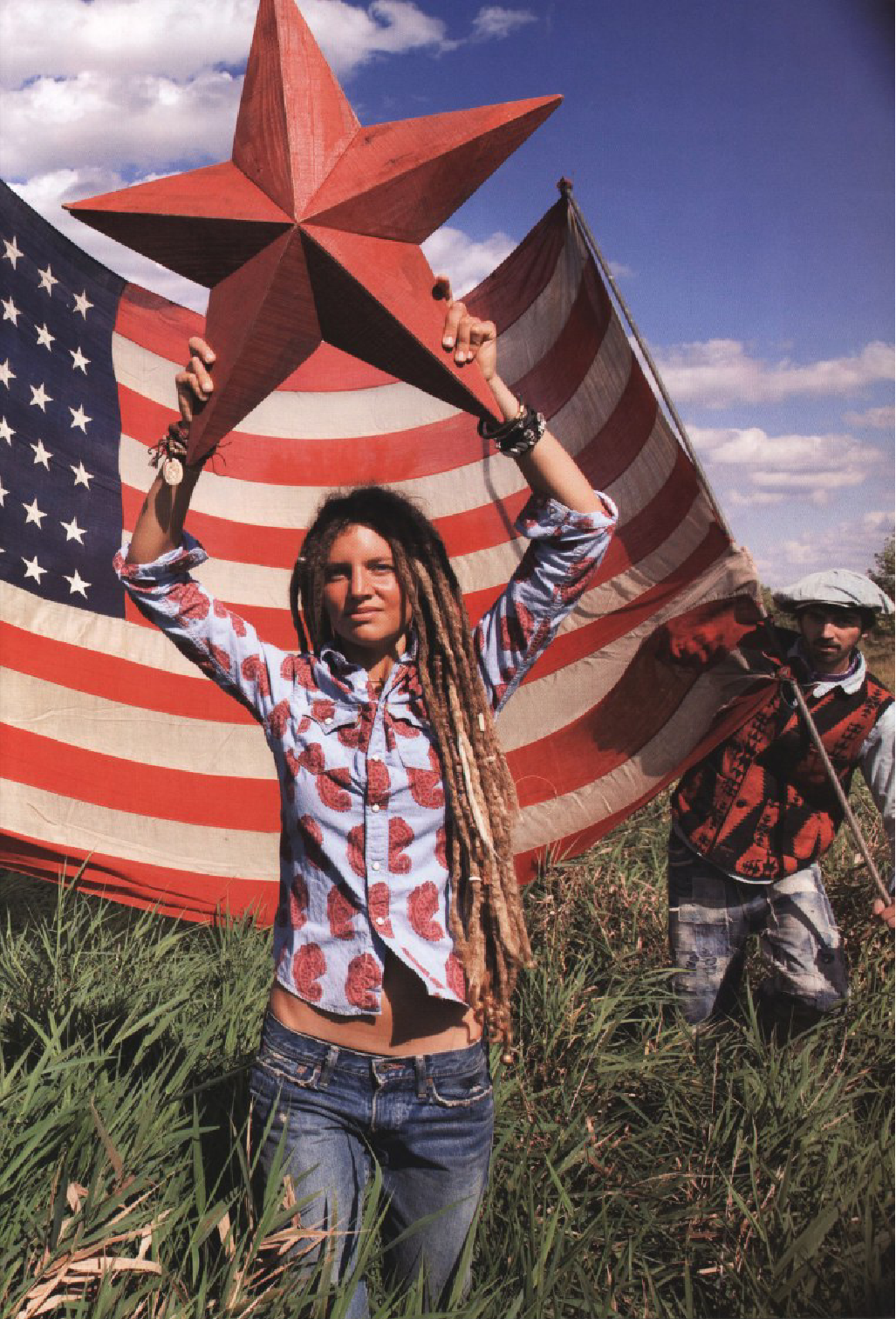
(Left) Kapital Woodstock Boro Oversize Cropped tee shirt American flag (source: Grailed - @DogSago) (Right) Kapital Spring 2011 ‘FARMY’ Lookbook (source: Archive pdf)
Kapital's Spring 2011 lookbook, titled FARMY — a portmanteau of "farm" and "army" — is perhaps the most fully realized example. The stars and stripes appear throughout, but always as fragments: broken into patchwork denim, overdyed in indigo and persimmon, stitched back together through the boro logic of accumulated repair. What Kapital is doing is less homage than archaeology — excavating pieces of American iconography that even Americans have forgotten, and preserving them through Japanese craft techniques that the original culture never possessed. The flag is not celebrated. It is not critiqued. It is archived: frozen at the moment just before it becomes something else, held in the amber of exceptional making.
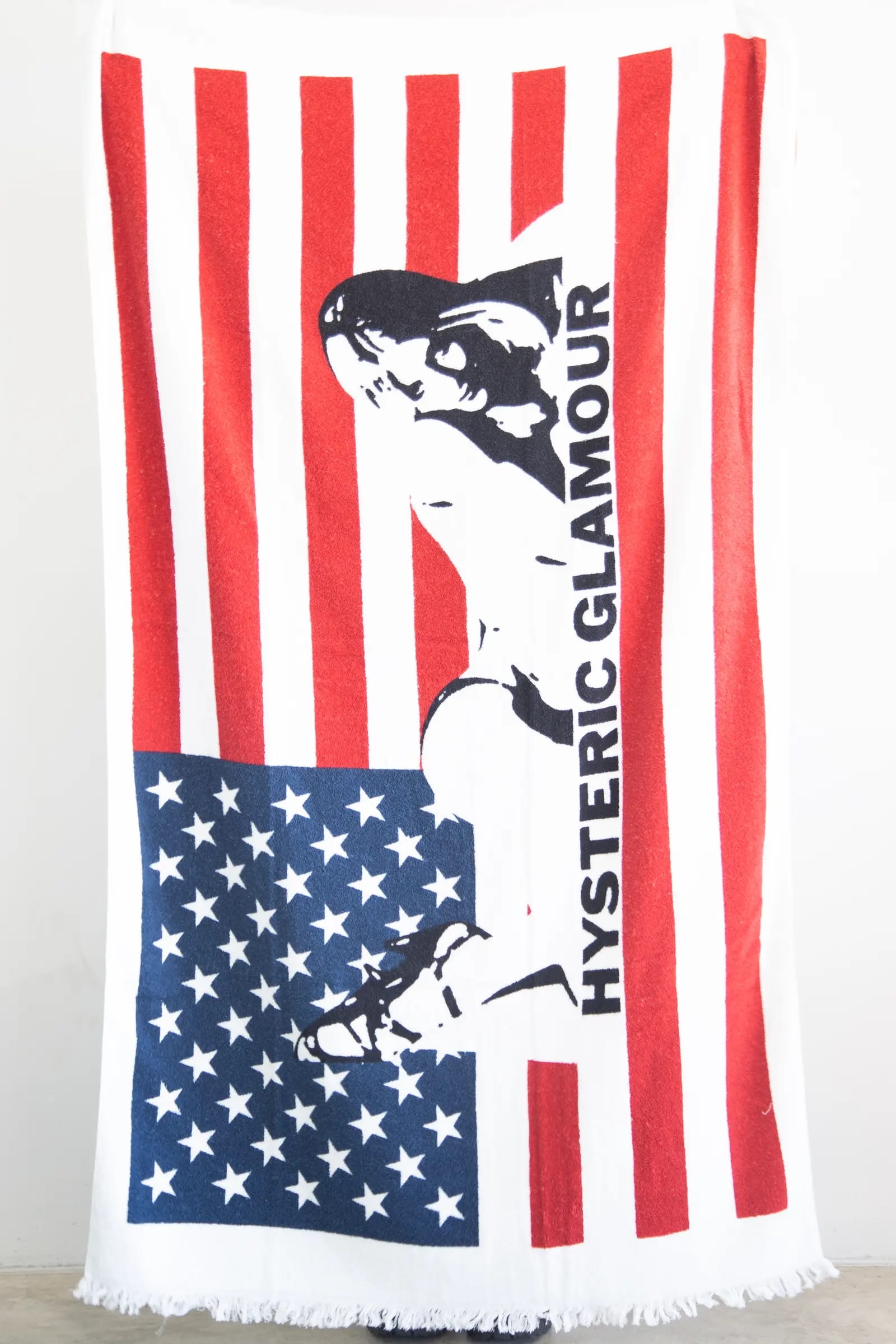
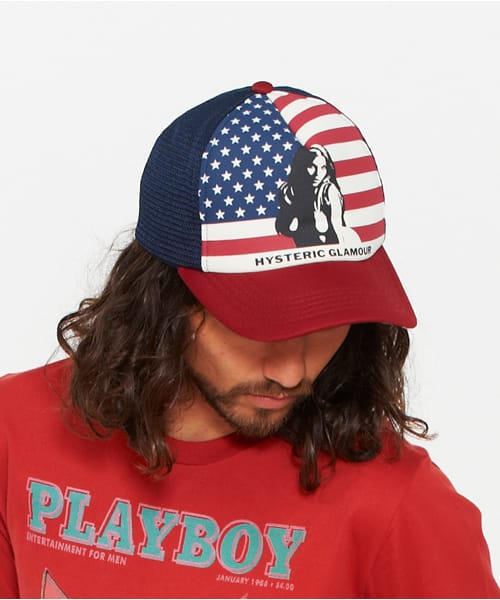
(Left) Hysteric Glamour Flag Woman Beach Towel (source: unknown) (Right) Hysteric Glamour Flag Woman hat (source: unknown)
Hysteric Glamour relocates the flag in a different direction entirely — from politics into pop culture, from Washington D.C. into the world of the diner, the drive-in, and the B-movie. The flag appears as texture within a maximalist archive of 1960s and 70s American imagery, presented with an excess that reads less as admiration than as loving mockery.
What unites these approaches is a consistent refusal of the flag's official meaning combined with an equally consistent refusal to discard it. The flag is always present, always altered, always held at precisely the distance that allows it to mean something beyond what it officially claims. The result is a relationship more complete than simple admiration or simple critique — because it holds both sides of the story. The love and the weight. The denim and the occupation. The desire and the damage.
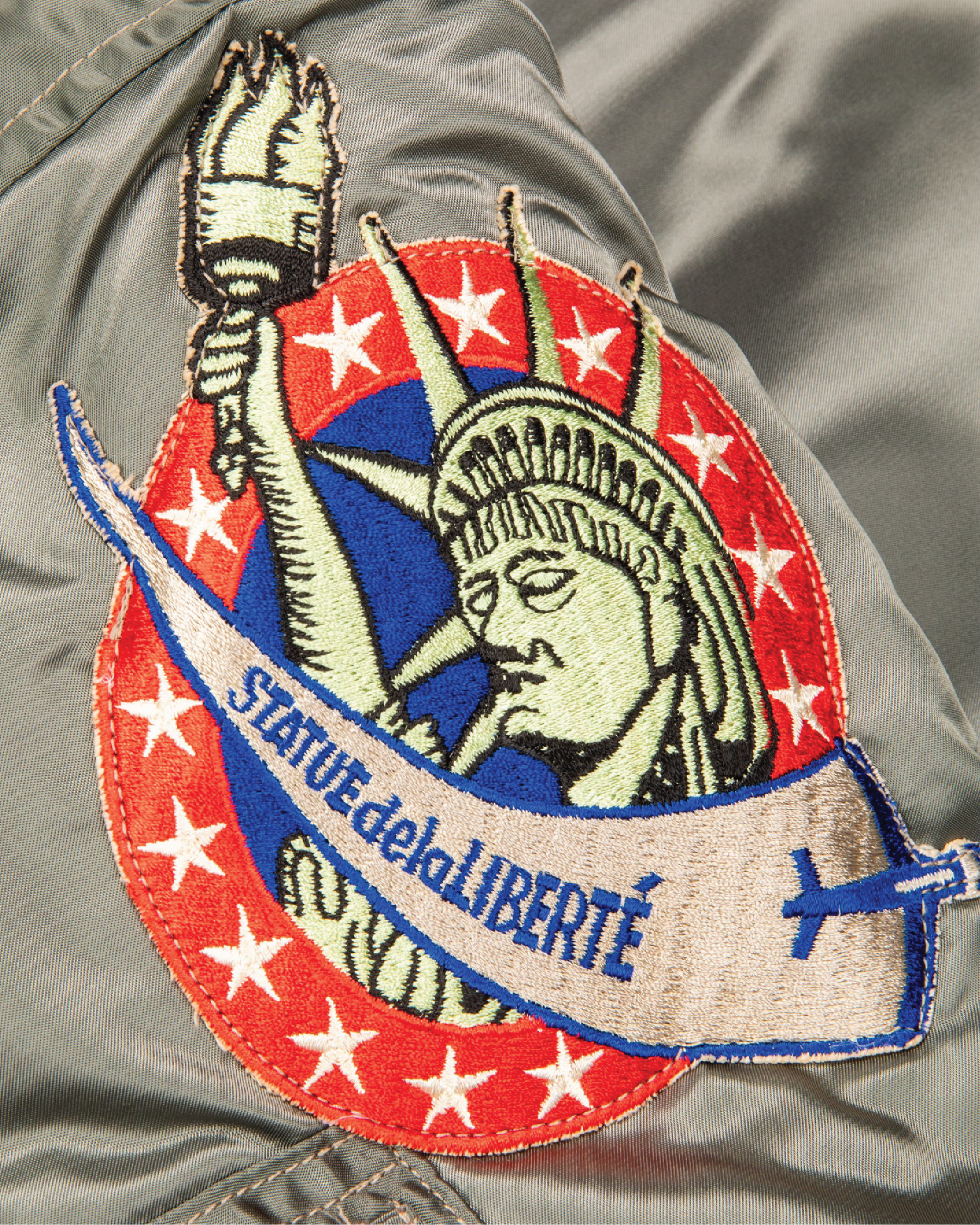
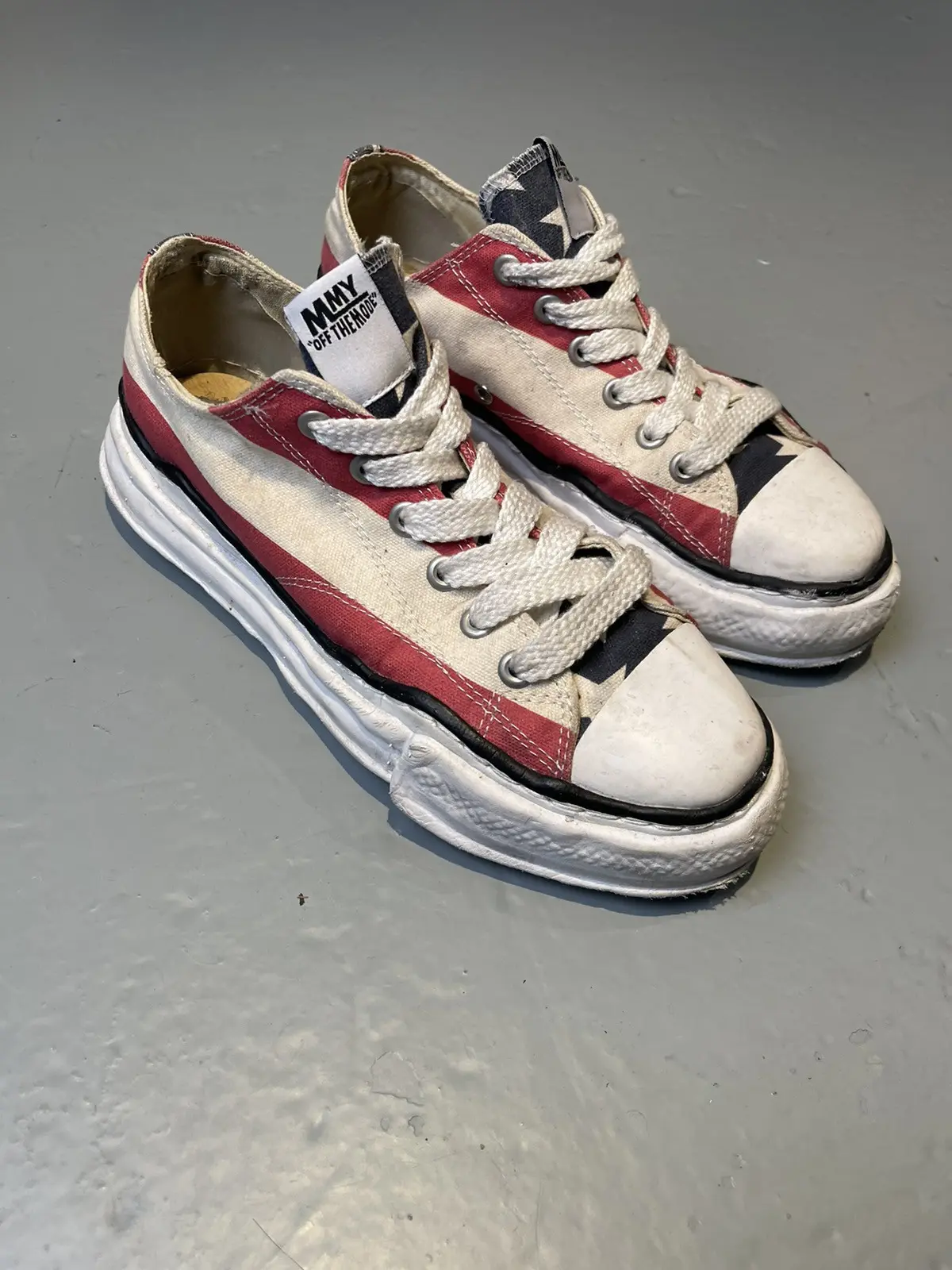
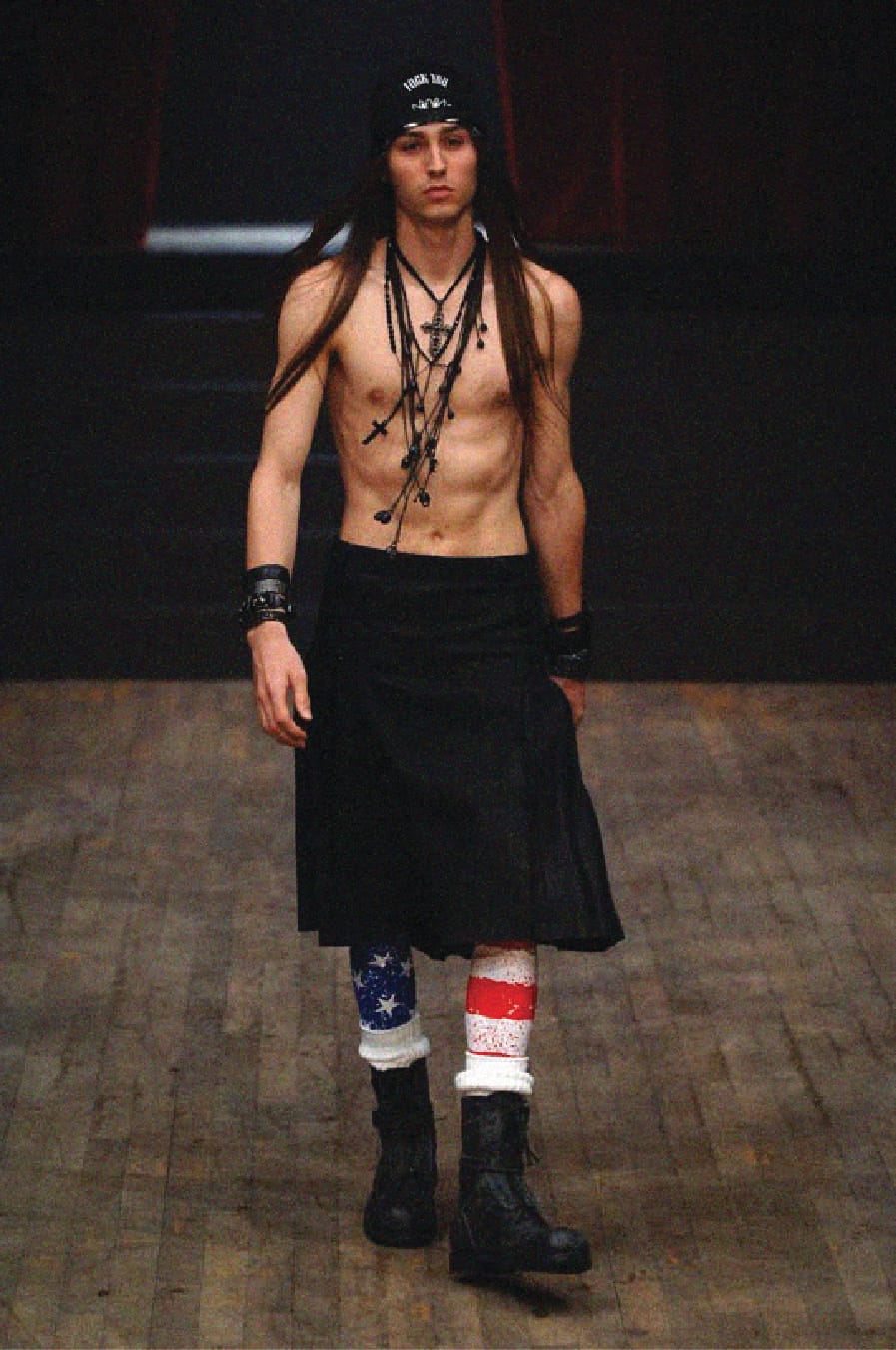
(Left) Real McCoy's MA-1 Statue de la Liberté flight jacket patch (source: The Real McCoy's) (Center) Maison MIHARA YASUHIRO American Flag Low Tops (source: Grailed - @ killshit) (Right) Number (N)ine 2006 Spring/Summer "Axl Rose" (source: unknown)
Japanese street fashion does not resolve this. It wears it — tweaked, distressed, stitched at an angle, combined with imagery that acknowledges the complexity without pretending to exhaust it. Which is, perhaps, the only honest thing to do with a flag that has never quite managed to mean what it says it means.
Inquiry